
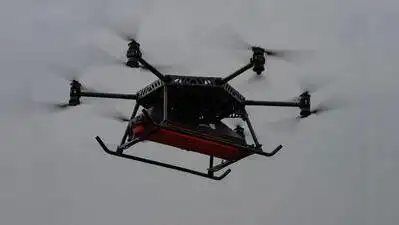
Photo for representation
Against this backdrop, Army held its biennial mechanised forces conference 2026 at Armoured Corps Centre and School in Ahilyanagar, with Chief of Army Staff (COAS) General Dhiraj Seth and Southern Army Commander Lt Gen Rajesh Pushkar attending the deliberations. Pune: The growing use of drones, precision-guided weapons, electronic warfare and unmanned systems in modern conflicts, particularly the Russia-Ukraine war, has reinforced the need for Indian Army to technologically transform its mechanised forces and prepare them for the changing character of warfare. The chief and army commander are senior-most Armoured Corps officers of Army.
Therefore, certain future advanced systems are being incorporated in the tanks to enhance protection layer to counter emerging aerial threats,” added the officer. You Can Also Check: Gold Rate in Pune | Silver Rate in Pune | Bank Holidays in Pune | Public Holidays in Pune | Petrol Price in Pune | Diesel Price in Pune | CNG Price in Pune | LPG Price in Pune Stay updated with the latest Pune news.
The conflict has also demonstrated that mechanised warfare is not becoming obsolete, but is undergoing a significant transformation, said the officer. For Indian Army, this transformation assumes significance amid evolving security challenges and the need to remain prepared for high-intensity conventional conflicts as well as emerging multi-domain threats, said a section of officers. Technology integration can help mechanised formations improve battlefield awareness, detect threats faster, coordinate firepower and protect armoured platforms against increasingly sophisticated aerial threats, said the officers who attended the conference. The emphasis is also expected to strengthen Army’s broader modernisation efforts, including greater absorption of indigenous defence technologies and closer integration of operational requirements with technological innovation developed by private players in the country, they said.
The chief, along with senior army officers who also attended the conference, discussed evolving operational requirements, future employment of mechanised forces, optimisation of human resources and integration of emerging technologies to enhance their combat effectiveness. “The Russia-Ukraine war has offered significant lessons for armoured formations across the world. The extensive deployment of low-cost first-person-view (FPV) drones, surveillance systems and loitering munitions has exposed the vulnerability of conventional tanks and armoured vehicles operating without adequate protection and technological support. The battlefield has increasingly become transparent, with drones detecting troop movements and directing precision strikes, leaving little room for traditional manoeuvres without adequate countermeasures. “Armoured vehicles continue to remain crucial for battlefield mobility, firepower and protection, but their effectiveness increasingly depends on integration with unmanned aerial systems, electronic warfare capabilities, air defence, real-time surveillance and network-enabled command systems. The discussions also focused on human resource optimisation, recognising that future mechanised warfare will require soldiers and commanders proficient in operating technologically advanced platforms and integrating data-driven battlefield systems. Download the TOI App.
All these aspects and challenges of the modern warfare were at the centre of discussion during the conference,” a senior army officer said on Wednesday. Aligned with Army’s vision of ‘JAI (Jointless Atmanirbharta and Innovation) se VIJAY’, the conference reinforced the thrust towards developing agile, technology-enabled and future-ready mechanised forces capable of delivering decisive results on tomorrow’s battlefield.