Image Credits: WikiMedia Commons
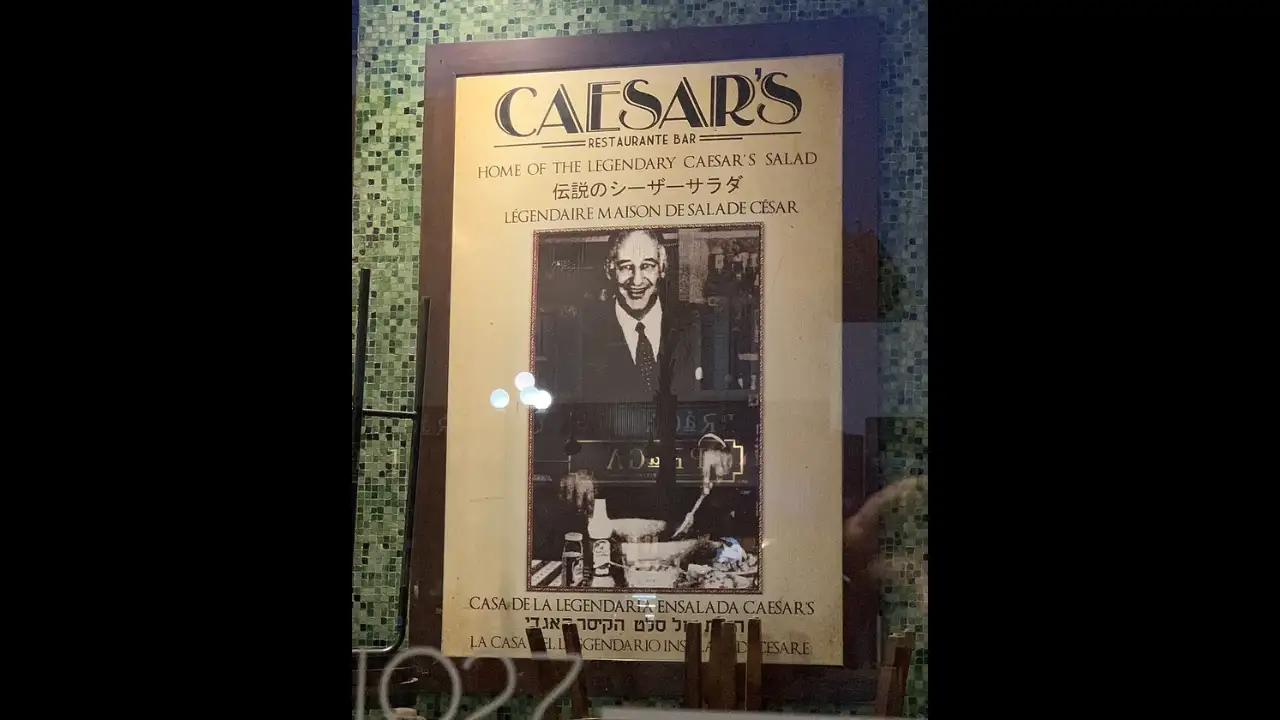
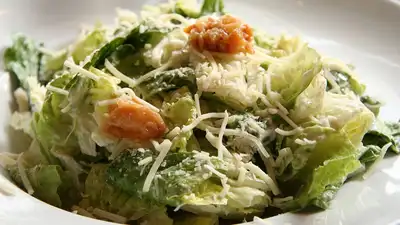
Born Cesare Cardini in 1896 in Baveno, Italy, near the picturesque Lake Maggiore, he eventually made his way to North America, where he worked in the restaurant and hospitality business. The story goes that on 4 July 1924, Caesar’s was packed with Americans celebrating Independence Day. He settled in California and operated restaurants in San Diego before opening an establishment across the border in Tijuana, Mexico. His restaurant, Caesar’s, offered American visitors something they could not easily find back home: good food, freely flowing alcohol and a temporary escape from Prohibition. The restaurant was running short on supplies, leaving Cardini with a room full of hungry customers and a kitchen with very little left to offer. Cardini gathered whatever ingredients were available and decided to turn the situation into a dining experience. Rather than simply sending out a hastily assembled plate, he brought a dining cart to the tables and prepared the salad in front of his guests, tossing the ingredients together with a little theatrical flair. What began as an improvised solution became an unexpected hit. The dressing was made tableside, with the egg helping bind the oil and other ingredients into a creamy coating. The lettuce leaves were arranged with their stems facing outwards, allowing diners to pick them up with their fingers. It was dinner and a little bit of theatre rolled into one. Interestingly, the salad’s origins are not entirely settled. Cardini’s brother, Alex, is also credited by some accounts with developing a version featuring anchovies, which he called the Aviator’s Salad. Another claim comes from Livio Santini, an Italian cook at the restaurant, who maintained that the recipe originated with his mother. Cardini remains the name most commonly associated with its invention While the competing stories have kept food historians busy. Word about the unusual salad travelled north into the United States and eventually across the Atlantic. Tijuana was already attracting Hollywood’s wealthy and famous, and Cardini’s restaurant became a popular stop for visitors looking for a good meal alongside their drinks. Silver-screen celebrities, including Clark Gable and Jean Harlow, were among the personalities associated with the restaurant’s growing popularity. The salad was no longer just a clever way to use up kitchen leftovers. It had become a dish people were willing to travel for.