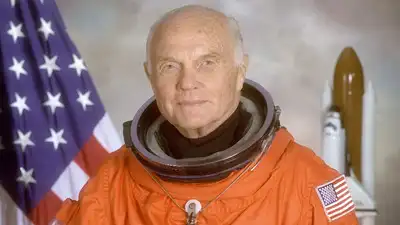
Astronaut U.S. Senator John Glenn. Image credits: Wikimedia Commons
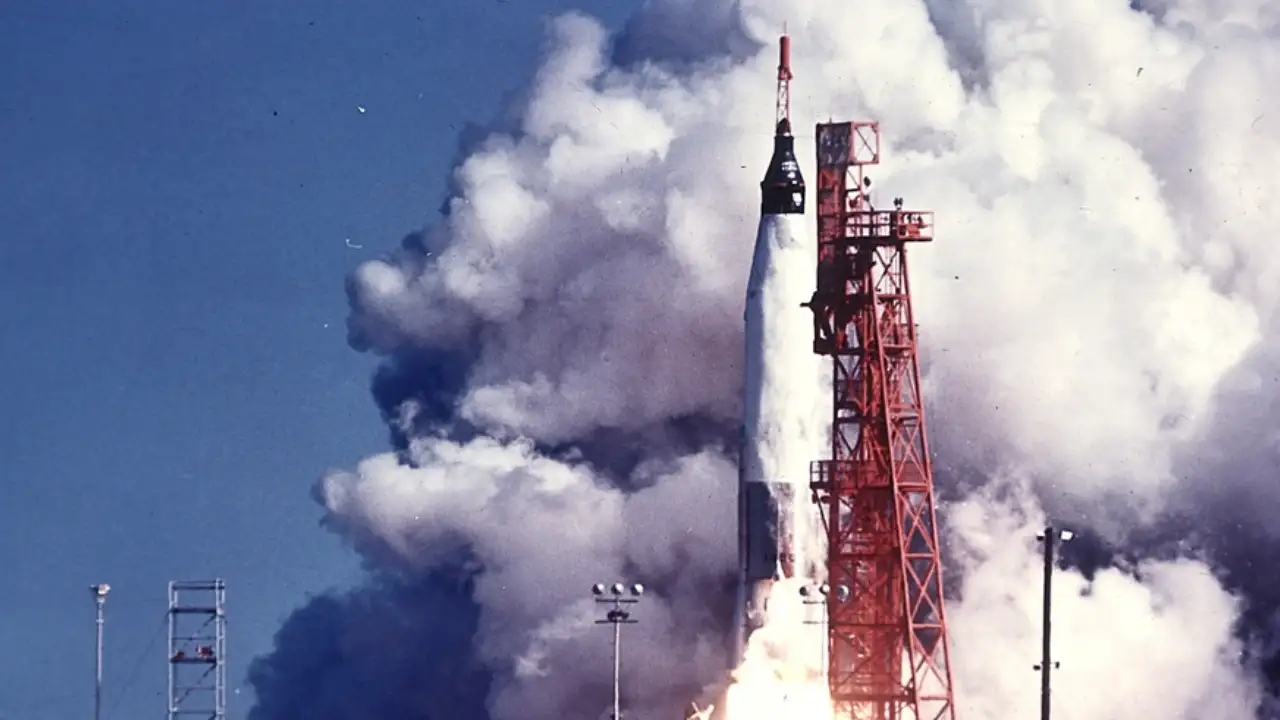
John Glenn challenged that image when he returned to orbit at the age of 77, more than three decades after his first historic journey. The American astronaut had already made history in 1962 by becoming the first American to orbit the Earth. His second flight aboard the Space Shuttle Discovery in 1998 made him the oldest person to fly in space at the time and brought attention to how ageing affects the human body in space. Discovery carried Glenn back into space at the age of 77 Glenn’s second flight came on October 29, 1998, when he joined the crew of space shuttle Discovery for the STS-95 mission. At 77, he became the oldest person to orbit Earth, a mark nobody has beaten in orbit. Blue Origin’s short suborbital flights later carried William Shatner in 2021 and Ed Dwight in 2024 into space at age 90. The mission lasted 8 days, 21 hours and 44 minutes, ending with a landing at Kennedy Space Center on November 7, 1998, NASA’s STS-95 mission page says. NASA’s 25 Years Ago: STS-95, John Glenn Returns to Space records that the mission included more than 80 experiments. It also recorded that the flight’s 80-plus experiments produced 2,500 Earth observation images and included the four-day SPARTAN free-flyer mission, which the crew deployed and later retrieved. Glenn’s second mission helped scientists study aging in space One of the main reasons for including Glenn in the STS-95 crew was his age. Scientists wanted to investigate whether some physical changes experienced during space resembled those associated with ageing on Earth, the NASA STS-95 mission record explained. Glenn later continued his public service and remained associated with space exploration until his death on December 8, 2016, at the age of 95. His two missions, separated by more than 36 years, remain an unusual chapter in the history of human spaceflight.
Space exploration has often been associated with young pilots and astronauts trained to handle the physical demands of spacecraft. Unlike his first mission, Glenn did not command the spacecraft. He served as a payload specialist alongside six other crew members. These covered several areas of scientific research, including the effects of microgravity on the human body. The paper noted that the seven-member crew completed the work across the shuttle’s middeck, Spacehab and payload bay, including tests on Glenn himself to compare weightlessness with ageing. During the mission, researchers studied his balance, perception, immune response, bone and muscle density, metabolism, blood flow and sleep patterns. Pedro Duque, another crew member, also participated in some of the medical investigations. Comparing their responses helped researchers examine how age might influence the body’s reaction to microgravity. The mission also carried out other scientific activities, including deploying the Spartan satellite to study the Sun and its solar wind. John Glenn’s return to space demonstrated that an astronaut could participate in a major scientific mission well beyond the age usually associated with active spaceflight. His first journey helped establish America’s position in orbital exploration, while his second allowed scientists to study aging in a microgravity environment.