
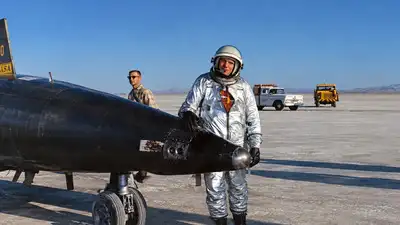
In 1962, test pilot Neil Armstrong piloted the experimental X-15 rocket plane on a challenging flight. Image Credits: Wikimedia Commons.
The North American X-15 was a joint program with the agency, the US Air Force and the US Navy to investigate the nature of high-speed, high-altitude flight and to develop hypersonic flight vehicle technology, such as vehicle stability and control, and vehicle behaviour during and after hypersonic flight, according to NASA . The X-15 was powered by a rocket engine and lifted into flight from a modified B-52 aircraft flying at an altitude of 45,000 feet. Armstrong joined the NASA flight research program in 1955 and was one of the pilots who had tried out the plane. A 1965 study of Automatica discusses adaptive flight control design for a re-entry vehicle, with the example of the X-15 control system used as a challenge posed by significant changes in aircraft behaviour at various speeds and altitudes.
Because traditional aerodynamic controls worked increasingly poorly in the thin air at near-space altitudes, the programme was especially significant. Once at altitude, the rocket engine would be ignited to accelerate the aircraft to hypersonic speed, then shut off, and the aircraft would return to Earth as a glider. It had reaction control jets, small rocket thrusters that helped pilots move the craft in the thinner atmosphere. NASA recorded the event, stating that the Rose Bowl marked the location where Armstrong was finally able to level off and re-enter the craft back towards the base. The event illustrated the challenges of controlling a plane at high speed as it moved from thin to denser air.
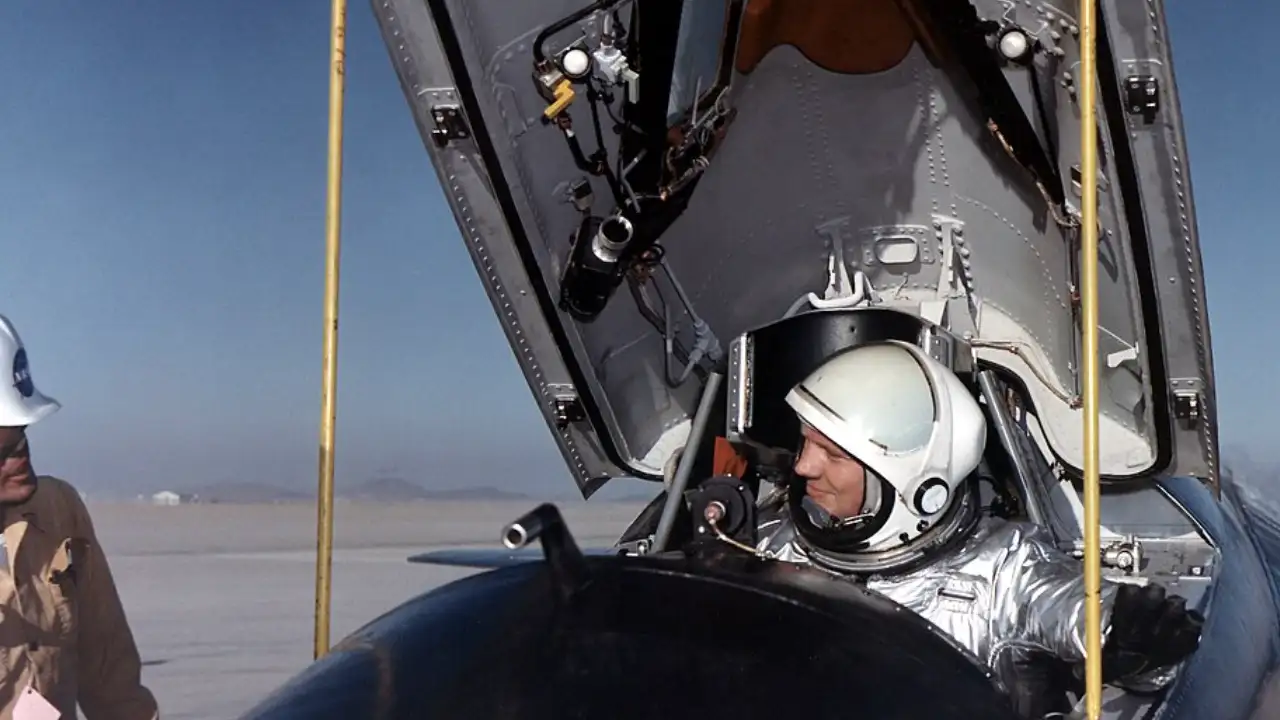
The 12-minute, 28.7-second flight was the longest to date and showed how critical pilot judgment was when experimental aircraft encountered conditions that the automatic flight-control system and flight-planning calculations could not foresee. A 2025 study published in Aerospace analysed the flight and suggested a technical explanation using more up-to-date calculations. As noted by NASA, the flight eventually moved towards the Rogers Dry Lake, the actual landing site next to the Edwards Air Force Base. Armstrong landed it on the southern part of Rogers Dry Lake instead of its designated point. The researchers reconstructed the flight to examine how aerodynamic instability and the aircraft’s finite response time may have contributed to the unexpected path.