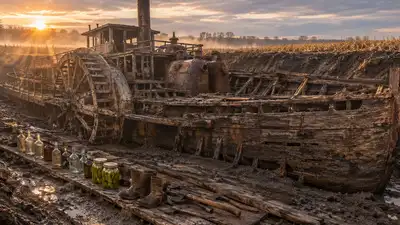
Buried 45 feet down and more than half a mile from the river, the steamboat lay under farmland until its cargo was recovered (representative image). Image Credits: ChatGPT
David Hawley used an old newspaper from 1856 which placed the sinking about a mile below the town of Parkville, Missouri. The team lowered the water table with 20 irrigation wells pumping 20,000 gallons a minute, day and night. There were rumours that the Arabia carried 400 barrels of bourbon whisky, but what was recovered from the mud was quite different.
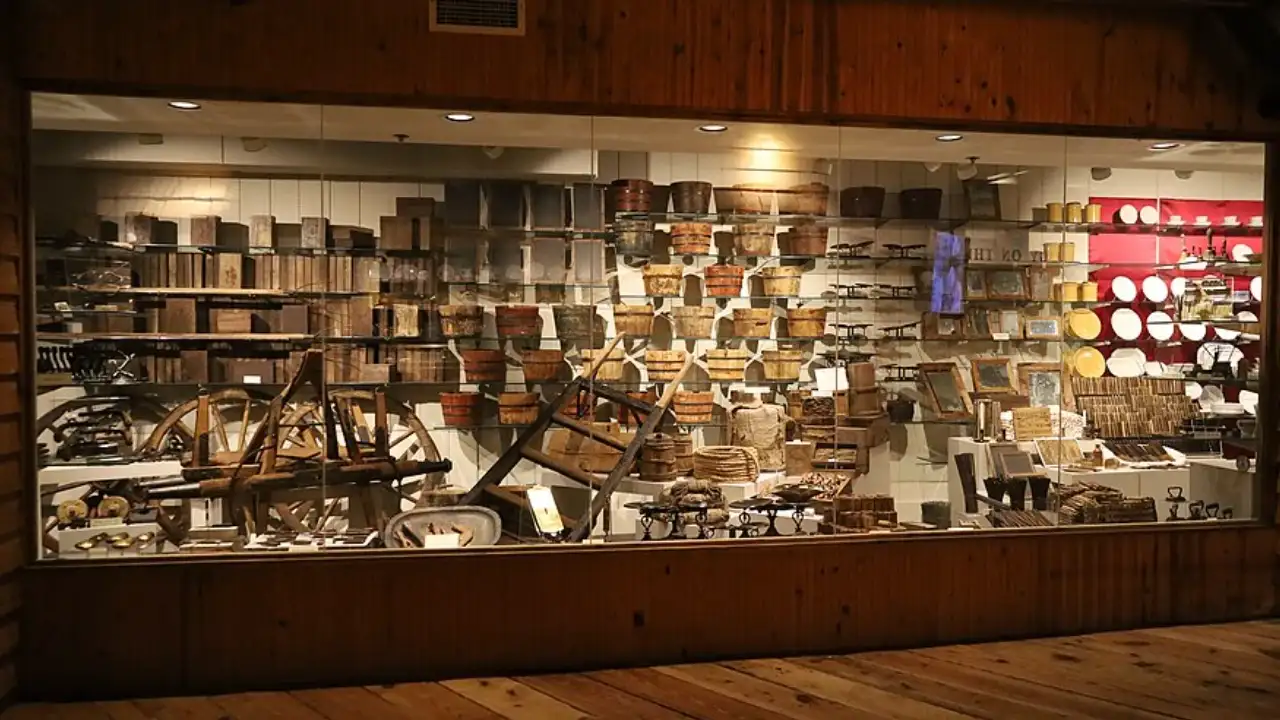
He said the pace was faster than most archaeologists would like, so the team had to balance speed with careful records. The first item found was a small rubber shoe marked “Goodyear” with an 1849 patent date. The items recovered included Asian silk, English dishes, South American tobacco, and French perfume, according to David Hawley. Among other things listed by the museum, which keeps the collection, are tools, weapons and clothing, as well as preserved fruits and green sweet pickles, which it says were still edible when they were dug up.
The team wasn’t a group of trained explorers. They were three refrigeration repairmen, a restaurant owner, and a man who dug sewer ditches. Then he traced an old map onto a modern map to follow the path of a once-flowing river. Finally, he walked the cornrows with a metal detector and found the boilers and engines. Digging the boat out was basically a fight against water. Greg Hawley recalled that the whole excavation took four and a half months. These details come from the brothers’ own account.
The steamboat, Arabia, sank in the Missouri River near Kansas City in 1856, and its cargo remained hidden for 132 years. In a 2004 interview with the National Endowment for the Humanities , brothers David and Greg Hawley described how that team dug it up in 1988, long after the river had shifted away. David Hawley said that this left the wreck on dry land about half a mile from the river and buried 45 feet deep under a cornfield in Kansas.
Because of snags, greg Hawley estimated that some 400 boats had sunk in the river, and about 70% of those were said to have sunk. What would you expect to find under a farmer’s cornfield? Soil, stones, possibly an old tool. Gradually, the Arabia was covered with sediment and the river slowly changed its course. The brothers started out as treasure hunters, but that changed when they opened passengers’ luggage. Greg Hawley described the box containing patched trousers, worn boots, two jugs and a small coin purse. From these items, the team pictured a poor traveller who still chose to head west in hopes of a better life. Instead of selling, the brothers decided to keep the cargo together, which now lives in the Arabia Steamboat Museum in Kansas City, Missouri.
A group of family and friends dug up a steamboat from an era even before the American Civil War.