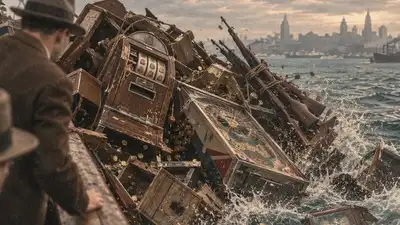
In the 1930s, New York’s seized gambling machines didn’t end up in a warehouse; they ended up in the water (representative image). Image Credits: ChatGPT
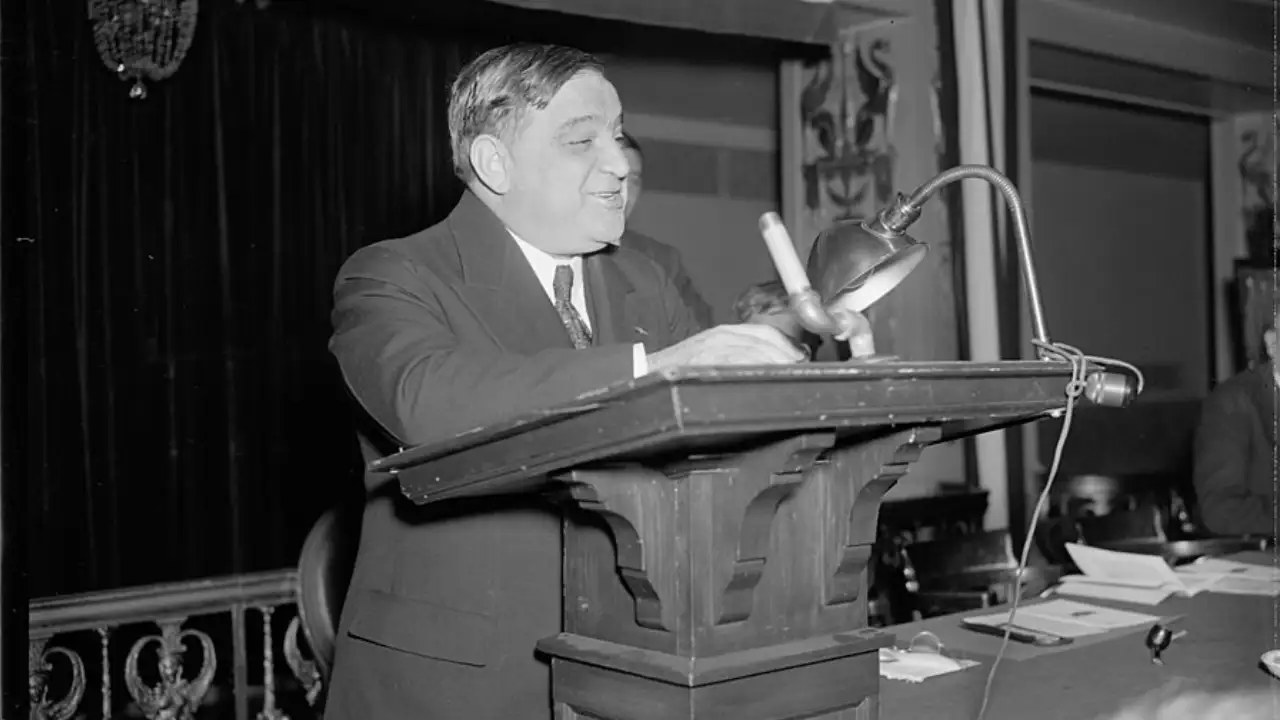
David Blankenhorn, in a 2013 report for the Institute for American Values, wrote that Mayor Fiorello LaGuardia ordered police to seize slot machines in January 1934, just days after taking office. A walk around New York in January 1934 would have left you convinced that slot machines were everywhere. Blankenhorn estimated that there were 25,000 to 30,000 slot machines operating openly in the city in that month alone. A single nickel slot machine in the right spot was said to make up to $20 per day. New York City’s slot machines brought in an estimated $57 million in 1932. The Supreme Court said in May 1934 the new law changed the situation, overturned the appeals court ruling and sent it back to be dismissed. October 1934 stands out particularly. The report states that the mayor, his police and fire commissioners, and a group of labourers loaded 1,155 machines confiscated by the city government onto a barge at Pier A. In 1936, another 1,300 machines were smashed and thrown overboard into the Sound. The Brooklyn Public Library’s digital collection holds a photograph dated 1937. The picture’s caption describes the tug Manhattan, loaded with slot machines, pinball games and guns of all sorts, leaving Pier 4 at the Battery to dump police seized goods into the ocean.
The caption says ocean and doesn’t name the mayor either. Imagine a tugboat leaving New York filled with guns and slot machines, on its way to dump the lot at sea. It might sound like something straight out of a movie, but it really did happen. His crackdown quickly turned into a very public campaign. These machines could be found in small shops, diners, candy stores, and cigar shops across the five boroughs. This was a big business. He adds that the police took no action to stop the activity but actually encouraged it, and any shop owner complaining was likely to see his property damaged. LaGuardia would not back down. He took over a police station for a day to hear a case of slot machines himself. The city took the fight all the way to the US Supreme Court, but the justices never ruled on the machines themselves. New York passed a new state law that made slot machines a misdemeanor. They set sail for Long Island Sound, where LaGuardia used a sledgehammer to destroy several of these machines. These destroyed machines were then sunk into the Sound. The dumping didn’t stop there.
This hints at a trip separate from the earlier dumps.