
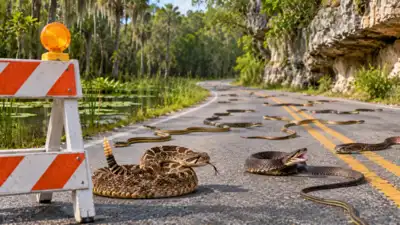
Image AI generated
More than 23 species of snakes have been recorded in the area, according to biologist Mark Vukovich, as reported by 5Chicago. Biologist Rich Siegel reported that almost one in four snakes he collected for a study had been killed by traffic, according to National Geographic. The seasonal movement takes place as temperatures change. In spring, reptiles emerge from hibernation as the weather becomes warmer and travel towards the swamp, where they can feed, mate and rest. When autumn arrives and temperatures begin to fall, they return towards the limestone cliffs, which provide places to shelter from colder conditions. The scale of the threat has also been documented in research. The seasonal road closure helps reduce this risk by removing vehicle traffic during the migration periods. The location is also home to several other reptiles and amphibians that use the route during their seasonal movements. Three of the snake species found in the area are venomous: the northern cottonmouth (Agkistrodon piscivorus), the copperhead (Agkistrodon contortrix) and the timber rattlesnake (Crotalus horridus). Other species that visitors may encounter include southern leopard frogs, different types of toads and salamanders, as well as turtles and lizards.
The closure dates were established following an earlier conservation measure introduced in 1972. Initially, the road was closed for three weeks during both the spring and autumn migration periods. However, biologist and herpetologist Scott Ballard, who worked with the Illinois Department of Natural Resources, found that the migration lasted longer than the original closure period. The Forest Service subsequently extended the restrictions to cover the longer migration.