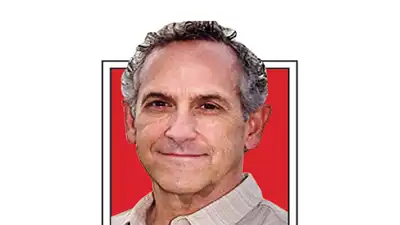
Marine biologist Mario Tamburri is Professor at the Center for Environmental Science, the University of Maryland. Speaking with Srijana Mitra Das at Times Evoke , he discusses his new co-authored research highlighting an overlooked — and alarming — environmental fallout of the US-Iran war:
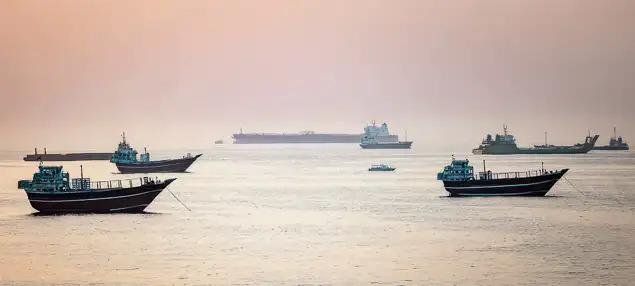
Over the past 25 years, I’ve been working on finding solutions and innovations for large environmental problems — a lot of that centres on invasive species that get moved around the world by ships, either in their ballast water or through biofouling that happens on a ship’s side. What is the core of your research? The focus of my research is on thechemical ecology of marine organisms, how they use the senses of smell and taste to find places to settle, seek mates and food, etc. We’re seeing shipping across the Strait of Hormuz being routinely disrupted now — why do you describe this as being potentially a ‘super-spreader bio-invasion’ scenario? In many ways, this is the worst-case scenario for biofouling on ships spreading non-native species around the world. You have large clusters of very big ships that are staying idle there for long periods of time. This is also happening at the worst possible moment, during the growing and reproductive seasons of many aquatic organisms. Ships don’t typically sit around that long — when they are in port, it’s usually a day or two of cargoope-rations, and then, they move on. However, when they stay in one place for long periods of time, as in this case, where some ships have been waiting even over months, you get extensive growth of marine life upon boats.
They may think they’ll do cleaning at the next port of call — but then, they must do cleaning with capture, so that they’re not knocking off organisms that could be invaders. In the Gulf region, where ships have been laid up for weeks, if not months now, in-water cleaning services are available but they don’t have the needed capacity. They weren’t built in a way to address such an unforeseen closure event where thousands of vessels need cleaning all at once before they leave. Also, under the circumstances, given how crews have been trapped for months, they may have to get out of there as soon as it becomes possible. What is the way forward for technologies to help protect oceanic environments? I’m always encouraged by so manyinnovations we’re seeing, from in-water cleaning technologies involving robotics, etc. The challenge is doing these in an environmentally sustainable way,making sure your prevention of invasive species doesn’t end up causing another environmental issue we hadn’t thought of. So, we have this balance to negotiate where we want to solve one problem and we’ve got good ideas — but that shouldn’t cause another problem. I’ve found a real way forward emerges when we undertake coordinated efforts between the private sector, from ship owners and transport operators to technology developers, and the regulatory environment, local resource managers, international agencies like the IMO and scientists — when we think about these issues together, we’ve often found truly sustainable solutions.Views expressed are personal. Catch the latest World News and Live updates. Download the TOI app.
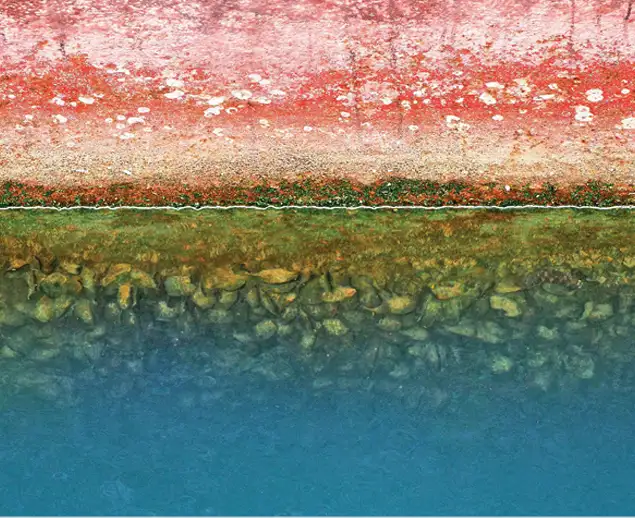
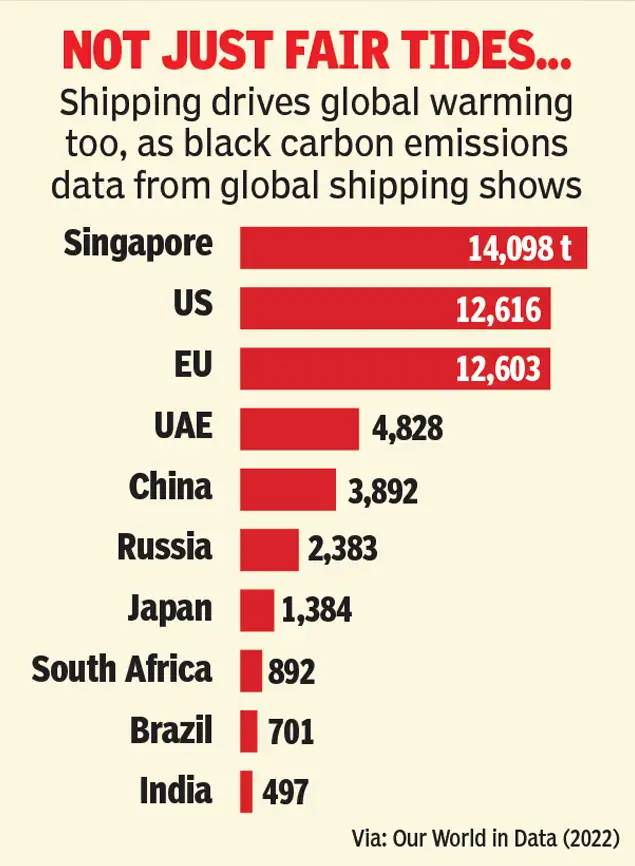
Traditionally, divers with scrapers wiped off material growing on the sides of ships and boats — now, there’s been evolution over the last 25 years, moving towards more automated cleaning systems that are either remotely operated or fully autonomous which vacuum-clean a ship. Because it’s a big maritime hub and a lot of ships go there, we also discuss Singapore here. Because the environments being similar and routes relatively short, fouling organisms can certainly survive and spread, those places are of the highest concern.
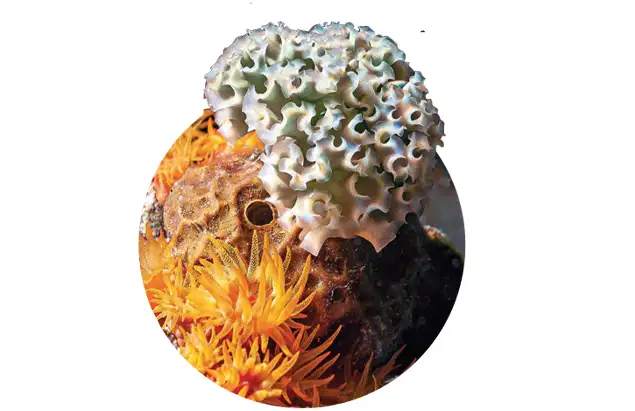
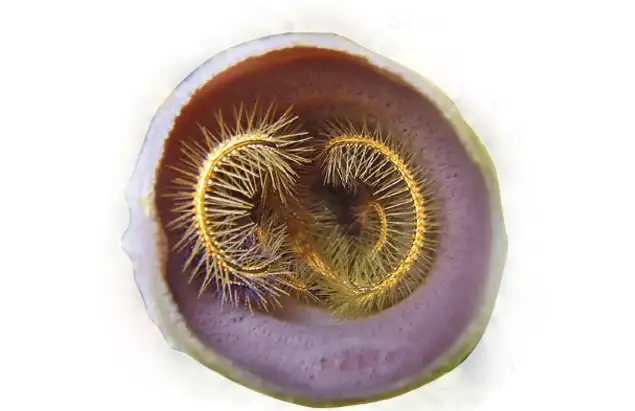
Organisms coming from high-salt environments going into fresh water won’t be able to survive there. So, when they do finally move, they will be carrying large amounts of species to new regions. We think of terrestrial birds and animals as belonging to one place — which marine species are specific to the Strait of Hormuz and could be transported out in this way? There’s a whole suite of organisms. It starts with microbes like bacteria, some possibly being pathogens. When you put any substrate, like a ship’s hull, in natural waters, it first gets colonised by such microbes, including bacteria, fungi and single-celled algae. Then, a biofilm gets established and subsequently, largerorganisms also colonise the area — so, you get macroalgae like seaweeds and seagrasses, invertebrates, barnacles, bivalves, mussels, sponges, corals, etc. Each habitat around the world has its native species in those categories but they’re limited in terms of how they can move around distances. However, if they settle on parts of a ship, they can be transported to a new region, and when they get to that port, if it has similar environmental conditions, those organisms might fall off or reproduce and establish non-native invasive species there. Research from different habitats shows us how such non-natives have enormous impacts — they can directly damage biodiversity in areas they invade, cause local extinctions of species by displacingnative varieties and affect fisheries, even leading to their collapse in many cases. Fouling organisms can also impact the cooling systems of power plants, resulting in enormous economic damage. One example where I work locally is in the United States Chesapeake Bay. A rope grass hydroid — it looks like a plant but it’s actually an animal — came here on ships and spread through the East Coast, including across the Chesapeake Bay. It’s been having huge impacts, fouling power plant coolingsystems, which then costsmillions of dollars annually for individual plants to remove these organisms. This is a large problem. Your research now indicates India could at very high risk from such biofouling via the Strait of Hormuz — why so? Absolute risk is hard todetermine but we can look at relative risk and make good scientific predictions on which locations are most susceptible. On the one end, some locations are at very low risk here. For example, if a ship left the Strait of Hormuz after waiting there for months and went through the Panama Canal, where there’s fresh water, and then to a port with low salinitywaters, like the Great Lakes in theUnited States and Canada, the risk of invasions will be low. The high-risk environments now are places that are short voyages away — like India — and have relatively similarenvironments along the route. That means warm water that is high saline, which is found across a lot of Asia. There are many locations in Indonesia, Japan, South Korea and China that have very similar conditions and are connected via relatively short routes from the Gulf. So, is there then enormous diversity of life even within a few thousand kilometers of the sea? Yes. There are different ecozones around the world with unique life forms and communities of marine organisms. Natural barriers, such as ocean currents, prevent these from spreading between regions — but shipping breaks down those boundaries. Ships transfer species where they would normally not be able to go. for example, which have similar environmental characteristics to the Gulf, the native organisms of the Gulf region and the Southeast Asian zones never mix naturally — human activities break down those barriers While there are many places in Southeast Asia. Global shipping is a behemoth now — what can be done to prevent such breaches? There are regulations to minimise these risks, evolving regionally, locally and internationally, in particular, for biofouling through the International Maritime Organization (IMO). These try to ensure ships are relatively biofouling-free, so they present lower risks when they move. To meet these requirements, the shipping industry paints ships with coatings typically containing biocides — these are like copper compounds that prevent organisms from growing as they’re toxic to them. However, the coatings are not perfect here — they work effectively when the ship is moving or has a normal pattern of sail, such as being in port for a day or two and then leaving. These don’t work well when ships sit around for extended durations, as is happening in the Gulf now. Another innovation is in-water cleaning. Importantly, these are all strategies the shipping industry itself backs. When ships are heavily fouled, they have more drag through the water as they move. That means they have to burn more fuel, which is expensive, to keep up their speed. It also means more exhaust emissions, which is damaging for the atmosphere. So, ships are eager for such innovative technologies that help them stay clean. One key point here is, if you’re cleaning a heavily fouled ship with all those big organisms, it’s crucial to try to capture the material or debris that comes off. You don’t want to knock live organisms off into an environment where they then become invaders. Alongside, you don’t want to knock off the coating material with biocides in it, which can also be harmful to the environment. So, these are helpful solutions but we’re still working on them, looking at both the regulatory and technological aspects.