
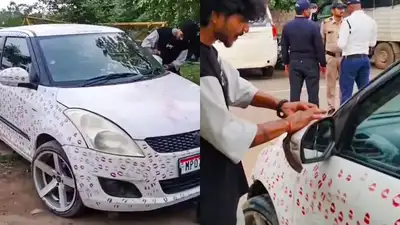
A car in Gwalior covered with around 3,400 lipstick kiss marks, an unusual modification that led to a Rs 5,500 fine and renewed focus on vehicle modification laws in India
Section 52 of MV Act bars alterations that make a vehicle’s particulars differ from those specified by the manufacturer and recorded in the RC. Traffic police also challan vehicles with vinyl graphics, large stickers covering around 30–60% of the body and other unauthorised modifications. Other common violations include tinted or sun-control films, defective or non-standard number plates and modifications that can obstruct visibility or distract other road users, saidDinesh Kumar Gupta, Additional CP Traffic Section 52 bars alterations that change a vehicle’s particulars from those recorded by the manufacturer, but the law does not specify how much of a vehicle can be covered by a different colour or graphic. RTO permission is required for permitted alterations, though private owners rarely seek it, said Anil Chikhara, former Delhi transport commissioner Police in Gwalior recently seized a car covered in 3,400 lipstick marks allegedly left by the owner’s girlfriend as part of a social media stunt.
Use of designations like ‘Police’, ‘Army’, ‘Press’, or fake govt logos on private vehicles is rampant While owners may view a sticker or wrap as a cosmetic change, traffic police assess modifications in terms of vehicle identity, visibility and road safety. Officials say vehicles carrying large banners or other forms of visual defacement, including those spotted around Delhi University, are also challaned. modifications that obstruct visibility, alter the vehicle’s identity or distract the driver or other road users can pose a safety risk and invite action While not every cosmetic change is a violation. The RC clearly records whether a vehicle is single-tone or dual-tone. So, if a black car is wrapped to appear black and red, it can be treated as a violation. Similarly, an orange-and-black car should have both colours reflected in the RC.