
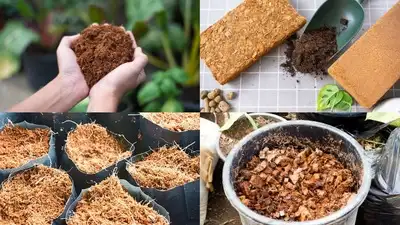
Because it is lightweight, easy to handle and useful in a wide range of gardening tasks, cocopeat has become a favourite among home gardeners. Made from the fibrous material found between the hard shell and outer husk of coconuts, cocopeat is commonly used as a growing medium and soil amendment. It can hold significant amounts of moisture while helping improve soil structure, making it especially useful for container gardens, seed starting and balcony plants. However, cocopeat is not a complete replacement for soil or fertiliser. Here are five practical ways gardeners can use it effectively.
Cocopeat is popular among gardeners due to its fine texture. There are some garden soils which are prone to compaction and hardening. This prevents the roots from spreading and the water from passing through the soil. Using cocopeat can solve this problem, as it adds lightness to the soil. Moreover, this gardening material is used in preparing home-made potting mixes. You should combine it with soil, compost, and other suitable materials instead of substituting it for all components of your mix. It can help tiny roots and sprouting seeds to develop properly as it is less dense than the garden soil.
Plants grown in pots can dry out very quickly, especially in the warm season. Using cocopeat as one of the components of your potting mix can help to increase the period between waterings, as it helps to retain the moisture for a longer time. This material may be very useful for balcony gardeners whose pots experience constant exposure to sun and warmth. Nevertheless, you will have to check the soil before watering once again as cocopeat holds much water.
The person who has tried to carry a pot filled with garden soil will be able to appreciate the benefit provided by cocopeat, as it is significantly lighter than garden soil. If you are using hanging baskets and other pots which should be moved from time to time, then you can combine cocopeat with the garden soil and other materials in order to obtain a lighter mix.
Pingback: If you want to multiply plants naturally at home, here are some plants that are worth