PC: AI Generated
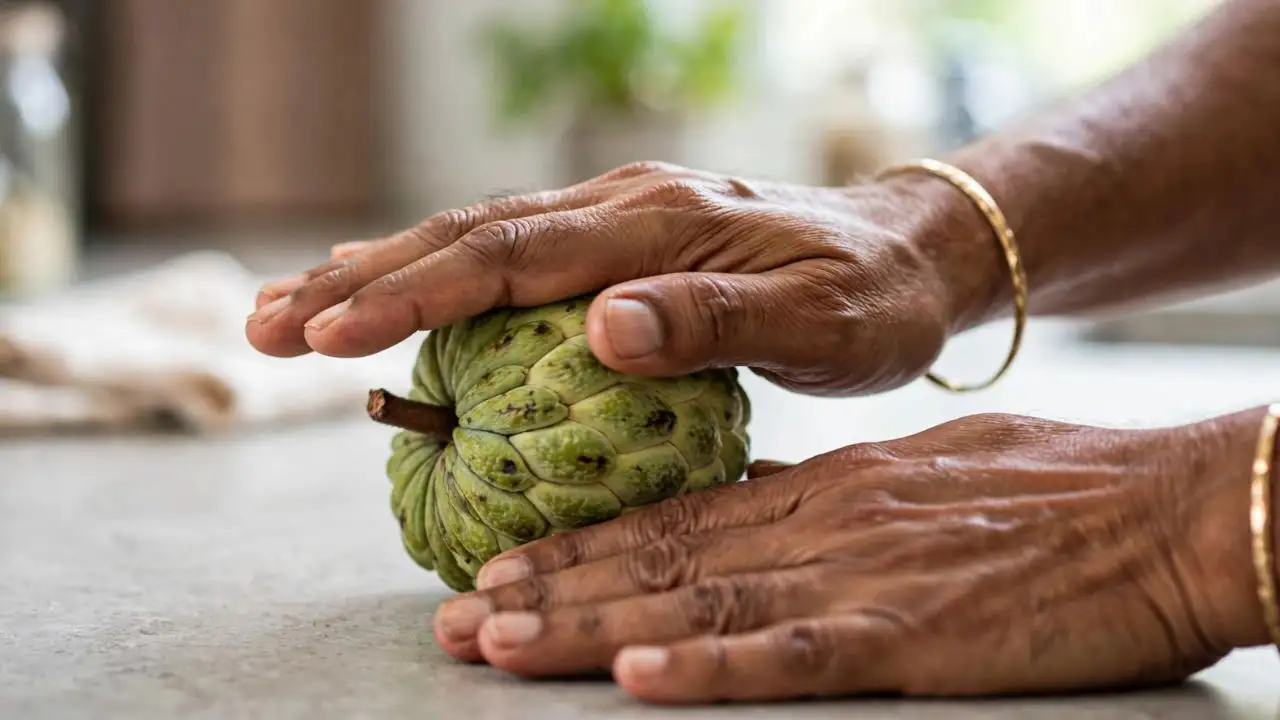
Roll the whole fruit before cutting
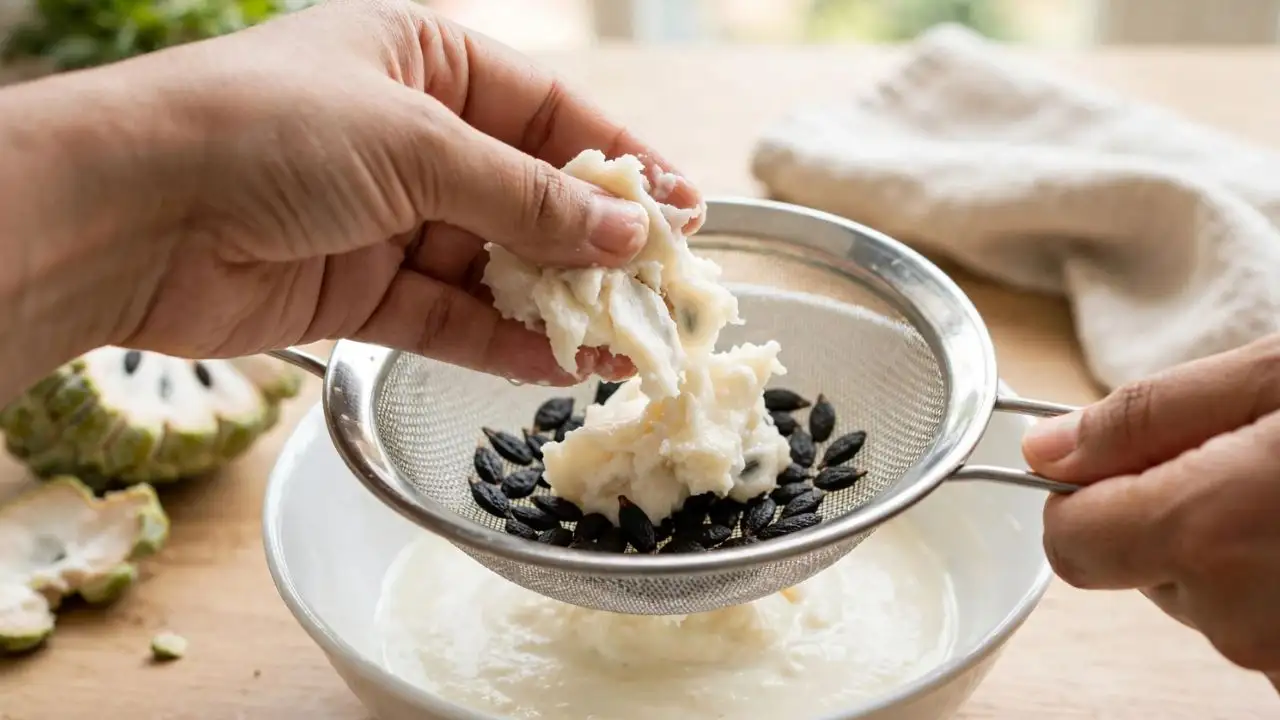
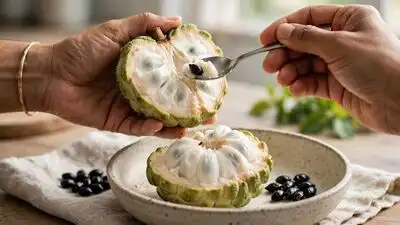
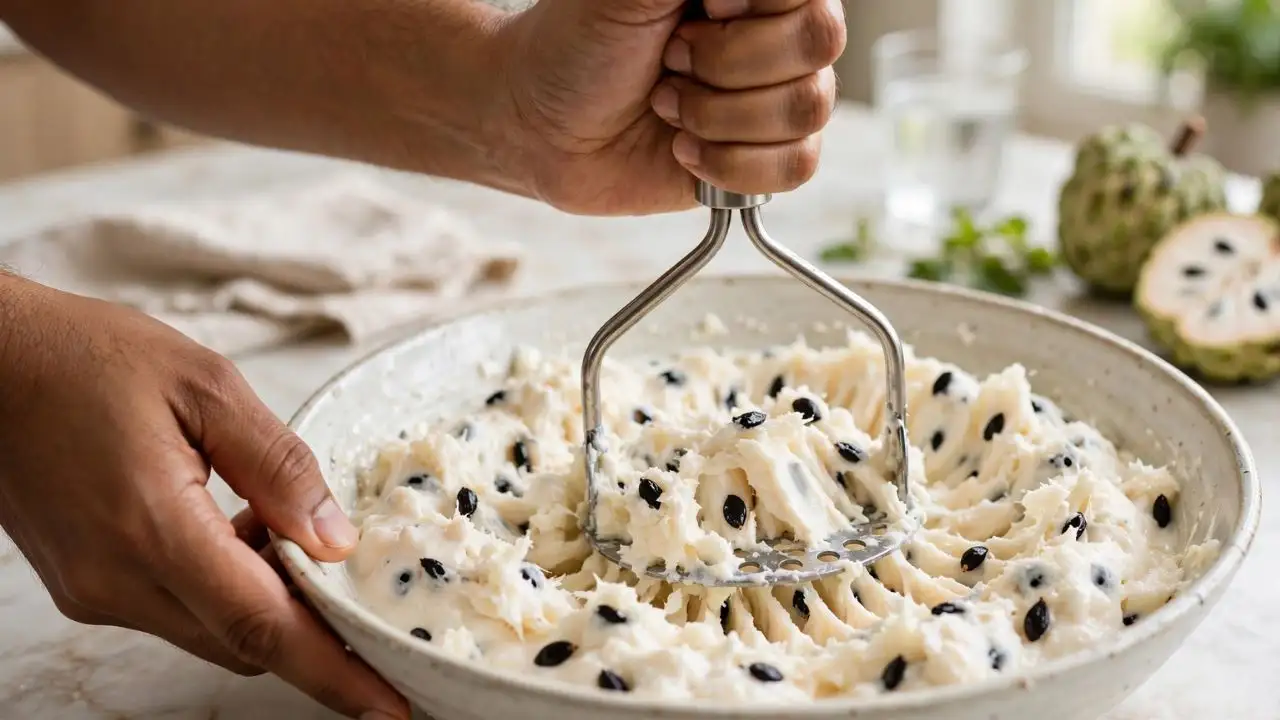
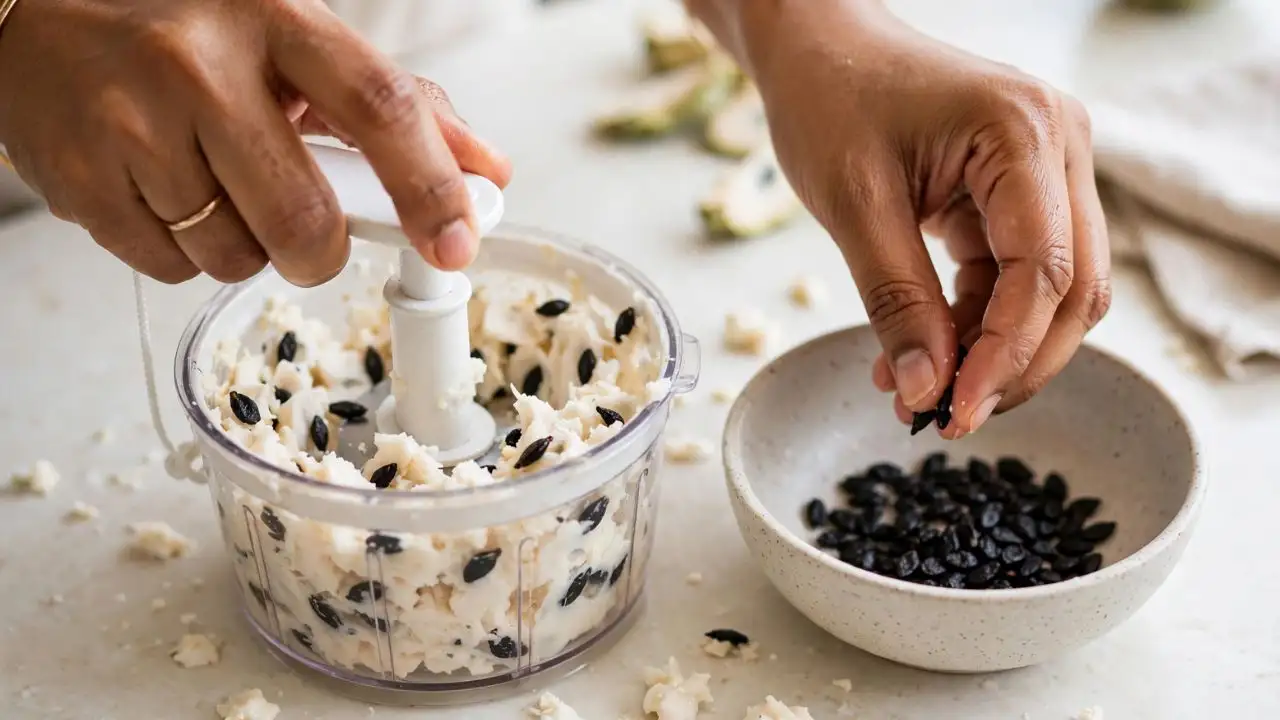
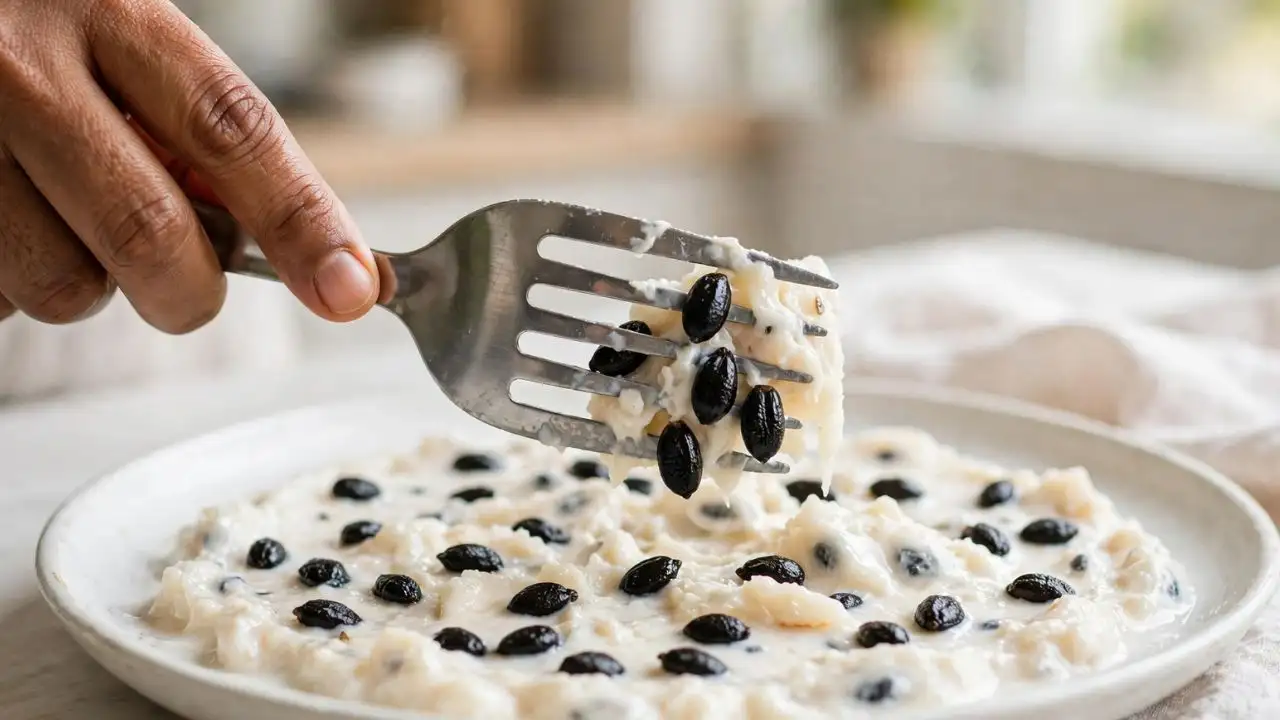
PC: AI Generated Place the scooped sitaphal pulp in a food chopper and run it for 1–2 seconds at a time. Because it gives you enough space to move the masher without compressing the pulp too much, a wide bowl works better. Sitaphal has a soft, creamy texture that makes it one of the most enjoyable fruits to eat. However, its hard black seeds can make the process messy and time-consuming. Unlike fruits where the seeds can be removed in one quick cut, custard apple has seeds scattered throughout the soft pulp. Trying to pick them out one by one may take patience, especially when preparing the fruit for desserts, milkshakes, or ice cream. Fortunately, you do not have to remove every seed individually. A few simple kitchen methods can help separate the seeds from the pulp with much less effort. The right method depends on whether you want to eat the fruit immediately or need smooth pulp for a recipe. Here are some easy ways to remove sitaphal seeds while keeping as much of the creamy fruit as possible. Before opening a ripe sitaphal, place it on the kitchen counter and gently roll it under your palm. Use light pressure and move the fruit back and forth for a few seconds. This helps loosen the soft pulp inside the fruit. Cut the fruit and scoop the pulp into a bowl. This trick is useful when the pulp is sticking firmly to the seeds, and you want to loosen it before separation. PC: AI Generated A masher can be useful when you are working with several sitaphals at once. Place the scooped pulp in a wide bowl and press it gently with the masher. The soft flesh breaks apart while the larger seeds remain easy to spot. Remove the seeds after every few presses instead of mashing the pulp continuously. PC: AI generated A large ladle can act as a quick seed-separation tool for a small batch. Place a portion of the pulp inside the ladle and press it gently against the side of a bowl. The soft pulp passes through the openings while the larger seeds remain in the ladle. Remove the seeds and repeat with the remaining pulp. Use a ladle with openings that let the pulp through without allowing the seeds to slip out. Stop between each run and repeat a few times. This helps loosen the soft pulp from the hard seeds, making them easier to separate. Transfer the mixture to a bowl and pick out the seeds with a spoon or your fingers. Avoid running the chopper continuously as the hard seeds may break and leave small pieces in the pulp. PC: AI Generated A regular fork can help when you want to remove seeds without crushing the pulp. Spread the sitaphal pulp in a shallow plate or wide bowl. Gently run the fork through the pulp to catch and remove the exposed seeds. The technique works best when the pulp is spread into a thin layer. You can see the dark seeds more clearly and remove several at a time instead of searching through a deep bowl. PC: AI Generated
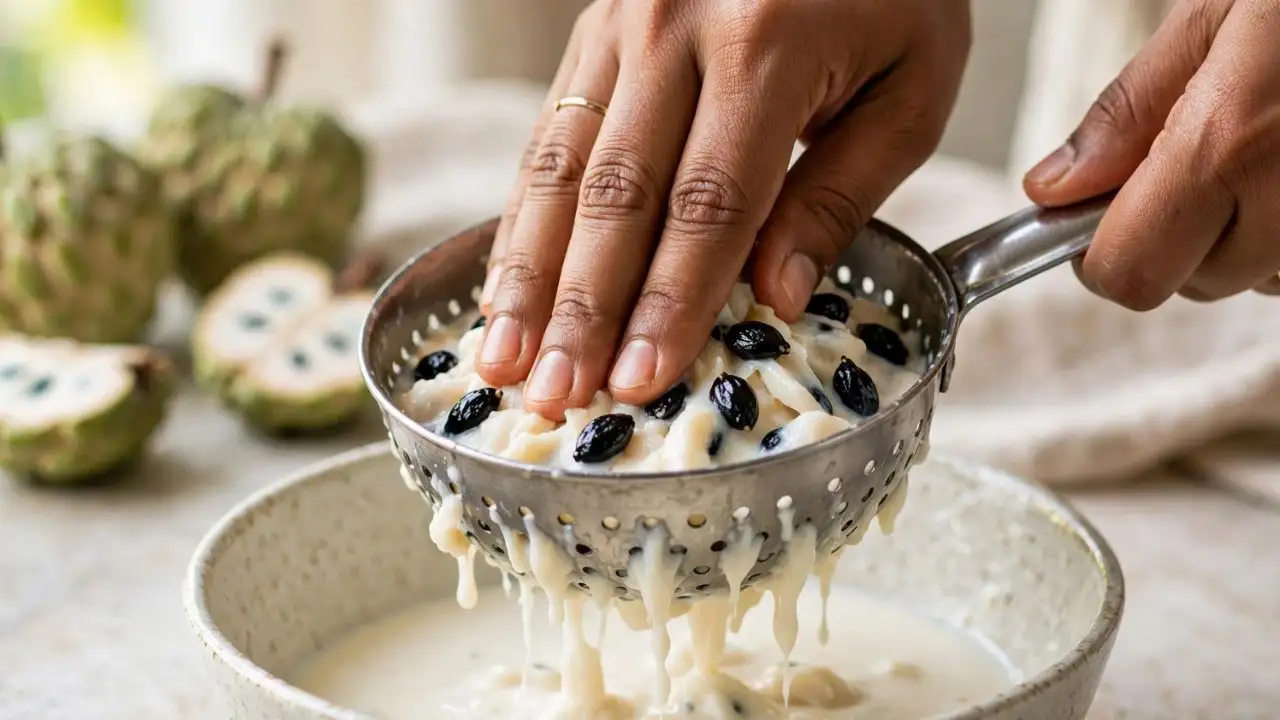
Because the pulp can quickly become sticky, for very soft fruit, gentle pressure is important. Instead of putting freshly scooped sitaphal straight into a sieve, loosen it first with your fingers or a spoon. Once the pulp has separated into smaller pieces, transfer it to a sieve and press it lightly. The preliminary loosening reduces the amount of force needed during straining. It also makes it easier to retain the soft pulp while keeping the seeds in the sieve. Work in small portions rather than pressing the entire batch at once. PC: AI Generated For one or two sitaphals, rolling the fruit first or using a fork can be quicker than setting up extra equipment. If you are preparing pulp for a dessert, a potato ricer or ladle can handle a larger quantity with less picking. For firmer ripe fruit, rolling it before cutting can help loosen the flesh. Whichever method you choose, work in small batches and remove the seeds before blending or processing the pulp further. Looking for trusted parenting advice? Follow TOI Parenting Circle on Instagram for expert guidance, relatable stories, and practical tips delivered every day.