
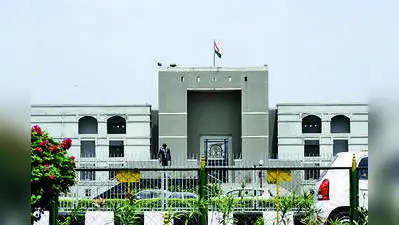
12-07-11. Gujarat High Court at Sola in Ahmedabad. Photo by Kevin Antao.
It was also argued that exhibiting her police statement violated evidentiary rules and constitutional protection, citing Section 161(2) CrPC and the bar on using police statements in court except for limited purposes. The CBI opposed the argument, contending the statement was exculpatory and admissible for corroboration under Section 157 of the Evidence Act. Justice M K Thakker discarded the prosecution’s contention and stated that statements recorded by police under Sections 161 and 162 of the Code of Criminal Procedure are not substantive evidence and can generally be used only to contradict their makers during cross-examination.
Ahmedabad: Gujarat High Court has quashed a CBI court’s decision to treat an accused woman’s statement made before police as evidence in connection with another related case, saying that the criminal procedure does not allow this.
In the present case, the petitioner’s statement, recorded as a witness in an FIR against her husband, was sought to be introduced through the investigating officer’s testimony in proceedings where she was an accused.
The court further said that such a statement cannot be used as an admission or confession against a person who subsequently becomes an accused in separate proceedings, regardless of whether its contents are inculpatory or exculpatory. HC then said, “Considering the above discussion, in the opinion of this court, order of exhibiting the statement of the petitioner cannot be sustained.”
Sinha moved HC against the CBI court’s decision through advocate Rahul Sharma, who relied on Article 20(3) of the Constitution that gives a right to an accused to remain silent, but in this case, the accused’s statement was being used as evidence against her. During deposition in the DA case, the investigator submitted his wife’s signed statement recorded during the search. The court marked the statement as an exhibit, thereby treating it as a piece of evidence.