
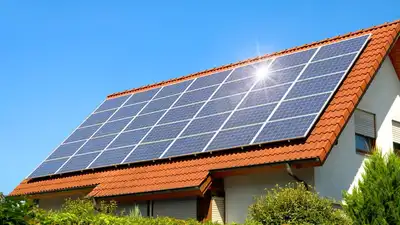
The legal change, which came into force on 27 August 2026, allows people in England, Scotland and Wales to buy portable solar panel kits rated up to 800 watts and plug them directly into their home electricity supply without hiring an electrician. The devices can provide up to 20 per cent of an average home’s electricity use and save households up to £110 a year, according to estimates from the Department for Energy Security and Net Zero. Households across Great Britain can now generate their own solar power using a standard three-pin wall socket, under new rules designed to cut energy bills and make clean electricity more accessible.
Under the new rules, changes to the Plugs and Sockets etc. (Safety) Regulations 1994 and the Electricity Safety, Quality and Continuity Regulations 2002 through Statutory Instrument 2026/848 mean households no longer need specialist wiring or professional installation for small solar systems. The systems can use up to two solar panels connected to an 800-watt micro-inverter. Government officials said British technical requirements are stricter than those used in some parts of continental Europe, where more than 500,000 balcony solar systems were connected in Germany during 2025. The system cuts power from the plug within 100 milliseconds if the device is unplugged or the local electricity supply fails.
Because of higher wholesale fuel costs linked to continuing geopolitical tensions around Iran, energy regulator Ofgem has announced a 4 per cent rise in the domestic energy price cap from October, mainly. Major retailers including Amazon, Currys, Argos and Wickes have announced plans to sell approved kits online and in their stores.
“From this summer, we are giving more families the ability to power their homes with clean homegrown energy,” said Miatta Fahnbulleh, the UK Energy Secretary, describing the technology as a simple and affordable way for households to manage their energy bills. The change comes as energy prices in Britain face fresh pressure. Until now, home solar in Great Britain was mostly an option for property owners who could afford to spend thousands of pounds on permanent rooftop systems. The new plug-in technology is aimed particularly at renters, flat owners and people living in smaller terraced homes who may not be able to install traditional solar panels. The inverter changes the direct current produced by the panels into alternating current that can be used through a normal household electricity circuit. The electricity is used inside the home and first offsets power being consumed by appliances that are always running, such as fridges, Wi-Fi routers, televisions and devices on standby. Green energy groups welcomed the change, calling it an important step towards wider access to small-scale renewable power. The approval of plug-in solar systems follows safety testing of micro-inverters and household wiring. All approved British kits must have automatic anti-islanding protection. This prevents the exposed plug from remaining live and creating a risk of electric shock. The rules also place limits on how the systems can be used. Each household can have only one plug-in solar device. It must be connected directly to a fixed wall socket and cannot be used with an extension lead, multi-way adaptor or cable reel. Battery storage systems are not included in the new rules and cannot currently be connected through the plug-in route. Fire safety rules also restrict where the panels can be installed. They cannot be mounted on timber balconies, high-pressure laminate cladding or external walls that are undergoing safety work. Mounting systems must be non-permanent and reversible, while tenants and other residents need written permission from their landlord or freeholder before fixing panels to external structures.