
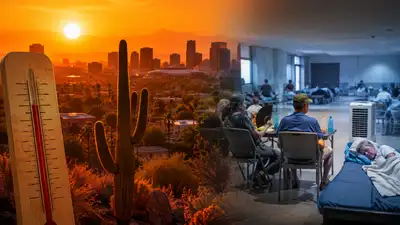
Image AI generated
Phoenix took a step in protecting residents from extreme desert heat in 2024, when it began providing overnight heat respite for people who could not rely on cooling centres after normal hours. By 2025, the city had built on that experience with a 24/7 Heat Respite and Navigation Centre at 20 W. Phoenix further expanded its heat-response system under its 2026 Heat Response Plan, approved by the Mayor and City Council in February 2026. The city continued operating the 24/7 Heat Respite and Navigation Centre at 20 W. Jackson Street and added a partnership with Justa Centre at 1001 W. Jefferson St., offering cooling centre hours from 3 pm to 9 pm. Phoenix also extended Cholla Library’s cooling hours until 9 pm Monday to Saturday and from noon to 9 pm on Sundays and holidays. The 2026 plan also placed greater emphasis on prevention and community outreach. Phoenix allocated $450,000 in FEMA Building Resilient Infrastructure and Communities grant funding to train public-facing city employees to connect residents with heat-related services. The measures followed a second consecutive year of declining heat-related deaths in Maricopa County, with confirmed deaths in 2025 about 30% lower than in 2024. Together, the changes showed how Phoenix was moving beyond daytime cooling centres towards a wider system of 24/7 respite, extended opening hours, transport, shelter connections and community outreach. The 2024 experience also showed that heat relief needed to be connected with other forms of support. Building on the 2024 experience, Phoenix opened a dedicated 24/7 Heat Respite and Navigation Centre at 20 W. Jackson Street for the 2025 heat season. The 24/7 centre was not intended to replace Phoenix’s wider network of cooling centres, libraries and hydration stations but to fill gaps when other services were unavailable. In 2025, the city also extended the hours of Cholla, Harmon and Yucca libraries until 10 pm, including Sundays and holidays. Together, these measures formed part of Phoenix’s broader heat strategy, which included 30 heat-response actions across eight strategies, covering public cooling spaces, drinking water, safer homes, worker protection, community outreach and coordination with external agencies.
In its updated approach, Phoenix planned not only to provide a cool indoor refuge but also water, navigation assistance and transport for people experiencing homelessness, allowing visitors to connect with wider city services.
This created “gaps in network availability, particularly in the late afternoon and evening hours, as well as on weekends”, according to the City of Phoenix’s 2025 Heat Response Plan. The move came as the city faced dangerous summer conditions, exposing a gap in a heat relief system that often operated only during daytime and business hours. Phoenix’s response was to keep cool spaces available beyond those limits, giving people somewhere to escape the heat during the late afternoon, evening and overnight. The first overnight locations, including Burton Barr Library and Senior Opportunities West Senior Centre, helped shape an approach to round-the-clock heat protection. Jackson Street, combining a cool refuge with water and services for people experiencing homelessness. The initiative became a key part of Phoenix’s heat strategy. Both sites provide cool indoor space, navigation services and transport to shelters or other services for people experiencing homelessness. A new referral partnership with UMOM New Day Centres was also planned to provide heat respite and links to services for families with minor children experiencing homelessness. The American Red Cross was set to conduct outreach in mobile-home and senior communities, while Park Stewards and Community Emergency Response Team volunteers would provide heat-safety information and cold water at Camelback Mountain, Piestewa Peak and South Mountain trailheads. The centre was chosen for its accessibility to people travelling on foot or by bicycle and its proximity to public transport, with Community Bridges and the Phoenix Police Department providing staffing and security. Phoenix described it as a continuation of the previous year’s effort, offering a cool indoor space and water overnight, along with navigation and transport resources for people experiencing homelessness.