
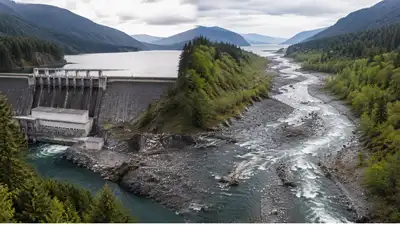
Image AI generated
In 1992, Congress passed an Act of law that few outside Washington State took much notice of at the time, yet it would go on to reshape one of the Pacific Northwest’s great rivers. It took until 2011 for demolition crews to finally arrive on site. Three years later, in 2014, the job was done, and for the first time in a hundred years the Elwha ran free from the mountains to the sea. The Act also required the Secretary to prepare a detailed report by January 1994 examining the costs, alternatives and feasibility of removal, including, according to the Act, “the timetable after conveyance for removal of the dams and the plans for removal and disposal of sediment, debris, and other materials. Provision was likewise made for the Lower Elwha Klallam Tribe, with Section 7 authorising up to $4,000,000 for the purchase of land held in trust for the tribe’s, as per the Act, “housing, economic development, and moorage for the Tribal commercial fishing fleet. Funding, environmental review and engineering preparation for removing dams of this size, the largest dam removal project in American history at the time, meant that construction crews did not begin dismantling the Glines Canyon and Elwha Dams until 2011.
The federal government was to buy up two hydroelectric dams that had blocked salmon from reaching their spawning grounds for the best part of a century, and to tear them down once and for all, according to the Elwha River Ecosystem and Fisheries Restoration Act. The Secretary of the Interior was authorised “to acquire the Elwha and Glines Canyon Projects, and all rights of the owner and local industrial consumer therein, subject to the appropriation of funds therefor,” but only once it had been established that dam removal was genuinely necessary for full ecological restoration, according to Section 3 of the Act. Reportedly, Section 4 of the Act required the Elwha River dam removal plan to protect local water supplies, “protection of the existing quality and availability of water from the Elwha River for municipal and industrial uses from possible adverse impacts of dam removal,” with the cost of any necessary water treatment works to be borne by the federal government rather than residents. Since the mill on Ediz Hook depended on electricity generated by the dams, Section 5 directed the Bonneville Power Administration to deliver so-called “project replacement power” once the dams were gone, ensuring the mill’s operations would not simply collapse once the turbines stopped turning. Annual licences for the dams were to remain in force “until the date the Secretary has acquired title to the Projects,” a condition that took many years to satisfy, according to the Act.
They had to balance the ecological case for removal against the needs of a local paper mill, a city water supply, and the Lower Elwha Klallam Tribe, all of whom depended on the river in different ways. The Act did not simply order the dams torn down overnight. Instead, it set out a careful legal and financial process for the federal government to acquire the two facilities before any demolition could begin. ” Lawmakers were careful to ensure that restoring the river would not come at the expense of the communities that had grown to rely on it. The Act also dealt with the question of power supply. ” Turning an Act of Congress into a working demolition project took decades rather than years.