
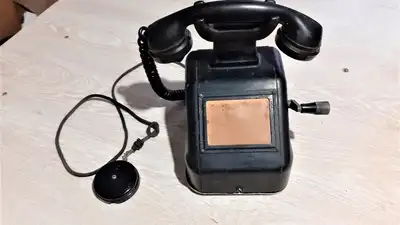
In 1990, 17 Idaho homes made one final phone call: How America’s last hand-cranked telephone system finally went silent.
Imagine making a phone call without a keypad, a screen, a contact list, or even a number to dial! You pick up a bulky black telephone, turn a small crank, and listen for a particular sequence of rings. Some days you’d call your neighbor with two short rings and a long one. If you wanted to talk to someone outside the canyon, you’d wait for the operator, who probably also knew if someone in your household was feeling under the weather or if the road washed out again last night.
Per Los Angeles Times, in 1990, 17 homes in Idaho lifted their phone receivers one last time, closing the book on an era that already felt like another world. The US Forest Service brought the first line back in 1931. It wasn’t until 1952, though, that a handful of residents took matters into their own hands (quite literally so) by buying the whole system from the North Fork Telephone Corporation for just a single dollar.
Because people respected the unwritten rules of brevity and privacy, knowing full well that anyone could quietly pick up and listen in, and that was part of the system: it only worked. America’s very last hand-cranked magneto telephone network went silent in the Salmon River Canyon that summer, but not before locals and neighbors crowded into the Shoup Store to mark the moment. Calling someone, you’d turn the crank and send a signal down the line. Each home had its own unique ring pattern, basically an early version of a ringtone, except everyone could hear the phone ring.
Operators were the unseen glue holding everything together. They connected calls, sure, but they also kept up with birthdays, reminded forgetful husbands to check in, and sometimes helped track down a missing pet or kid. If you needed help, like after a rockslide, a snowstorm, or a fall on a trail, it was the phone line, not just your next-door neighbor, that might save you. It’s hard to overstate how vital that party line was, especially with radio communication shaky in all those canyons and winter storms making roads impassable. With a flick of a switch, the future arrived. The crank was retired. The party line was silenced. And the last physical thread connecting these Idaho homesteads to America’s earliest telephone days finally snapped. A little bit of the past vanished, not quietly but with a crowd of friends, one last call, and a sense that progress comes with a price: the loss of closeness that only a shared line and a community’s trust can give.