
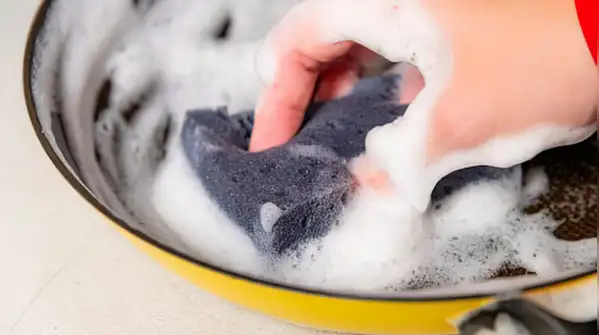
Few kitchen disasters are as annoying as a pan left on the stove a little too long. One minute you are cooking dinner; the next, there is a stubborn black layer welded to the bottom of your favourite pan. The good news? You do not need to attack it with a scrubber for an hour. The trick is to soften the burnt layer first, using heat, water and a few basic kitchen ingredients. Cleaning guides from cookware and home-care experts recommend soaking or simmering the residue before attempting any serious scrubbing. Scroll down to read more…
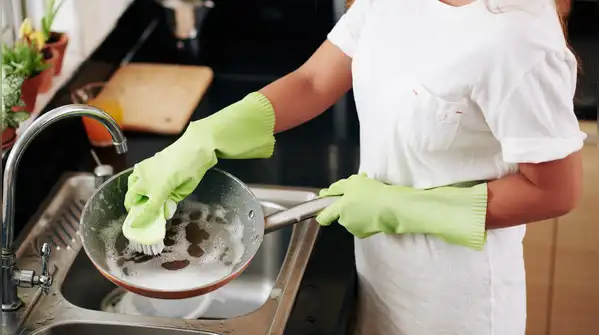
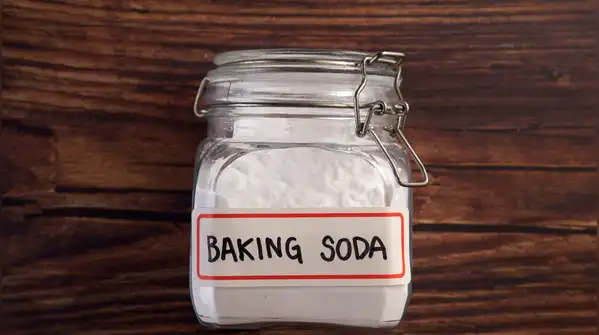
Place it back on the stove and let the water simmer for around 10–15 minutes. Leave it for 15–30 minutes. Before reaching for baking soda or vinegar, try the simplest method. Once the pan has cooled enough to handle safely, remove any loose pieces of burnt food with a wooden spoon or silicone spatula. Fill the pan with enough hot water to cover the burnt area and add a few drops of dishwashing liquid. Turn off the heat and allow it to cool slightly. The heat and water help soften the hardened food, making it much easier to lift with a non-abrasive sponge or brush. For lighter burns, this may be all you need. If a black layer is still firmly stuck to the bottom, baking soda can help.Sprinkle a generous layer over the affected area and add just enough water to make a thick paste. Baking soda works as a mild abrasive, helping loosen residue without requiring the kind of aggressive scrubbing that can scratch some cookware. Then use a soft sponge or nylon brush to gently work over the burnt areas. For particularly stubborn residue, you can add some water to the baking soda and bring the mixture to a gentle boil. Let it cool before cleaning. It is popular for a reason, but it is not magic. For a stainless-steel pan with stubborn burnt food, add equal parts water and white vinegar, enough to cover the affected area. Bring the mixture to a boil, then turn off the heat. After removing the liquid, sprinkle baking soda over the remaining residue. The two ingredients will fizz when they meet. Let the reaction settle before gently working on the loosened residue with a non-scratch sponge. The important point is that the heat and soaking do much of the heavy lifting. The fizz itself should not be treated as a miracle cleaning reaction that dissolves all burnt food instantly. This is where cleaning aggressively can do more harm than the original burn. Avoid steel wool, knives and harsh abrasive tools on non-stick or delicate coated cookware. Scratching or damaging the coating can permanently affect the pan. Always check the manufacturer’s care instructions before using vinegar, baking soda or a commercial cleaner. For non-stick cookware, start with warm water, dish soap and a soft sponge. Give the residue time to loosen rather than trying to force it off.
If you have no time to clean the pan immediately, do not let the burnt residue dry out completely. Fill the cooled pan with hot water and a little dish soap and leave it overnight. A long soak allows water to penetrate and soften the hardened food, so you can often remove it with considerably less effort the next morning. This is particularly useful when the burnt layer is thick but not completely carbonised.
The easiest method to remember
Cool the pan → remove loose food → cover the burn with hot water and dish soap → simmer → soak → gently wipe. If that fails, move on to baking soda or a suitable vinegar-and-water treatment. The real secret to cleaning a burnt pan is not scrubbing harder. It is giving the burnt layer enough time, heat and moisture to loosen first.
Pingback: If you have more herbs than you can realistically use within a few weeks, freezing is