

The SUV that ran over the boy
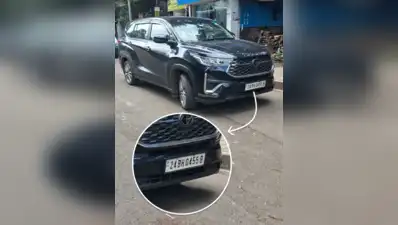
Ansh, a Class 3 student at Apostolic Carmel High School and Junior College, was killed while crossing the road near Jijamata Garden in Bandra West on Sunday Megha Rawal The SUV that ran over the boy Ansh, a Class 3 student at Apostolic Carmel High School and Junior College, was killed while crossing the road near Jijamata Garden in Bandra West on Sunday Megha Rawal The SUV that ran over the boy

Culpable homicide not amounting to murder remains a severe, non-bailable offence triable exclusively by a sessions court attracting a maximum sentence of 10 years. In contrast, causing death by negligence is generally triable by a magistrate, though its bail status varies by subsection: while general and medical negligence under Section 106(1) remains bailable, hit-and-run cases under Section 106(2) are non-bailable. Further, Section 106 deals with deaths caused by a rash or negligent act without intention or knowledge. Section 105 requires prosecution to prove the accused acted with knowledge that their actions were likely to cause death. On the high bar for Section 105, Thool compares ordinary negligence to firing a gun in the air, while invoking culpable homicide not amounting to murder would be closer to pointing a gun at someone’s head and pulling the trigger. “Application of Section 105 of BNS hinges on knowledge.
You Can Also Check: Gold Rate in Mumbai | Silver Rate in Mumbai | Bank Holidays in Mumbai | Public Holidays in Mumbai | Mumbai AQI | Weather in Mumbai | Petrol Price in Mumbai | Diesel Price in Mumbai | CNG Price in Mumbai | LPG Price in Mumbai Stay updated with the latest Mumbai news.
Mumbai: While fatal road crashes caused by driver distraction or error are typically treated as negligence cases, the use of Section 105 of BNS—usually reserved for extreme recklessness such as drunk driving—in the case of an 8-year-old boy being run over in Bandra by nutritionist Megha Rawal, has sparked conversation over whether speaking on a mobile phone while speeding amounts to legal “knowledge” that one is likely to cause death. Advocate Ashwin Thool says that threshold is difficult to meet in a case involving mobile phone distraction. “To invoke this section, the prosecution must prove the driver had conscious knowledge their actions would likely cause death,” he says. In drunk-driving cases, he adds, that standard is easier to establish as a person who consumes alcohol knows their faculties will be compromised while handling a “mechanical instrument large enough to cause death. ” According to Thool, talking on the phone does not necessarily carry the same presumption of impairment. he says, a phone call is a distraction, and applying the same standard of “knowledge” to phone talk is legally debatable While alcohol is a “sure-shot” way to lose control of one’s senses. Advocate Ayaz Khan says the prosecution’s case will depend heavily on forensic and circumstantial evidence. He says, “They will also have to determine the mobile call she was having, and if it was a handheld mobile call or if it is those calls where you get a direct connection on your car system. “The fact that she took the child to hospital may assist her in her defence… courts normally consider that act to be in favour of the accused,” Khan said. Thool too said the fact that the driver took the child to hospital is a mitigating factor. If you drive while distracted or speeding on a busy road, knowing the potential repercussions, that knowledge is attributed to you,” said advocate Pradip Gharat.
He also noted that many other factors, the speed limits and crowd on the road, whether the child crossed outside of a designated crossing, would be crucial. “They will have to examine skid marks to determine speed and then collect evidence on whether that speed was permissible. “It demonstrates good conduct and respect for human life—elements that courts have appreciated. When you are driving and speaking on a mobile phone, you are aware your attention will get diverted. Download the TOI App.