
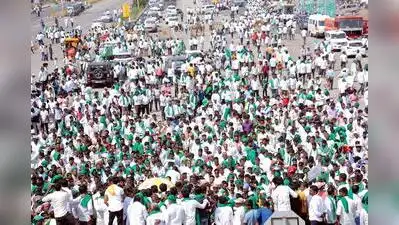
Sugarcane farmers blocked several national highways in North Karnataka for two days, forcing the govt to take notice
The Centre’s decision on Oct 14 to set up a committee to examine growers’ demands did not stop the march. Chief minister DK Shivakumar travelled to Kittur in Belagavi district on Oct 17 to appeal for an end to the agitation. The 1980 Nargund-Navalgund agitation against a betterment levy ended in police firing that killed two farmers; two policemen also died. The unrest helped end Congress governance in 1983 and brought Ramakrishna Hegde to the helm. July 21 is observed as Farmers’ Martyrs’ Day. In 1996, KRRS activists vandalised Bengaluru’s first KFC outlet to protest economic liberalisation.
Led by Karnataka Rajya Raitha Sangha and Hasiru Sene president Chunappa Pujeri, farmers began a padayatra towards Joshi’s Hubballi residence after blocking the Pune-Bengaluru national highway, disrupting traffic to neighbouring states for consecutive days. Maharashtra farmer leader Raju Shetti joined the protest. With the crushing season stalled, he wrote to PM Modi, arguing that the core demands required central govt intervention. Late-night talks with Joshi led to the protest’s suspension. Nargund helped fuel the rise of Karnataka Rajya Raitha Sangha under Prof MD Nanjundaswamy, uniting farmers across caste and region. Green-shawled activists organised statewide blockades, while Babagouda Patil took their cause to Parliament.
Nanjundaswamy’s death in 2004 and a dispute over a memorial trust split KRRS and ended mobilisation under one banner. Leaders including Kurubur Shanthakumar, Kodihalli Chandrashekar and Badagalapura Nagendra now lead local, issue-based agitations.