
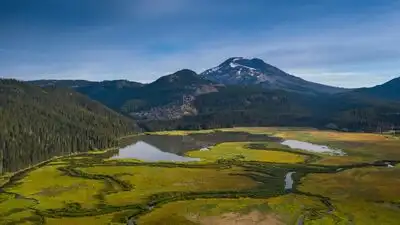
Oregon’s Cascade Range(Representative image by Canva)
By analysing temperature data from geothermal drill holes, a University of Oregon-led team estimated that at least 81 cubic kilometres of water are stored in the region’s subsurface, nearly three times the capacity of Lake Mead, the largest reservoir in the United States. The team’s calculations suggest that at least 81 cubic kilometres of water are stored in the volcanic rocks of the study area. To put that in perspective, Lake Mead, the massive reservoir formed by Hoover Dam on the Colorado River, has a full capacity of about 28 cubic kilometres.
The discovery, announced by the university , reshapes how researchers think about water storage in volcanic mountains and could have implications for everything from regional water budgets to volcanic hazard assessment.
In other words, the hidden aquifer beneath the Oregon Cascades could hold nearly three times as much water as the largest reservoir in the U.S.This does not mean there is an underground “lake” that could be tapped like a surface reservoir. Beneath the forested slopes of Oregon’s Cascade Range, scientists have uncovered a vast, hidden reservoir of water locked inside volcanic rock. A surprise hidden in old drill data The finding did not come from new drilling or expensive field campaigns, but from a fresh look at existing data. The team, led by University of Oregon geosciences professor Leif Karlstrom, focused on temperature measurements collected from geothermal exploration wells drilled decades ago across the Oregon Cascades. By modelling how heat should flow through dry volcanic rock and comparing it to the actual temperature logs, the scientists could infer where large volumes of water must be present.The result was a surprising picture of the subsurface: instead of mostly dry, fractured lava flows, the team found evidence for a regionally extensive, water-saturated zone stretching across a large portion of the Oregon Cascades. The water is dispersed through countless pores, fractures and vesicles (gas bubbles) in layers of lava flows, volcaniclastic deposits and other volcanic rocks. It is more like a giant, three-dimensional sponge than a single body of standing water. Many previous models assumed that a large fraction of water in volcanic mountains either drained rapidly through fractures or was stored primarily in shallow soils and alluvial valleys. The new results indicate that a much larger fraction is stored in the volcanic bedrock itself, with important implications for water movement through the landscape.
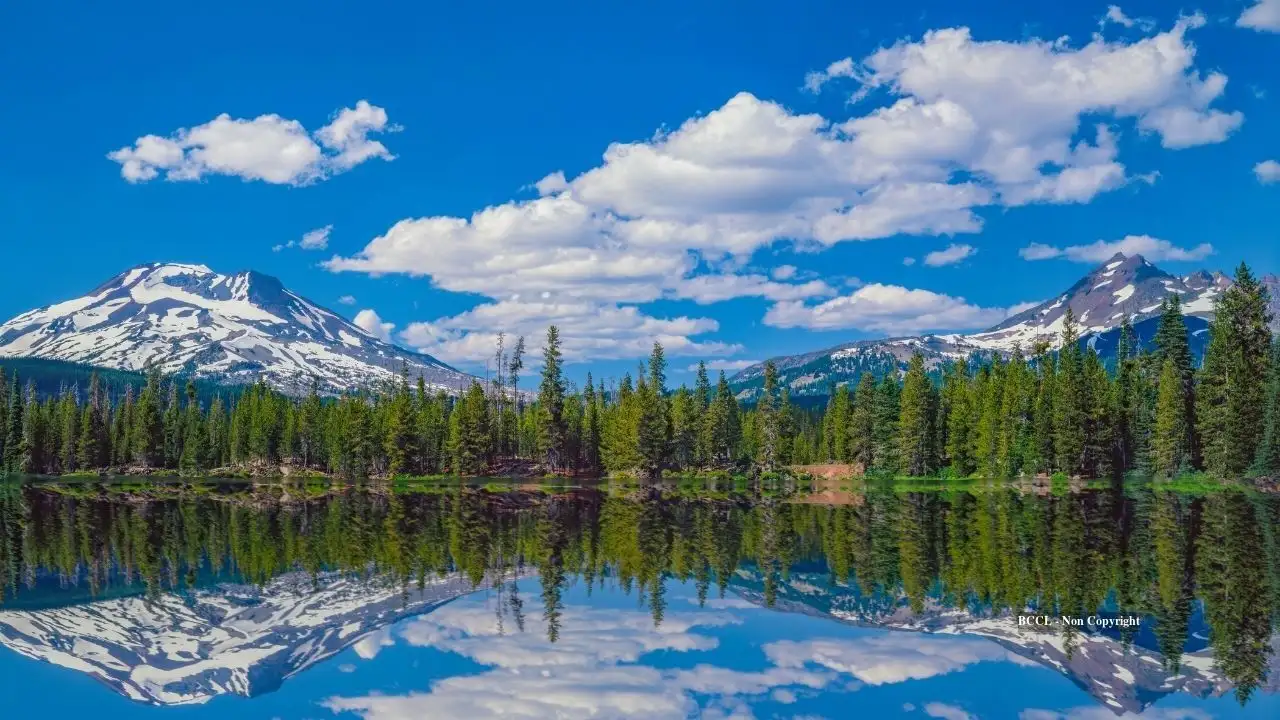
The discovery of 81 cubic kilometres of water beneath the Oregon Cascades is a reminder of how much remains unknown about Earth’s subsurface. it plays a crucial role in sustaining ecosystems, streams and potentially even geothermal resources While this water is not a direct source of drinking water or irrigation in the conventional sense. As scientists continue to probe these hidden reservoirs, the challenge will be to understand not just how much water is there, but how it moves, how it interacts with surface systems and how it might respond to a warming, changing climate.