
Nepal has shifted its focus from rescue to relief, rehabilitation and reconstruction
Prime Minister Balendra Shah announced the change in govt’s priorities after days dominated by frantic searches for survivors.
Govt is now focusing on rehabilitation while working to protect the lives of people in the affected areas and providing the necessary medical treatment and psychological counselling,” Shah said. Binoj Basnet, a retired senior army general who oversaw rescue operations during Nepal’s 2015 earthquake, said, “Looking at the nature of the disaster and the area which has been hit by the flood, as days go by there are less chances of human survivors.” The change in emphasis came as the possibility of live rescues diminished sharply outside a few hydropower sites.
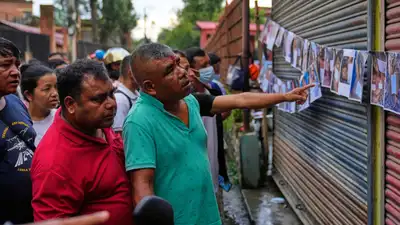
Nepal Police Wednesday put the toll at 1,127 dead and 4,858 missing. For Indian families, uncertainty continued: New Delhi’s last detailed missing-person update listed 275 nationals and 128 persons of Indian origin, or PIOs, as missing or uncontactable. India subsequently said 163 of its nationals had been rescued in Nepal, but did not issue a revised missing count. Across the border in Tibet, Chinese authorities raised the toll to 21 dead and 541 missing. The missing there included 49 Indians.
Because hundreds of Indians were caught on both sides of the Nepal-Tibet border when the flood struck, india’s role remained particularly significant.
Shah told parliament Wednesday that govt had mobilised security forces, helicopters, medical teams and relief supplies immediately after receiving information about the disaster. The Tibet figure was compiled separately and could overlap with India’s list of missing nationals. He also thanked India and China for their assistance, including technical support.