
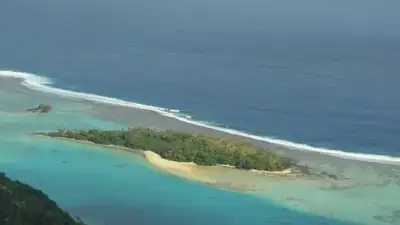
Mel Gibson bought a 5,411-acre Fijian island for $15 million: Inside Mago Island, with two lagoons, white-sand beaches and extraordinary privacy.
But Mel Gibson skipped the script entirely when he bought Mago Island: a massive, 5,411-acre volcanic island tucked into Fiji’s Lau Group. It’s hard to describe Mago without it sounding like an exaggerated travel brochure: cliffs rising up 200 meters, thick greenery framing beaches blindingly white, two turquoise lagoons, reefs, and long stretches of absolute isolation. When celebrities buy real estate, there’s usually a predictable routine: a Malibu mansion, a villa in the South of France, maybe a penthouse in New York. This wasn’t just about one-upping other stars. It was privacy you literally can’t measure unless you have your own postal code. Far removed from Los Angeles and surrounded by the waters of the South Pacific, Mago offered something even the most secluded Hollywood mansion could not: thousands of acres of land, beaches, lagoons, and almost complete isolation.
The history behind the picturesque island
But the real story is more complicated than a movie-star retreat. Mago’s postcard-perfect beauty sits atop a very heavy, very real history. Long before Gibson arrived, Indigenous Fijians called Mago home. In the 19th century, colonial-era business deals, some described as deeply unfair, others reportedly involving outright force, pushed their ancestors off the land. Decades later, the descendants of those families challenged the sale, protesting and talking about legal action soon after Gibson’s purchase made headlines. Fiji’s government responded that the deal was legitimate, as the island had become freehold land decades prior, and refused to intervene. Even without the Hollywood connection, Mago carries layers of history. It was once home to cotton fields and sugar production, a sugar mill humming into the late 1800s. In the years before Gibson, copra (dried coconut) was the main export. By the early 2000s, all that industry had faded; Mago was wild, remote, and largely empty, waiting for its next chapter.