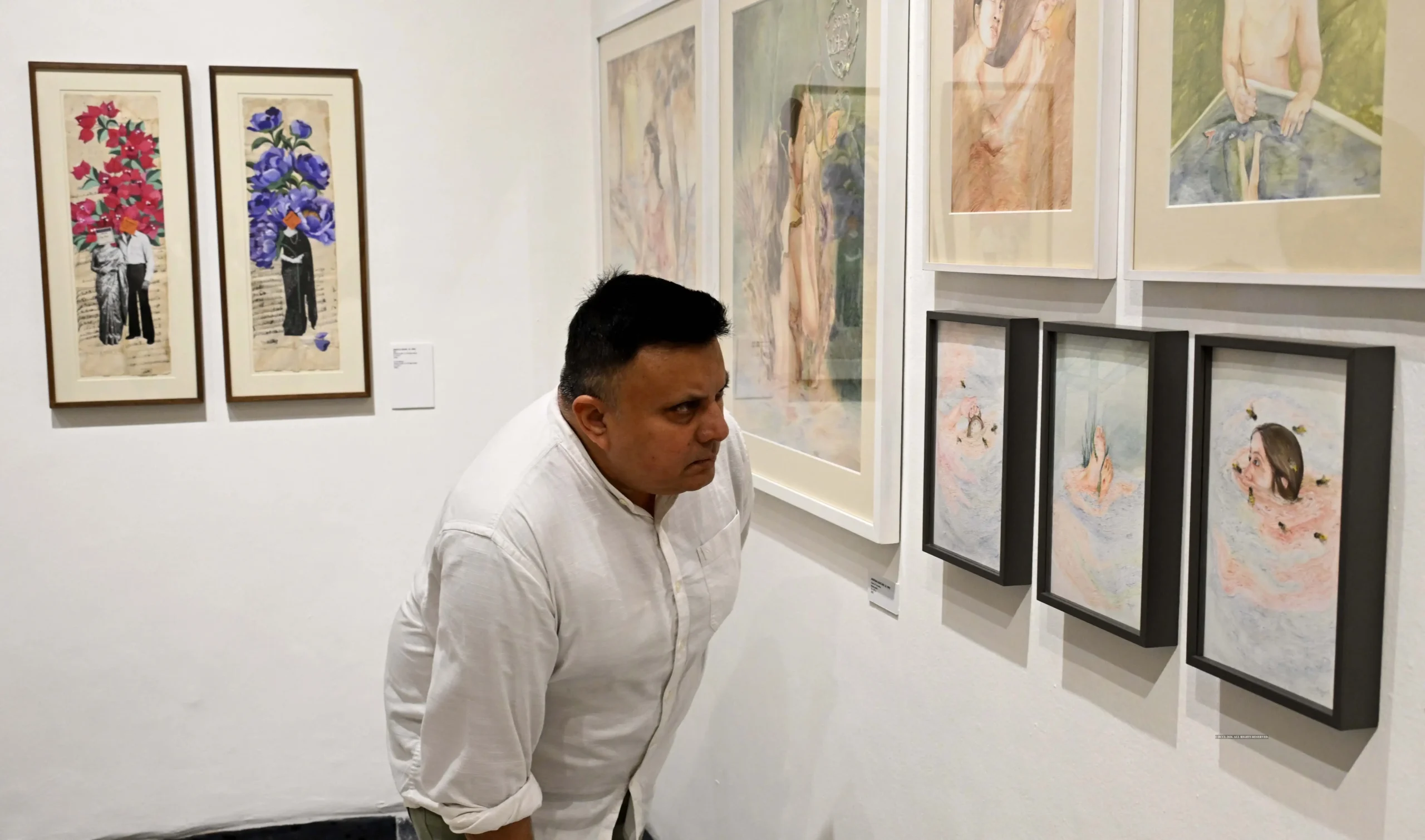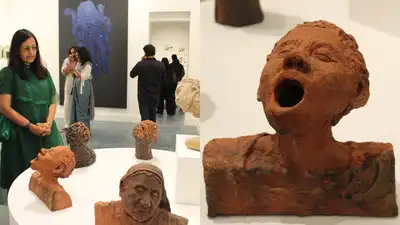
Astha Butail, an artist, looks at Sister Malu Joy’s works – terracotta busts featuring older nuns
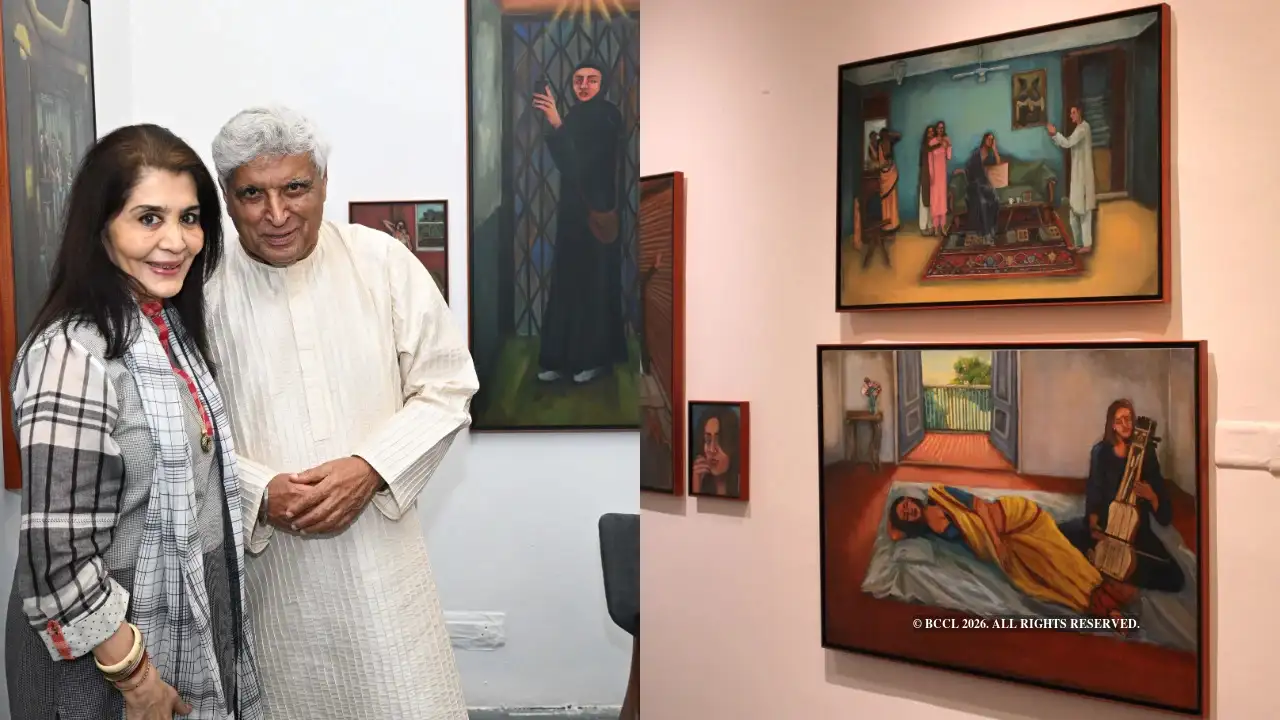
The works are quite personal and experiential,” said Rasika Kajaria, founder of Exhibit 320. Bhavna Kakar of Latitude 28 sees a similar shift.
“Contemporary art is a reflection of society as it is,” said Mandiraa Lambba, whose gallery presents Ways of Being Seen, bringing together practices that look at the body through memory, identity, intimacy, vulnerability and resistance. Shefali Somani of Shrine Empire, whose presentation looks at urbanisation, ecological crises, displacement, migration and identity politics, said, “Galleries are putting forward very interesting conversations through these artworks and artists. They have done their homework,” says Roshini Vadehra, director of Vadehra Art Gallery. She said that while many may be new to acquiring art, they are not new to looking at it, thanks to the wealth of information available online. “They are looking for a story they resonate with,” she says, adding that younger buyers are willing to experiment and may discover an artist online before approaching a gallery. “They come with an open mind,” she notes.
“At DCAW this year, we are bringing together artists who challenge established material vocabularies while remaining deeply attentive to the social, political and emotional world from which they emerge. Its presentation moves across painting, drawing, textile, print, sculpture and mixed media, with artists exploring materiality through processes such as hand-cut and stitched brass wire and hand-woven Kota Doria. Artist-sculptor Manav Gupta takes in Anupama Alias’ mixed-media artworks, which explore womanhood through the body For Blueprint12, the body becomes a lens through which artists examine contemporary concerns. The presentation is centred around materiality, with artists working with textiles, Japanese linen, paper collage, fibreglass, charcoal, ink and even pastel on aluminium sheets. ” For galleries, the changing audience is as interesting as the works on display. Younger collectors, they say, are entering the art market with greater awareness and increasingly making choices on their own terms. “Young collectors are actually quite savvy. “They are not necessarily drawn to older artists or younger artists. It depends on what their story is and how they want to collect. Artist Juhikadevi Bhanjdeo looking at her artwork Skin of Home: aal-dyed panel held together with safetypins