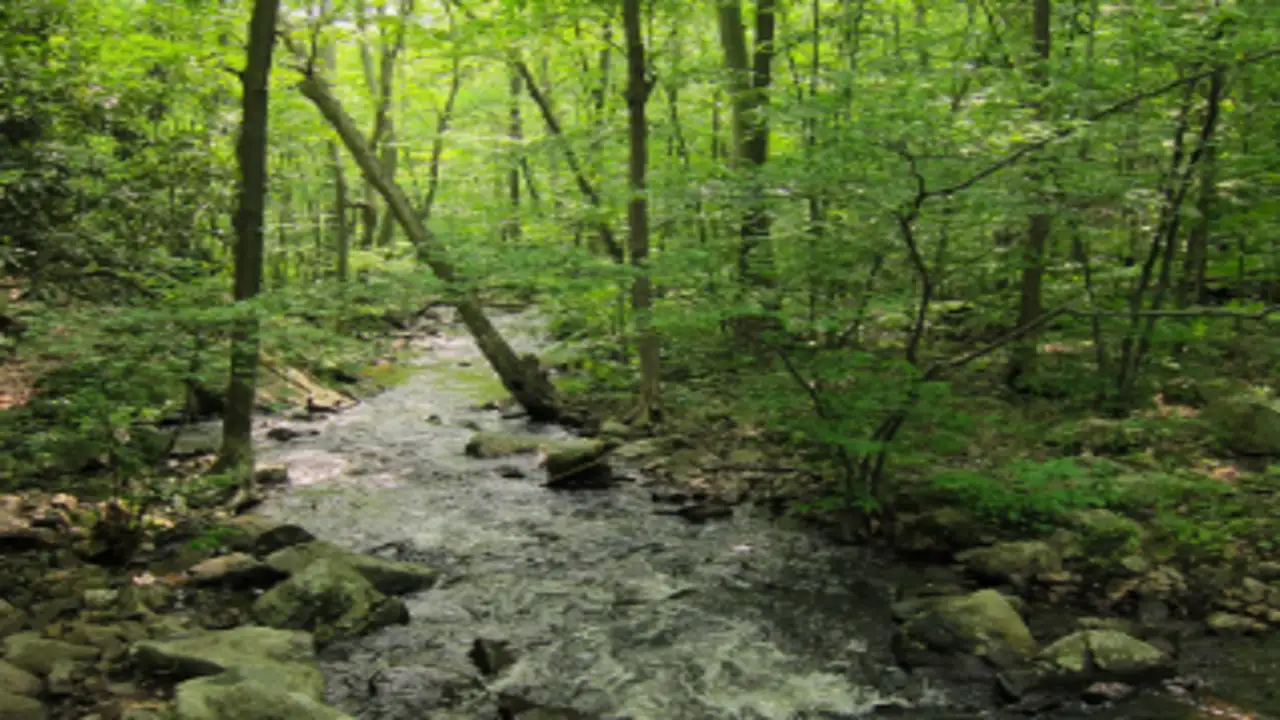
White Mountains of New Hampshire. Image credits: Wikimedia Commons
During the winter of 1965, a group of scientists conducted an experiment in the White Mountains of New Hampshire, which involved felling all trees within a forested watershed and leaving the fallen wood in place. Why scientists chose to clear an entire watershed All of the trees and shrubs in Watershed 2 had been cut down from November 18 to December 31, 1965, when there was more than 30 cm, which is about 12 inches, of snow on the ground, as recorded in the experiment’s official record provided by the Hubbard Brook Ecosystem Study . To prevent any re-colonization of this area by plants for the next three years, researchers used herbicides on this plot; first, bromacil was sprayed aerially in June 1966, then 2,4,5-T was applied to the ground in 1967 and 1968. The streamflow increased by about 40 percent during the first year after the cut, by 28 percent in the second one and by 26 percent in the third one, according to Hubbard Brook records. It reported slightly more precise results for the first two years, 39 and 28 percent, respectively. One of them is the first evidence of the existence of acid rain in the precipitation of New England in the 1960s, which helped to pass the amendments to the Clean Air Act in 1990. Six decades after the last tree in Watershed 2 fell, the site is still part of the constantly monitored research forest.
As a result of felling all trees, the streamflow increased, the snowmelt occurred earlier and the concentration of nitrates in the stream rose to such levels that would not meet the drinking water requirements. As a result, scientists have gained decades of additional information on the dynamics of the recovery of the northern hardwood forest cut in Watershed 2. These numbers were reported in another peer-reviewed publication authored by Gene Likens et al., Effects of Forest Cutting and Herbicide Treatment on Nutrient Budgets in the Hubbard Brook Watershed-Ecosystem, and available in the free research archive maintained by the U.S.
The intention here was not to destroy but rather to measure the effects of such an experiment by studying how the roots and canopy of the forest interact with the water and nutrients passing through them. By completely clearing the vegetation off the watershed, scientists were able to study the process without any interference from a neighboring unmodified watershed. The results of this experiment changed the way hydrologists and ecologists thought of the role of the forests in general. In addition, the watershed used for this experiment is still under observation six decades later. They cut stems and branches to one meter in height and all of the cut plants remained where they were, without moving the material offsite. There were no trails or roads, nor any vehicles in the study area, as they made an intentional effort not to disturb the ecosystem by cutting the vegetation and not to have logging equipment disturbing the soil as well. The impact of this process on the streamflow volume became evident very quickly. In the absence of trees that would normally pull water from the ground via their roots and transpire it into the air, a lot more rainfall ended up in the stream. Department of Energy . Also, there was a shift in the date of snowmelt onset. However, the purpose of the experiment was to allow the ecosystem to grow back on its own without herbicides after three growing seasons. The Hubbard Brook Ecosystem Study, the results of which include this and many other experiments, became one of the most influential works on the environment in the twentieth century. What used to be a drastic experiment in the complete deforestation of a plot turned into one of the best examples of how much work the roots and the crown of a forest ecosystem perform to retain water and nutrients, which becomes visible only after it ceases.