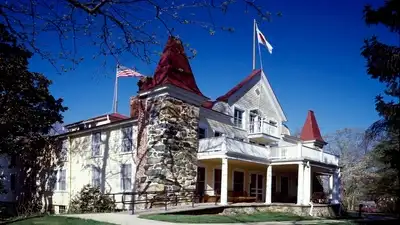
The Clara Barton House. Credits – Wikimedia Commons
In the late nineteenth century, the Baltzley brothers in Maryland bought land alongside the Potomac River, hoping to turn the area into a cultural retreat in the style of the Chautauqua movement. But to make their unproven venture look respectable, the brothers needed a name that people were already familiar with. So they turned to Clara Barton, the founder of the American Red Cross, and gave her part of the land they had acquired. The gift that built a home
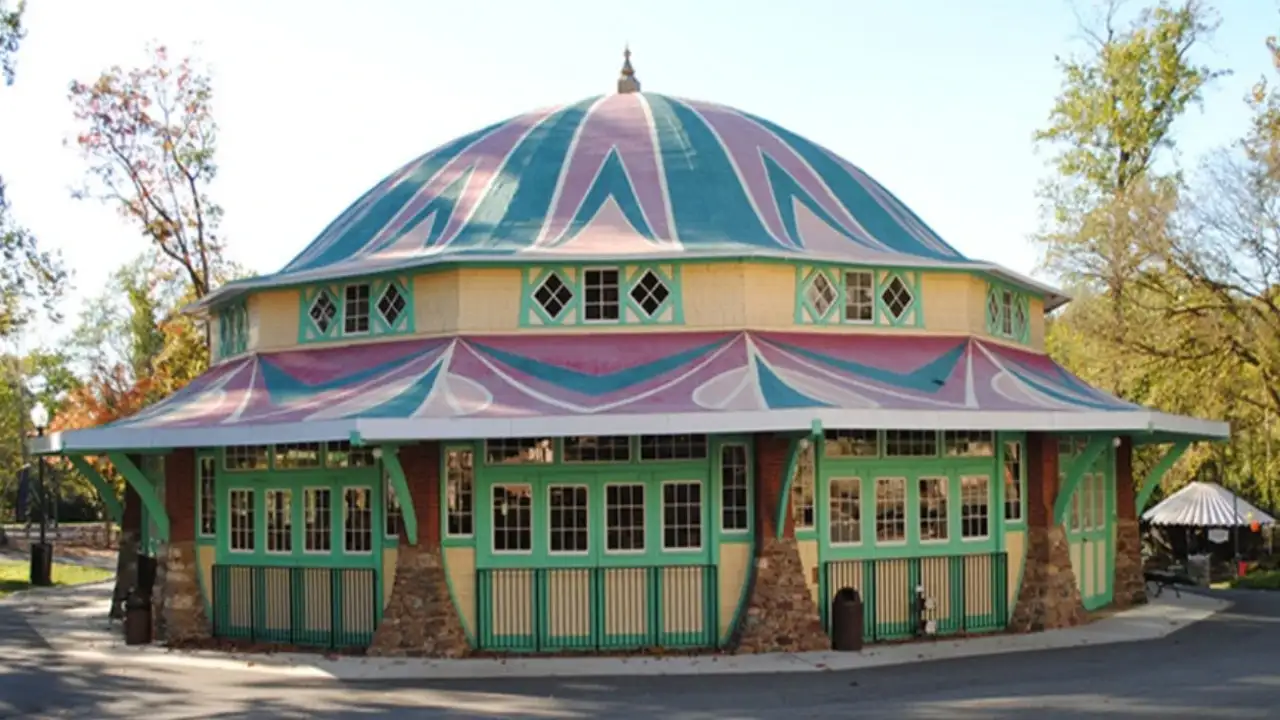
The 22 acre cultural landscape that survives today sits in Montgomery County and combines two separate National Park Service units, Glen Echo Park and the Clara Barton National Historic Site, according to a landscape history published by the National Park Service . The property includes part of the 80 acres that Edward and Edwin Baltzley donated in 1891 to establish the Chautauqua, and they gifted a portion of that land to Barton, the founder of the American Red Cross, while also supplying the labour and materials used to build her house. The same history traces how the site shifted from an educational campus into an amusement park once the Chautauqua idea struggled to take hold, with Edwin Baltzley renting the grounds out to vaudeville acts and the first amusement park structures going up by 1899. Barton’s home sits within a broader stretch of land estimated at 22 acres in total.
The Baltzleys called the land the National Chautauqua of Glen Echo, and Barton later built her home there. Guides who lead tours through the property still point out small details that reveal her frugal habits, and the National Park Service notes that some of the interior walls and ceilings are covered in muslin, the same material used in field bandages, rather than plaster. The house also carried the Red Cross emblem worked into its stained glass windows, a detail that quietly tied her home to the organisation she had spent decades building. What fascinates the visitors and what they encounter now extends well beyond the house alone. The National Park Service manages together with the adjoining Glen Echo Park, a former amusement park that operated on neighbouring ground until the late 1960s. The two properties share a cultural landscape designation, linking Barton’s story to the wider history of the land. More than a century later, it is Barton’s story, not theirs, that draws people to Glen Echo.