
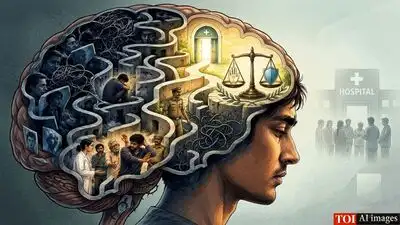
Families face difficult choices when mentally ill relatives become unmanageable (AI image used for representational purpose only)
A 60-year-old man and his friend were recently arrested for allegedly killing his schizophrenic son (38) ‘as he had become aggressive and unmanageable’. Police are required to take under protection a person they believe has a mental illness and poses a risk to themselves or others, and take them to a public health establishment for assessment within 24 hours. Depending on the disorder, the treatment gap ranged from 70% to 92%. NCRB recorded 1,70,746 suicides in India in 2024, including 2,905 in Delhi.
The incident has thrown up a larger question: When a person with severe mental illness becomes violent or refuses treatment, what options does the family have? Caught between an urgent need for medical help and legal safeguards meant to protect the patient, here’s what they can do — and where the system falls short. They can also approach the nearest hospital emergency department, a psychiatric inpatient facility, Tele-MANAS — govt’s 24×7 mental-health helpline — or Delhi’s Mobile Mental Health Units, adds Dr Paramjeet Singh, consultant psychiatrist at PSRI Hospital. The Act also permits emergency treatment where there is a serious and immediate risk. In severe illnesses such as psychosis, a patient may genuinely believe nothing is wrong and refuse treatment. Families and doctors may see an emergency, but intervention must balance the need for care with the patient’s rights. Experts say Delhi needs a smoother crisis-response mechanism connecting families, police, psychiatrists and the law — one that allows quick intervention in genuine emergencies without opening the door to wrongful detention or treatment.