
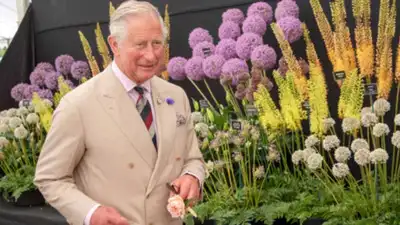
Britain’s Prince Charles visits the Sandringham Flower Show at Sandringham House: Reuters
In 1986, then Prince Charles made a simple remark about his garden that unexpectedly became part of his public image. During a television interview in September 1986, Charles spoke about his garden and his approach to growing plants.
he revealed that he talked to his plants because, as he put it, “they respond” While discussing his passion for gardening at Highgrove. Very important to talk to them; they respond, I find,” he said. Charles later recalled that his decision to farm organically had been described as “completely bonkers”.
The comment amused much of the British public and press. For years, it became one of those memorable stories attached to Charles’s reputation as an unconventional royal. But there is another side to the story. Modern plant research shows that plants can detect and respond to their surroundings, although there is no evidence that they understand human speech. “I just come and talk to the plants really. It was an unusual thing for a future king to say on television, and newspapers quickly found humour in it. The image was irresistible: Prince Charles, surrounded by plants at Highgrove, apparently having conversations with his garden. The story also invited comparisons with his ancestor, King George III, who was popularly associated with speaking to an oak tree. Contemporary coverage used that connection to add another layer to the joke. The plant remark did not appear in isolation. Charles had developed a strong interest in organic farming, gardening and environmental issues at a time when those views were not always taken seriously. His approach to Highgrove eventually became closely associated with organic and sustainable gardening.
A 2024 umbrella review and meta-analysis examined 40 studies on gardening, horticultural therapy, wellbeing and quality of life. A future king made an unusually personal comment about his garden, the press turned it into a joke, and decades of research have since revealed that the plant world is considerably more responsive and complex than it appears.
The “Prince who talked to plants” story remained part of Charles’s public image long after the 1986 interview disappeared from television schedules. That background helps explain why the comment attracted so much attention. The public was not simply reacting to a man talking to plants. It was reacting to a royal who openly held ideas that differed from conventional thinking of the time. Plants are not passive objects. They respond to light, temperature, gravity, touch and other environmental signals. The Royal Horticultural Society explains how plants sense and respond to changes in their surroundings. The researchers found an overall positive association between gardening and wellbeing, while also noting differences and limitations across the studies. That makes the picture rather interesting. Talking to a plant may not have a proven special effect on the plant, but spending time caring for plants can encourage people to slow down, spend time outdoors and engage with nature. In that sense, the conversation may be less important than the act of gardening itself. Organic farming, biodiversity and sustainable gardening have become much more familiar ideas, while research has shown just how sensitive plants are to their environments. That does not mean science has proved Charles right about plants responding to human conversation. It has shown something subtler: plants are living systems that constantly sense and react to the world around them. Perhaps that is why the old anecdote remains interesting. Disclaimer: This article is for general informational purposes. Looking for trusted parenting advice? Follow TOI Parenting Circle on Instagram for expert guidance, relatable stories, and practical tips delivered every day.
What once sounded peculiar also sits differently today.