
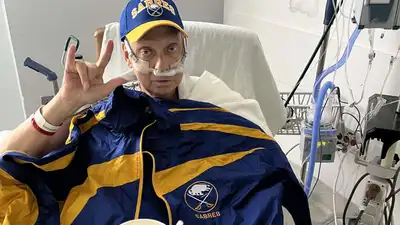
The damage to his lungs became so severe that he required supplemental oxygen simply to stand and walk short distances. At one point, even a trip to the bathroom left him struggling for breath, and he began considering whether he might eventually need a lung transplant.
At 63, Papa’s comeback comes far earlier than doctors typically expect for patients facing a similarly complicated recovery. Papa was diagnosed with acute lymphoblastic leukemia on July 16, 2025, after the disease was discovered in his brain and spinal column, according to San Francisco Chronicle. Papa spent 78 days at UCSF Health, most of that time in intensive care. Papa also has a history of cardiomyopathy, a hereditary heart condition diagnosed in 2023.
For much of the past year, the San Francisco 49ers radio announcer Greg Papa’s world revolved around hospital rooms, medical charts and the exhausting uncertainty of whether he would ever return to the work that had defined four decades of his life. Now, just six months after a bone marrow transplant and a series of life-threatening complications, he is preparing to step back in front of the cameras. His treatment included chemotherapy and eventually an allogeneic bone marrow transplant. What followed was an exceptionally difficult recovery. He developed pneumonia, both lungs collapsed, chest tubes were inserted and he spent a week on a ventilator, states the online report. Four blood clots also developed, including one that traveled to his lung. Despite the encouraging progress, Papa’s doctors remain cautious. The first two years following a leukemia transplant can carry a significant risk of relapse. Patients also face the possibility of graft-versus-host disease, a potentially serious complication in which donor immune cells attack the recipient’s tissues. The combination of existing heart concerns and lingering lung damage means his return to work will have to be carefully managed. Travel and high-altitude locations could present additional challenges, while even ordinary activities can leave him exhausted.
A recovery faster than expected
Patients undergoing Papa’s type of transplant typically need 12 to 18 months to return to their pre-diagnosis level of functioning, according to his medical team. He walks roughly 2,000 steps a day, uses exercise bands and lifts light weights to rebuild strength after losing 36 pounds following the transplant. He has since regained about 17 pounds.
Papa’s recovery has moved considerably faster and by early September, his oxygen tanks had been removed from his home, marking a major milestone after months of relying on supplemental oxygen. He remains easily winded, however, and his lungs are still damaged. His physical rehabilitation has also become part of his daily routine. Yet the transformation from a hospital bed to a television studio is striking. A year ago, Papa was in a UCSF hospital room undergoing chemotherapy while watching the 49ers begin their season. Now he is preparing to spend another NFL opening week talking about football. There are no guarantees about how long his recovery will last or whether he will return fully to his previous workload. But after months in which simply breathing and walking were major challenges, Papa is once again preparing game notes and planning for kickoff. His comeback is not just a return to broadcasting. It is evidence of how far he has traveled since a devastating diagnosis turned his life upside down.