
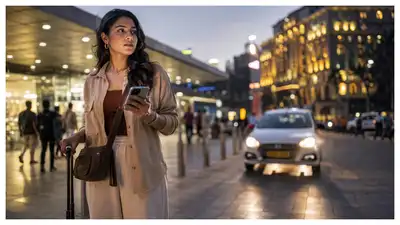
Indian women frequently bear additional travel expenses to guarantee their personal safety, which includes opting for safer transport and secure accommodations. This phenomenon, dubbed the ‘solo-travel safety tax’, aims to provide peace of mind while journeying. Plus, support from family and friends can act as a distant safety net. At the end of the day, safety should be a standard part of travel, not just an extra charge.
The ₹300 cab instead of a walk from the metro. Because sharing with a stranger feels uncomfortable, the private room. Because the cheaper overnight option means arriving alone at 2am, the daytime flight. A solo trip can therefore become an exercise in risk management.
For a young Indian woman planning a solo trip, the calculations begin long before she boards a train or flight. There is the usual search for the prettiest cafe, the most affordable hostel and the hotel with the best reviews. But alongside it runs another, quieter assessment: Will I reach before dark? Is the hotel in a crowded area? Is the route well lit? Should I share my live location? Is the last metro worth taking, or would a cab be safer? On Instagram, solo travel is often presented as sunsets, charming stays and spontaneous plans. In reality, many women travel with an invisible safety checklist running in the background. The women-only dorm that costs more than the mixed one. The hotel near the airport, despite being overpriced. This could be called the solo-travel safety tax. Check the cab number. Save the driver’s details. Share them with a friend. Keep the live location on. Avoid poorly lit streets. Stay on a call until you reach the hotel. Popular culture has long romanticised travel as an escape from routine. Yeh Jawaani Hai Deewani gave an entire generation the fantasy of train journeys, mountain landscapes and making plans as you go. But for many women, the reality of travelling alone involves a less cinematic set of decisions: choosing the better-lit hotel, checking the route twice and ensuring the return journey does not end with an unfamiliar arrival at 2am. The question, then, is not why women are willing to spend more to travel safely. It is why they have to. Safety should not be a premium feature of travel. It should be part of the infrastructure: well-lit streets, reliable night transport, safer accommodation, trained staff and accountability when things go wrong.