
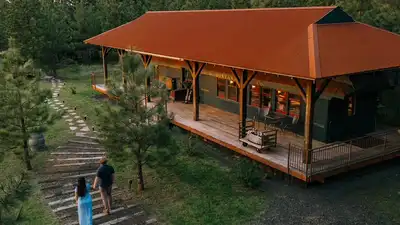
PC: People
In 2018, an old wooden railway carriage was hiding beneath a farm shed in Idaho, so neglected that it was difficult to tell what it had once been. Its windows were broken, the timber was deteriorating and around 20 feral cats had moved in. Then Isaac French’s father noticed faded paint and the numbers 306, offering a clue to its past. Built in 1906, the 61-foot carriage had spent decades away from the railway, eventually being used to store grain and feed cattle. A post shared on Instagram by a US couple reveals how the wooden railway carriage was transformed from a neglected farm storage space into a $350-a-night holiday rental. The family bought it for $3,000, but getting it home took another two years. What followed was an extensive restoration, carried out largely by the family, costing about $147,000. By August 2020, the neglected carriage had been transformed into a holiday rental, where guests can now stay for more than $350 a night. This began in December 2018, when Isaac French’s father was helping an elderly neighbour clear snow from a barn. There was another complication inside: about 20 feral cats had taken over the carriage. The move happened in February 2020, on a cold, wet day.
It was a wooden railway carriage, though its condition made that difficult to recognise at first, according to People.com. On the property stood a long, open-sided agricultural shed, and beneath it was something that appeared to have been abandoned for years. The windows were damaged, the sills had rotted and dirt covered much of what remained. A semi-truck hauled the carriage along icy, winding back roads for about three hours. When the route reached the final hill towards the French family’s property, the truck could not manage the climb on its own.
Car 306 now offers guests a stay inside railway history
Beside the broken clerestory windows were the faint numbers 3, 0 and 6. Those details led the family to identify it as Washington, Idaho & Montana Railway Car 306, a carriage manufactured by the American Car & Foundry Company in St Charles, Missouri, in 1906. Car 306 had not been sitting beneath that shed since its railway days. A previous owner had acquired the carriage as scrap and transported it roughly 10 miles to the property. The French family agreed to buy Car 306 for $3,000. For two years, the family tried to find someone capable of moving a 61-foot wooden railway car in poor condition. Reportedly, renovation work began in January 2020. The family had originally paid just $3,000 for the carriage, but restoring it properly was becoming a much larger undertaking. The eventual restoration cost about $147,000. A picture of Car 306 from around the time it was built in 1906 showed the family what the original carriage had looked like. When Car 306 was finally completed in August 2020, the family had found a way to give its old spaces new purposes without simply stripping out the interior. The finished Car 306 is now offered as an Airbnb in Deary, Idaho. The nightly rate is now more than $350, and French says the property is booked roughly 90 per cent of the time. The setting is not identical to the railway journeys Car 306 made more than a century ago, of course, but the landscape still provides a link with its working life. The 20 cats are gone, the grain is gone and the carriage no longer sits beneath a farm shed. But the timber, brasswork, lettering and proportions of Car 306 remain, giving the old railway vehicle a new purpose without entirely erasing the one it had before.
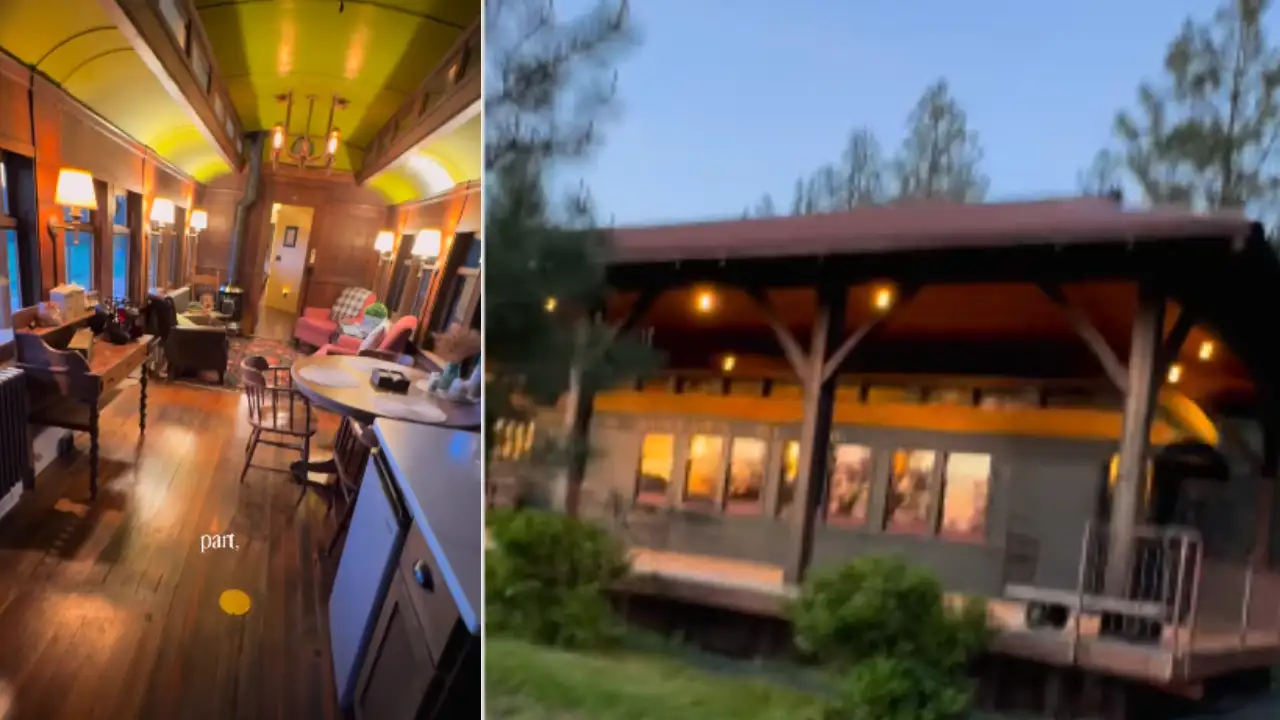
Because they were not trying to create a generic railway-themed accommodation, that mattered. A small kitchenette was fitted into the existing woodwork so that it did not dominate the carriage’s original character.
It arrived on the farm sometime in the 1950s, after the tracks in the area were removed, according to French. But the family says the accommodation was not the original reason for buying the carriage. French’s father, however, knew enough about the local railway history to look more closely. Near the passenger section, traces of old paint could still be seen. The discovery changed the way they looked at the battered old structure. Rather than being an unidentifiable farm building, it was a surviving piece of local railway history. There, its purpose changed completely. The former railway car became agricultural storage, eventually helping with jobs around the farm such as storing grain and feeding cattle. That long period of neglect left plenty to deal with. The family found an exterior battered by years of exposure and an interior that had accumulated layers of grime. The cats had made themselves comfortable inside, too. French later joked that the first thing his father encountered when approaching the carriage was not its history but its smell. Yet the shed that had hidden the carriage away for so long had also done something unexpected. It had protected much of the original structure. The deal was simple enough: a handshake followed by a cheque. Several movers declined after seeing what was involved. The size alone was awkward, and transporting an old timber carriage over rural roads presented its own problems. Eventually, someone agreed to take it on. Before serious restoration could begin, the carriage needed protection from the weather. French had drawn up plans for a timber-framed structure inspired by traditional railway depot architecture. His brothers constructed the roof over the carriage, creating a sheltered space where the restoration could continue without leaving the old timber exposed to Idaho’s conditions. The timing made the job considerably harder. Within weeks, the pandemic had disrupted normal life and created problems with materials, money and construction work. Much of the work was done by the family themselves, which helped keep the figure from rising further. French’s father and brothers handled plumbing and electrical work. French took on sanding, epoxy repairs, brasswork and the lettering. A friend made a copper chandelier by hand, while his mother searched for antiques to furnish the finished interior. It became a family construction project as much as a preservation job. One of the most useful things the family had was not a modern plan or a set of restoration drawings. It was a photograph. They could use the surviving photograph to work out details that had disappeared during decades of agricultural use. The original timber proved surprisingly resilient. Much of it could remain in place, while sections around damaged window sills were repaired with epoxy. The brass fittings were cleaned and restored. The windows were repaired. The faded gold lettering was recreated. Some of these jobs took far longer than their finished appearance might suggest. A restored letter or polished brass fitting can seem like a small detail once everything is complete. During the restoration, though, each one represented another piece of work standing between the family and the finished carriage. The former mail compartment became the main bedroom. The cargo area was converted into a bathroom, while the passenger section became a reading lounge. There is also a gas-powered potbelly stove in the lounge. The result is not simply an old carriage with modern rooms installed inside it. Much of the original structure remains visible, with the restored wood, windows, brass and lettering providing the setting for the new accommodation. Guests can stay inside a railway carriage that was built more than a century ago and spent much of its later life doing something far removed from passenger travel. By his account, the rental recovered the restoration costs within about its first year. The idea came later, after they had already decided that the old railway car was worth saving. That sequence is important to how French describes the project. They did not begin with a plan to purchase an unusual building and turn it into a holiday rental. They encountered an old carriage that was close to disappearing and eventually found that hospitality provided a practical way to preserve it. For French, one of the quieter pleasures of the restored carriage is the reading lounge. He has described sitting in a comfortable chair with a book, looking through the windows towards the hills and pine trees outside. The farm shed that made it look abandoned and useless also protected the wood from the elements. The agricultural conversion that removed it from railway service may have helped keep the original structure intact long enough for someone to recognise what it was. Catch the latest World News and Live updates. Download the TOI app.
Today, visitors pay to spend a night inside that same structure.
Only then did Car 306 finally reach the place where its next life would begin. A bulldozer was brought in and pushed from the front.