
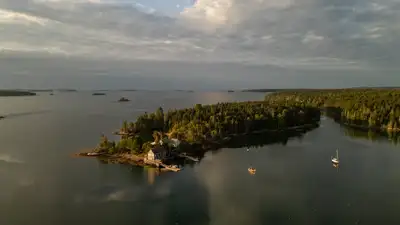
Maine island
Deep in Maine’s Muscongus Bay, a 330-acre island covered in spruce trees has survived a threat of clear-cut logging and, 90 years later, continues to serve as an international training centre for environmentalists and bird researchers. Hog Island Audubon Camp, near the coastal community of Bremen, marked its 90th anniversary in late August 2026.
The island was saved from commercial logging in the 1930s by Millicent Todd Bingham and her mother, Mabel Loomis Todd, according to records from the National Audubon Society and the Seabird Institute. Today, the island is the National Audubon Society’s flagship educational camp, welcoming hundreds of scientists, teachers, artists and nature lovers every summer.
After her death in 1932, her daughter, Millicent Todd Bingham, a geographer and scholar, continued the effort. In 1936, she joined forces with John H. The island’s modern conservation story began during the Great Depression. Mabel Loomis Todd, a writer and editor best known for publishing the poetry of Emily Dickinson, recognised the value of the untouched forest and tried to buy the property. Bingham spent years working to secure the island and create a permanent plan to protect it. Baker, then executive director of the National Association of Audubon Societies, now known as the National Audubon Society. Together, they established Audubon’s first Nature Study Camp. The programme was created to train primary and secondary school teachers in outdoor field biology. The teachers could then take what they learned back to classrooms across the United States. Historical records from the Todd Wildlife Sanctuary show that Bingham eventually gave the island to the National Audubon Society. This created a permanent refuge for wildlife and migratory seabirds.
Landowners had planned to clear-cut Hog Island’s thick spruce forest, which included centuries-old wolf trees, large trees that had been left behind by earlier farmers to provide shade for livestock.
From 20 to 23 August 2026, more than 200 former campers, instructors, researchers and volunteers gathered on Hog Island to mark 90 years of continuous operation. Ninety years after its founding, the 330-acre island remains a living laboratory for conservation. In the 1970s, ornithologist Stephen Kress launched Project Puffin from the island.
The celebration included panel discussions, guided walks to study plants and tours of historic buildings, including the rustic Bingham cottages and the old Fish House, according to an anniversary report from the National Audubon Society’s Seabird Institute. During a panel called “The Future is Bright at Hog Island,” Audubon Chief Conservation Officer Marshall Johnson, along with instructors Maggie Dewane and Anthony Hill, discussed plans to expand research on the island over the next decade while keeping environmental education at its centre. The Hog Island Artist-in-Residence programme welcomes writers, visual artists and musicians each year, according to National Audubon Society programme guidelines.
The anniversary also recognised the Friends of Hog Island (FOHI), a volunteer group that helps keep the camp running. Its volunteers provide thousands of hours of work each summer, helping with building maintenance, kitchen duties, habitat management and fundraising for the Hog Island Endowment. Hog Island has also played an important role in modern seabird conservation. He developed social attraction methods, including wooden puffin decoys and recorded bird calls, to bring Atlantic Puffins back to nearby Eastern Egg Rock. The methods developed through the project at Hog Island are now used around the world to help restore threatened seabird colonies. The island also has a strong connection to the arts. They stay in the historic Bingham cottages, continuing the creative tradition linked to Mabel Loomis Todd. As climate change and rising sea levels reshape New England’s coastal waters, the research and education carried out at Hog Island continue to influence bird conservation efforts across North America.