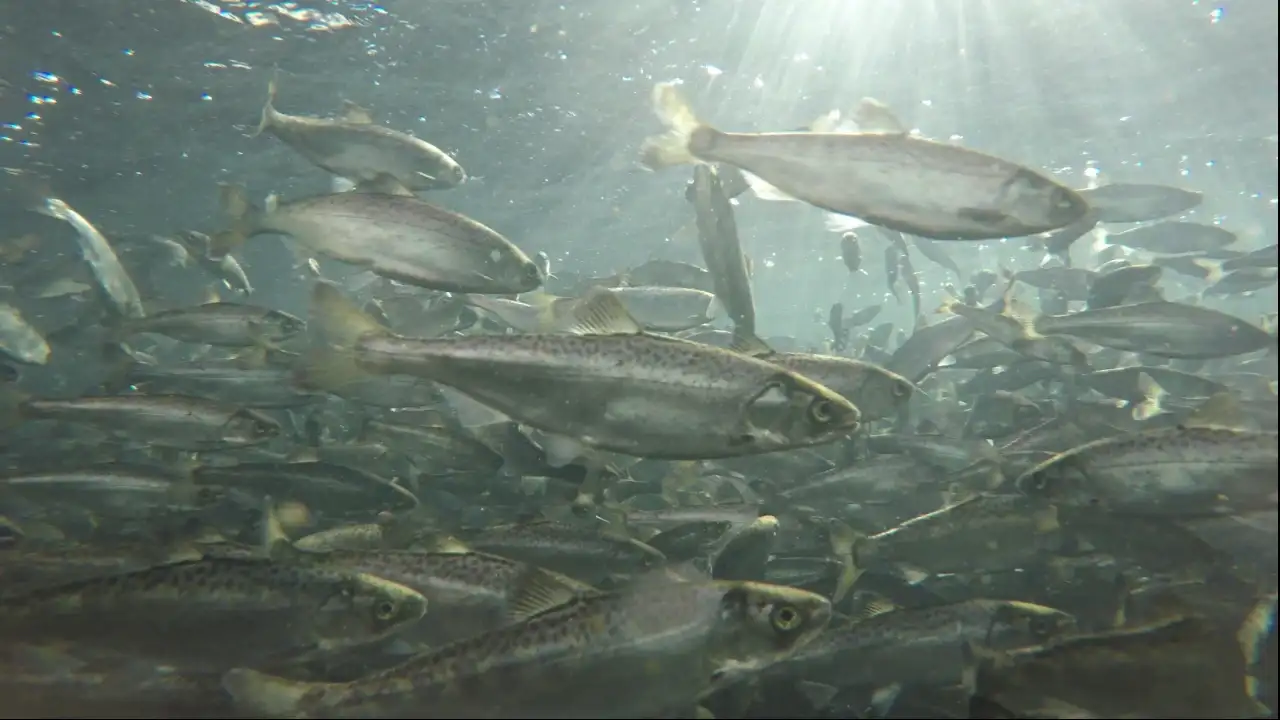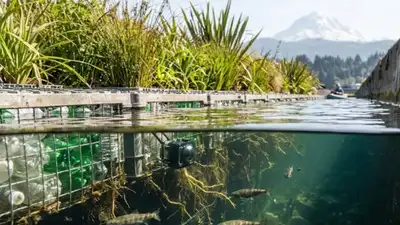
AI Representation: Urban upcycling supports salmon in Seattle. Image credits: Chatgpt
Dredging, channeling and a century of industrial activity have destroyed 97 percent of the tidal wetlands that once lined the riverbanks, according to a University of Washington-led study on the Duwamish Floating Wetlands Project. Along the first seven miles of the Duwamish River, 40 to 60 percent of the linear shoreline is bulkhead, and 50 to 80 percent is riprap, according to the project background for the Duwamish Floating Wetlands Project. In April 2019, Biobarges were launched into the river and placed within the Duwamish Estuary at two sites. Monitoring continued through the out-migration season and ran until July 2019, marking the first year of a two-year proof-of-concept pilot project. The structures were then monitored again in 2020, according to the Green Futures Lab website.
The river once had extensive tidal marshes and mudflats along its banks before channelization and filling transformed much of the estuary into an industrial waterway, according to NOAA’s Lower Duwamish River hazardous-waste site summary. Two of the biobarges were positioned at a heavily industrialized site downriver, while the other two were placed farther upriver in a more vegetated stretch of the river, allowing researchers to compare fish use across a hardened site and a more natural one, according to a University of Washington graduate student’s account in the SMEA Currents blog . That hardened shoreline leaves young salmon migrating from fresh to salt water with little cover from predators or access to food. Local volunteers trained as community scientists carried out much of the fieldwork. They counted and identified juvenile salmon near the Biobarges and at separate reference and control sites without floating wetlands. They also set up and collected the GoPro cameras that recorded underwater footage at each structure. In the project’s second year, the volunteers reviewed hundreds of hours of video to identify and count the fish captured on camera, as documented in the study.