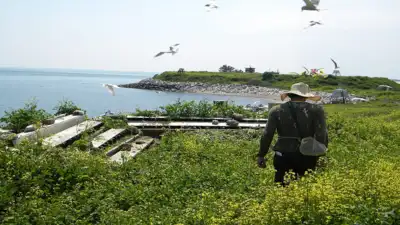
Great Gull Island is a 17-acre former military outpost at the eastern end of Long Island Sound that was occupied by the US Army’s Fort Michie from 1897 to 1949. Image Credits: Wikimedia Commons.
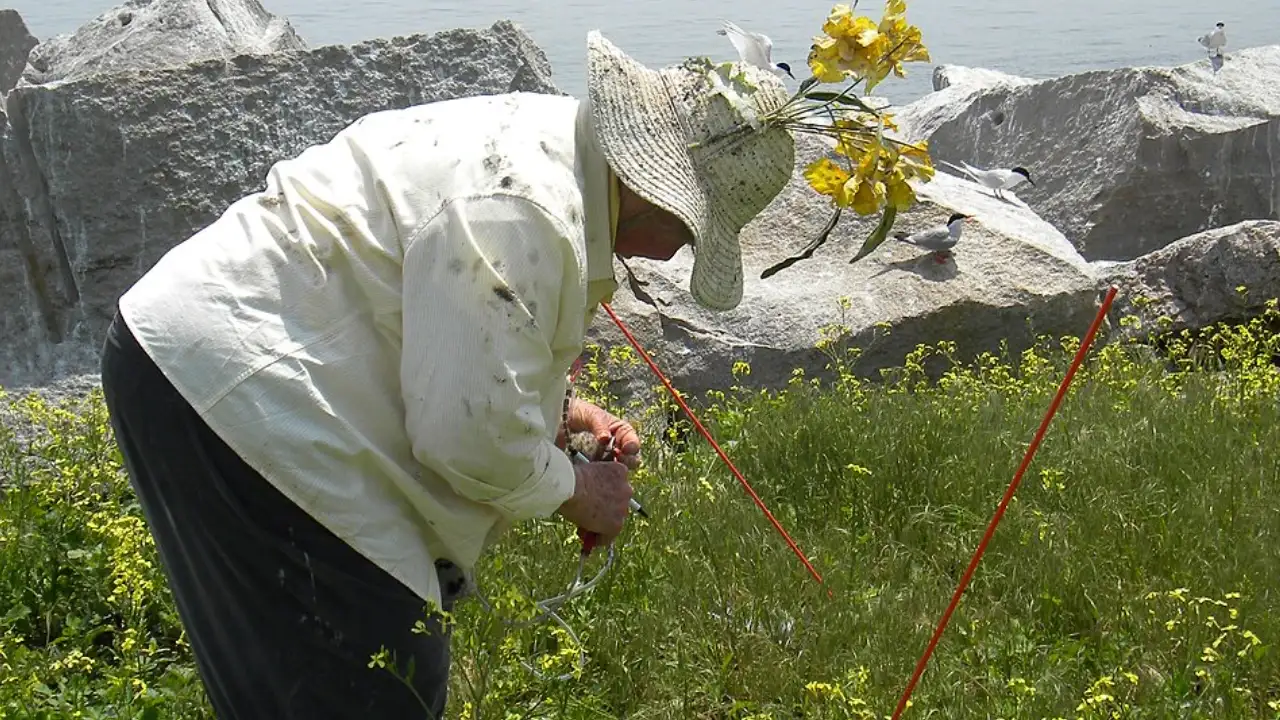
In 1969, ornithologist Helen Hays began spending roughly half of every year on Great Gull Island, living in former army buildings and working with volunteers to count, band and protect Common and Roseate Terns. On a tiny island in Long Island Sound, an abandoned military outpost became home to one of North America’s most important seabird colonies. More than five decades later, the island had become a major tern research site, with tens of thousands of birds returning each breeding season.
Society member Irwin Alperin flew over the island and spotted 25 pairs of Common Terns nesting at its eastern end. In 1963, Helen Hays visited the island with Catherine Pessino of the American Museum of Natural History and recognised its potential for long-term study of the two species. By 1969, enough volunteers had been recruited to spend time on the island and begin systematic monitoring of the tern populations during the summer breeding season. The island is small, but its significance extends far beyond its 17 acres. What began in 1969 as months spent in deteriorating army buildings has grown into a long-running conservation and research effort.
Roseate Terns began nesting there soon afterwards. Isolation from people and predators makes the island especially suitable for colonial seabirds. At the same time, years of monitoring resulted in an unusual biological database, connecting individual birds, their breeding places, and migration patterns through generations. Eventually, Hays stopped making her annual visits after spending about half a century on the island each summer. However, the work which she created has been continued. The Linnaean Society describes it as a conservation success, while the American Museum of Natural History continues to support the research program and preserve its field notes and other documents. Great Gull Island now serves as both a protected habitat and a research site for tracking seabird migration.
At the beginning of the long-term project, Great Gull Island supported approximately 3,000 breeding pairs of Common and Roseate Terns. By 2014, the colony had expanded substantially, with more than 26,000 nesting pairs of Common Terns recorded on the island. Three Roseate Tern chicks found with congenital abnormalities at Great Gull Island in 1970 contained high levels of polychlorinated biphenyls (PCBs) and DDE, raising concerns about chemical pollution affecting the species, according to the US Geological Survey . A later survey examined organochlorine residues in Roseate Tern eggs from major colonies in 1981 and investigated whether contamination was associated with changes in eggshell characteristics.
Because the species prefers open areas, vegetation can make Common Tern nesting sites unsuitable. Therefore, the project made use of habitat management, including the introduction of meadow voles to the area. These conditions were anything but favourable for Hays and her team. The military buildings were dilapidated, with leaky roofs, broken doors and windows, and cracked floors. Hays and her volunteers tried to repair everything and converted the abandoned military buildings into simple lodging. Every year she would spend six months on the island from April until September and return to Manhattan for the remaining part of the year. Hays’ efforts incorporated conservation with intensive field research. Her volunteers would band chicks and catch adults for identification of individual birds during their next visits. That work produced valuable data on the colony, including changes in population size, nest building and habitat conditions. Over time, Hays’ project grew into an extensive conservation program involving volunteers, students and scientists, and Great Gull Island became a major monitoring station for Common and Roseate Terns. The Linnaean Society of New York also notes the colony’s impressive growth. The increase was not simply a result of leaving the island undisturbed. Conservationists actively managed the nesting habitat, protected the birds during the breeding season and adapted the site to provide suitable conditions for different tern species. Common Terns prefer open nesting areas, while Roseate Terns tend to choose more sheltered sites under rocks or in nest structures created for them by scientists. That combination of protection and research has made Great Gull Island unusually important for seabird conservation.
Today, it supports the world’s largest nesting colony of Common Terns and the largest Roseate Tern colony in the Western Hemisphere, according to the Linnaean Society of New York.