Ganesh Chaturthi Image: AI
What happened to Chandra?
The story therefore turns an apparently strange festival rule into a moral tale about how quickly humiliation and judgement can spiral.
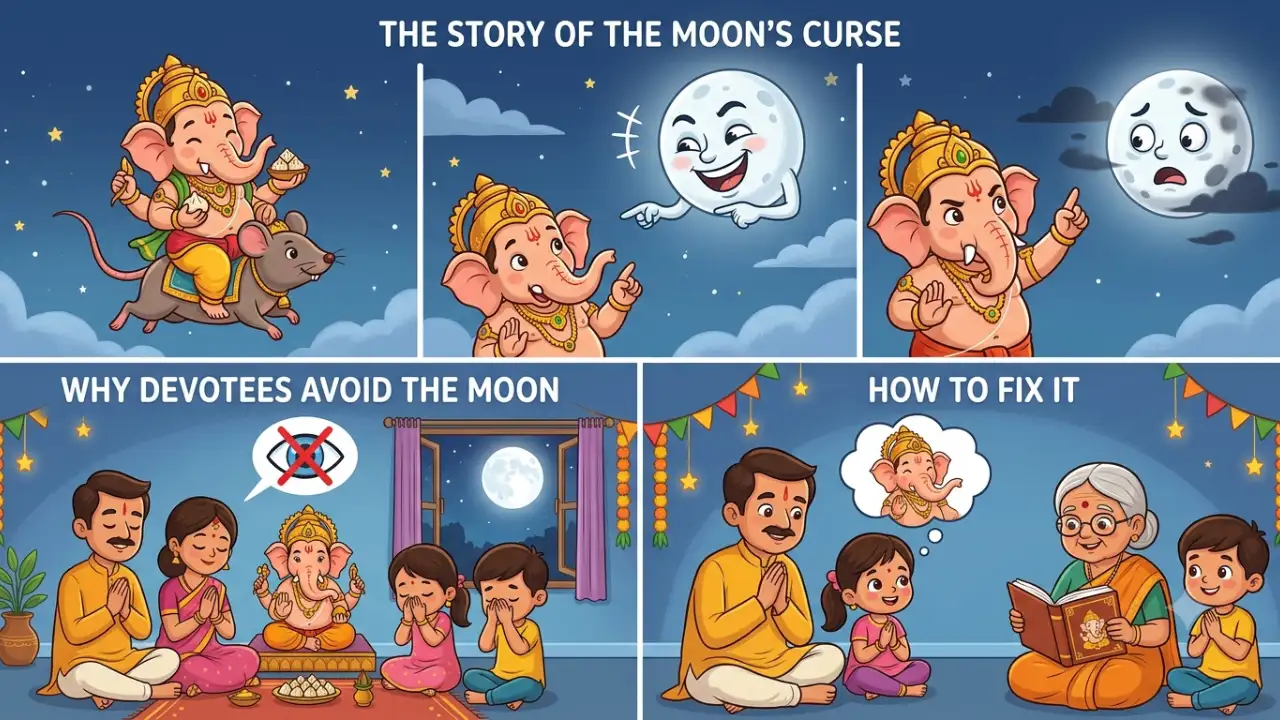
There is a night during Ganesh Chaturthi when a simple act of looking up can, according to a centuries-old Hindu belief, bring trouble. Lord Ganesha was returning home after accepting a large quantity of food, including his beloved modaks, according to a popular Hindu mythology. And according to the story, Chandra, the moon god, saw Lord Ganesha and laughed at him. Lord Ganesha eventually softened the curse, according to the mythology, rather than leaving it completely unchanged. So if someone tells you, “Don’t look at the moon tonight,” the oldest answer isn’t simply “because it’s unlucky.
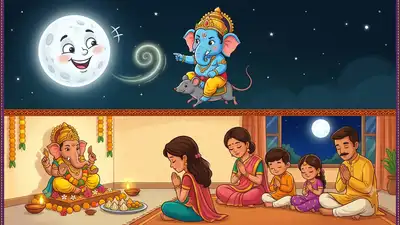
The object in question is hardly frightening: the moon shining in the sky. Yet devotees in some traditions deliberately avoid looking at it on Ganesh Chaturthi, especially on the fourth lunar day of the bright fortnight of Bhadrapada. The reason goes back to a curious story involving Lord Ganesha , Chandra, the moon god, and a moment of laughter that allegedly ended in a curse. But the story is not simply about avoiding the moon. It is about pride, humiliation, false accusations and the consequences of judging someone by appearance. His vehicle, the tiny mouse, was carrying him when it suddenly stumbled. Lord Ganesha fell. Some versions of the story describe his stomach bursting open, causing the food he had eaten to spill out. Lord Ganesha gathered the food and tied it back around his belly, sometimes using a serpent as a belt. It was an unusual sight. That laughter changed the meaning of the night. Lord Ganesha became angry at what he saw as Chandra’s pride and mockery. He cursed the moon, declaring that anyone who looked at him on that particular lunar day would face misfortune. That is the mythological explanation behind the belief that devotees should avoid seeing the moon on Ganesh Chaturthi. Lord Ganesha and the moon (Image: AI) The traditional belief is more specific than simply saying that seeing the moon is “bad luck. In popular retellings of the story, those who see the moon on Ganesh Chaturthi may face false accusations or an undeserved blemish on their reputation. In some traditions, this is associated with mithya dosha, referring broadly to the stigma or blame of a false accusation. The moon god eventually realised the seriousness of what had happened. Chandra sought forgiveness from Lord Ganesha. This is why the tradition became associated specifically with Chaturthi, rather than with avoiding the moon every night. The story has several variations across texts and regional traditions, so the exact details can differ. But the central idea remains recognisable: Chandra’s pride, Ganesha’s anger, a curse and eventual reconciliation. This is where tradition becomes especially interesting. Many Hindu households do not treat an accidental glimpse as something that should cause panic. Traditional practices in different communities may include reciting or hearing the Syamantaka Mani story, associated with the Bhagavata Purana, as a way of addressing the belief. The story concerns a precious jewel, suspicion and a false accusation, which connects directly with the traditional idea of avoiding false blame on Ganesh Chaturthi. Practices can vary by region, family and tradition, so there is no single universal ritual. It comes from a much stranger story: a fallen Ganesha, a laughing moon and a curse that turned one moment of mockery into a centuries-old festival belief. Looking for trusted parenting advice? Follow TOI Parenting Circle on Instagram for expert guidance, relatable stories, and practical tips delivered every day. Get the latest Lifestyle News and more. Download the TOI app.