
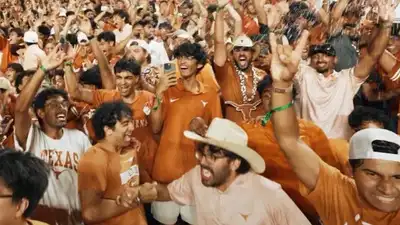
The photograph failed the statistical smell test
Asian Americans now constitute about 6.7% of Texas’s population, while the state’s foreign-born population is 17.6%, according to Census Bureau data. The transformation is particularly visible in the technology and professional suburbs around Dallas-Fort Worth, Houston and Austin which have become a hotbed of anti-Indian rhetoric and activism.
Senator John Cornyn, a Republican and former co-chair of the Senate India Caucus, sharply rebuked French, asking whether Republicans would condemn “intolerance and racism” or allow it to become normalized. MAGA hardliner response: A meme showing Abbott smooching a sari clad woman who says, “Thank you for catering to us. For now, a football photograph has exposed a much deeper argument over immigration, race, economic opportunity and the changing meaning of “American” — while the statistics sit rather conspicuously on the sidelines.
Indian community activists acknowledge none of this means immigration policy is beyond legitimate debate, nor that every criticism of the H-1B programme is xenophobic. They agree that critics raise genuine questions about outsourcing, wage competition, employer practices, visa dependence and whether the programme is being used as Congress intended. But there is a considerable difference between asking whether H-1B policy works properly and looking at a football crowd, guessing people’s ethnicity and declaring that Indians are displacing Americans. The response from Texas Republicans exposed another fault line within the GOP. Texas Governor Greg Abbott, who has made two business trips to India, has simultaneously pursued tough state-level immigration measures while maintaining a political and economic environment attractive to technology, energy and internationally connected businesses. In response to the controversy, Abbott rejected French’s interpretation of the photograph, saying it showed how Texans could unite, while reiterating his support for stringent immigration policies and restrictions involving H-1B visas at universities. The political question now is whether Texas Republicans will continue treating visible demographic change as evidence of displacement or distinguish between immigration policy, economic competition and the much older question of who gets to call himself or herself a Texan – or American for that matter.