
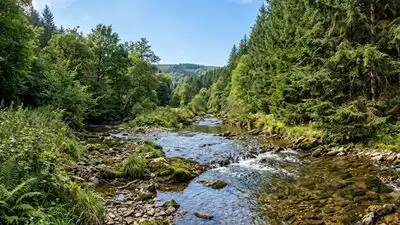
PC: AI Generated
Groundwater beneath Douglas-fir also recorded nitrate concentrations reaching 50 milligrams per litre. At Breuil in France, nitrate levels in the Douglas-fir subcatchment ranged from 3 to 21 milligrams per litre between 2019 and 2021. Nitrate concentrations beneath Douglas-fir reached as high as 50 milligrams per litre.
Because soil nitrate concentration was linked to nitrate concentration in nearby streams, this was important. Forests are often associated with clean water, but a study of Douglas-fir plantations in France and Luxembourg has found that the trees can be linked to much higher nitrate levels in nearby streams and groundwater. Researchers examined paired headwater catchments with different land covers, including Douglas-fir, spruce, deciduous forests, grassland, and clearcuts. The catchments were monitored for three to five years to understand how Douglas-fir affected water chemistry. The study published in ‘ Environmental Pollution ’ found that streams draining Douglas-fir catchments had nitrate concentrations two to ten times higher than streams draining other forest and grassland areas. The study found that streams draining Douglas-fir catchments had noticeably higher nitrate levels than those flowing through areas with other land covers. Across the three study areas, nitrate concentrations in streams below Douglas-fir were two to ten times higher than those measured in streams associated with spruce, deciduous vegetation and grassland. At some sites, nitrate concentrations in Douglas-fir streams also reached levels similar to those found below clearcut areas. The researchers found that these elevated concentrations were connected to nitrate production and accumulation in soils beneath Douglas-fir plantations. PC: AI Generated The researchers also examined nitrate in soils to understand where the higher stream concentrations were coming from. Soil nitrate concentrations under Douglas-fir were higher than under the other land covers studied. Their levels were also similar to those measured in clearcut areas at the French sites. This indicated that Douglas-fir plantations were linked to excess nitrate production in the soil. The findings supported the researchers’ hypothesis that a substantial share of the excess nitrate produced in Douglas-fir soils was transferred through the soil profile and eventually reached surface waters. Groundwater measurements provided another indication of the effect associated with Douglas-fir plantations. These concentrations were higher than those recorded under the other land covers examined in the study. The researchers connected the groundwater results with the nitrate accumulation observed in Douglas-fir soils. When nitrate production exceeds the ability of plants, microorganisms and other processes to retain or remove it, the excess can move through the soil with water.
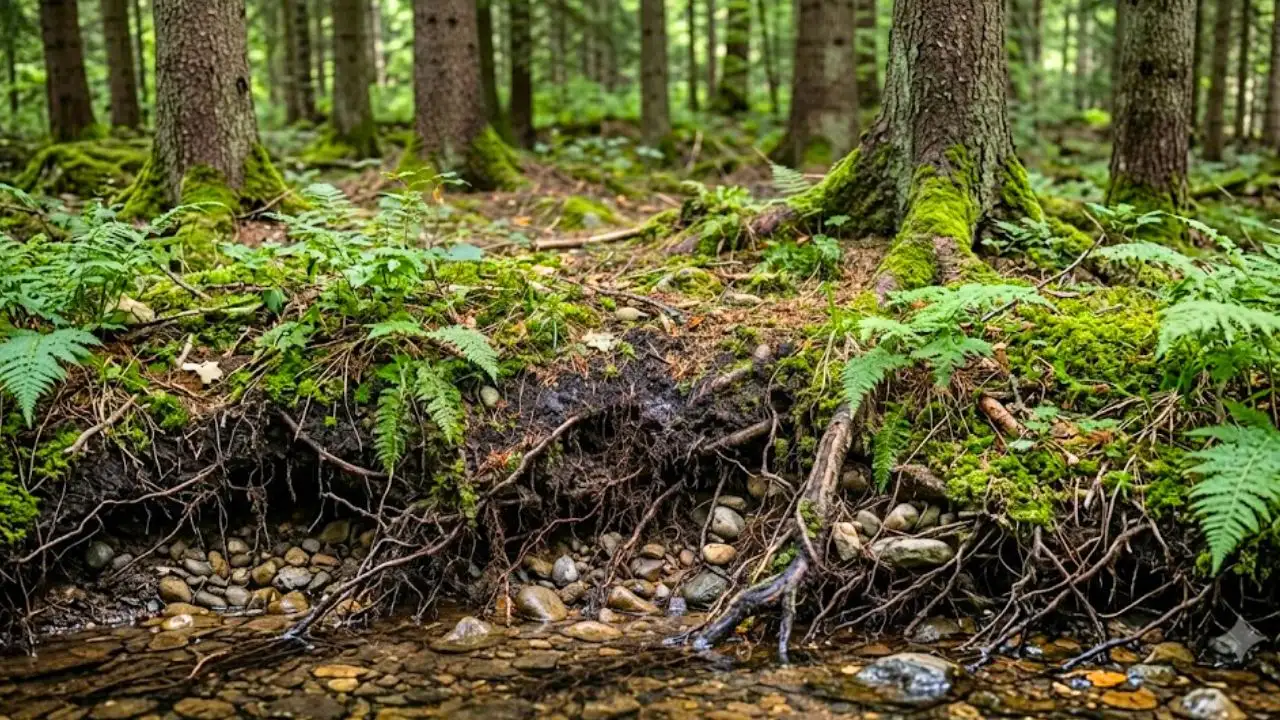
The researchers focused on how Douglas-fir plantations affect the movement of nitrogen through forest soils. Nitrogen enters forest systems and is then transformed through processes including mineralisation, nitrification, plant uptake, microbial immobilisation and denitrification. The balance between these processes determines how much nitrate remains available to move through the soil. The study’s results show that this balance was different beneath Douglas-fir plantations. Excess nitrate production appeared to exceed processes that would normally retain or remove it. Seasonal changes in nitrate concentrations also showed an imbalance between nitrate production and consumption.
the study found that the effect became weaker further downstream Although Douglas-fir catchments showed higher nitrate concentrations. The researchers attributed this reduction partly to dilution as water from different areas mixed. This finding notes that the impact of Douglas-fir on surface-water nitrate is not necessarily the same throughout an entire catchment. The researchers proposed that mixing tree species at the catchment scale could help reduce the effect of Douglas-fir plantations on nitrate concentrations in surface waters. Their findings also show that forested catchments cannot always be assumed to have low nitrate levels. Catch the latest World News and Live updates. Download the TOI app.