
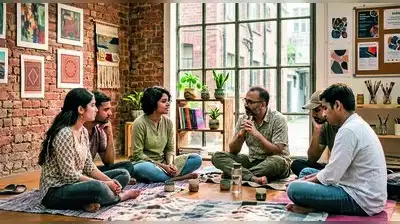
On weekend mornings, small circles are forming across Bengaluru, where strangers gather to say the things that are usually left unsaid: the weight of family expectations, the ache of feeling left behind, the fear of ageing and the vulnerability of intimacy. Some truths are easier to share with someone who doesn’t already know your story.
It is people who share that experience coming together,” says Natasha Joshi, strategy officer of an organising committee. “They also have a space to share how they have experienced something similar,” facilitator Shashanka Lakshmipati says, adding, “When facilitators show vulnerability themselves, it can help participants feel more comfortable opening up. ” ‘The space is not solution-oriented’ The purpose of such conversations is not necessarily to arrive at an answer. “Unlike a workshop, which usually works towards a defined outcome, a sharing circle is an exploration around a theme,” says Shashanka.
Sharing circles offer a space for such conversations: where people speak from lived experience and are heard, without anyone rushing to fix, advise, or resolve. What do they get in return? The rare gift of being understood without having to explain. Unlike a panel discussion, where a subject is often approached through research, professional knowledge or clinical practice, these conversations place lived experience at the centre. “We had panels happening on stage, with panellists talking about a topic from a place of research or clinical practice. But a sharing circle is something that is entirely lived experience. There is no expert in a sharing circle. Facilitators help ensure that the discussion remains balanced, while participants may recognise their own experiences in someone else’s account. “One of the things that sets a sharing circle apart is that it isn’t solution-oriented. There isn’t really one problem that we’re trying to solve. The idea is to offer a space where emotions and feelings can be explored in a community, and not necessarily to solve the problem,” he adds. Yashasvi adds that participants often support one another. “When emotions get unlocked, and people cry or talk about things they have never spoken about out loud, it is often the others with similar experiences who hold that space. They bring in empathy and know what to say in ways that only somebody with that kind of experience can.”