
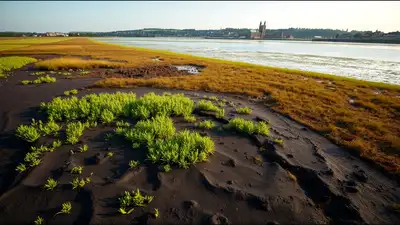
Representative Image of the restoration of Lymington saltmarsh using dredged sediment and revitalized vegetation (AI Generated Image)
Lymington’s saltmarsh has been declining since around 1920 and continues to erode, raising concerns about the natural coastal protection it provides around the harbour. After the first 2024 trial, around 800 cubic metres of sediment had been placed, and monitoring showed substantial vegetation recovery by the following year. Since 2014, Lymington Harbour Commissioners have been able to place up to 10,000 wet tonnes of dredged sediment a year in a licensed disposal area near Boiler Marsh. Surveys by August 2023 showed that this sediment had built up an area of around 17,000 square metres by about 1.5 metres, helping reduce erosion of the marsh behind it. A first trial was carried out in August and September 2024 using a Saltmarsh Restoration Drag Box developed for moving sediment in shallow intertidal environments. The Marine Management Organisation had granted Lymington Harbour Commissioners a 10-year licence in December 2023 to trial new techniques, while the Environment Agency provided funding from the Department for Environment, Food and Rural Affairs Water Improvement Fund. The 2024 campaign did not move as much sediment as originally intended. The trial area continued to be monitored through 2025. About 800 cubic metres of sediment were placed in the first trial area at an elevation intended to support saltmarsh regeneration. When the team returned around 12 months later, they found good-quality saltmarsh vegetation growing there. The Crown Estate says the area has lost around 85% of its saltmarsh over the past 100 years.
Project representatives said the material had been rapidly colonised, with the transformation occurring over a single winter. Dr Jonathan Dale, a physical geography lecturer at the University of Reading who studies wetland restoration, said the decline has reduced benefits including carbon storage, flood defence and habitat for fish and birds. Dale said the Lymington trial could provide another option for restoring saltmarsh in locations where conventional approaches are unsuitable. He pointed to projects using brushwood structures in the Dart and Severn estuaries, which trap sediment and encourage marsh development, but said the use of dredged sediment could offer an additional restoration method.
A trial at Lymington Harbour in Hampshire has shown how sediment dredged from the harbour could be reused to help restore an eroding saltmarsh, with vegetation returning to a treated area within about a year. The project is being led by Lymington Harbour Commissioners with Land & Water and other partners, including the Hampshire and Isle of Wight Wildlife Trust, the Environment Agency and the Crown Estate. Instead of allowing dredged sediment to remain in conventional disposal areas, the project has tested ways of moving it to higher parts of the marsh, where the ground can reach elevations suitable for saltmarsh vegetation to establish. Lymington Harbour has already been using dredged sediment as part of efforts to slow saltmarsh erosion. However, the material remained too low in the tidal frame for new high saltmarsh to establish. The new restoration project was designed to solve that problem by moving already deposited sediment onto lower-lying areas of deteriorating marsh. Difficult ground conditions contributed to equipment problems, while an unseasonably windy period also affected the operation. Even so, the project team considered the technique promising and used the experience to improve subsequent work. The ecological response was more encouraging. The restoration relies on reaching a suitable elevation and providing sediment with appropriate physical and chemical characteristics, after which seeds carried by wind and birds can naturally establish on the surface. The restoration is taking place against a long-term decline in Lymington’s saltmarsh. The harbour’s saltmarsh provides coastal protection while also supporting wildlife, including birds and other species associated with intertidal habitats. The problem extends beyond Lymington. Dale also noted that traditional managed realignment, which involves breaching existing flood defences to allow tidal water onto land behind them, is not suitable everywhere, particularly where infrastructure or heritage assets occupy the land behind existing defences. The Lymington project is now being developed beyond the initial trial. A second phase has allowed the team to move a larger quantity of sediment more efficiently, while continuing to test how dredged material can be placed at elevations suitable for saltmarsh restoration. The Crown Estate has backed the work as part of its wider interest in finding ways to combine harbour maintenance with nature restoration. The Lymington team similarly hopes that lessons from the trial can be applied to other eroding saltmarshes around the UK, although further monitoring will be needed to establish how durable the restored habitat is over the longer term. Catch the latest World News and Live updates. Download the TOI app.