
Image credit: iStock
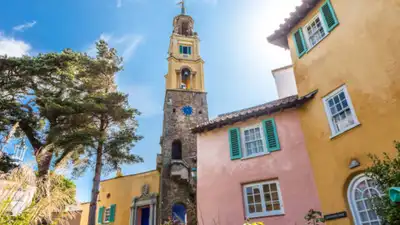
When the old Aber Iâ estate near Penrhyndeudraeth came up for sale, he didn’t hesitate. He bought the neglected patch of cliffs, woods and shoreline from his uncle and set to work. What started as a rundown promontory with a Victorian house and a few cottages slowly grew into Portmeirion, the colourful Italian-style village that still draws people today with its pastel walls, quirky towers and sea views.
The first step was converting the old shore house into a hotel that opened in 1926, giving him income and a base while he began sketching the village itself. He renamed it Portmeirion right away, Port for the coastal setting, Meirion for the old county of Merioneth, and turned the main house into a hotel to help pay for the dream. Over the next fifty years he kept adding buildings, paths and gardens, proving that a place could be both practical and full of delight. The Aber Iâ peninsula, just a few miles from his family home at Plas Brondanw, had everything: steep wooded cliffs, a wide sandy estuary, streams and a mild microclimate that somehow felt a touch Mediterranean. He saw the neglected wilderness and knew at once it could become the living example of his ideas. the Italian Riviera and especially the fishing village of Portofino, had stayed in his mind for years Although Williams-Ellis always insisted Portmeirion was not a direct copy of any one place. He loved the way coloured buildings climbed hillsides above the sea and how human-made charm could sit happily with natural beauty. Another strong reason for the way Portmeirion grew was Williams-Ellis’s dislike of waste. He turned the village into what he called a “home for fallen buildings. Ceilings, colonnades, windows and whole façades that were about to be demolished elsewhere in Britain found a second life here. A Jacobean plaster ceiling from Emral Hall, a Georgian colonnade from Bristol and many other fragments were carefully rebuilt into new structures.