
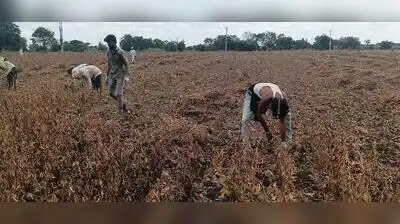
Dry stalks are all that’s left to hold on to in Dharashiv
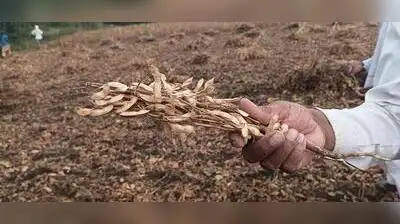
Instead, he sat under a tree, worrying about how to pull out the dry stalks that may not even give him 10% of his normal harvest. “Last year, I had a bumper harvest earning around Rs 4 lakh. This year, I have spent about Rs 2 lakh cultivating soybean this season and will have to pay workers to pull out a useless crop,” he said, holding up shrivelled pods. Waybhatt and Mane‘s distress is now backed by a district-wide crop assessment, which found widespread and severe damage to kharif crops across Dharashiv, with field-level losses estimated at 50% to 90%. A joint committee constituted by district collector Keerthi Pujar inspected all eight talukas and 53 revenue mandals a few days ago. The evidence, particularly after Aug 1, points towards severe drought conditions. The assessment found that 70-80% of the crop area was unlikely to recover even if there is any rainfall now. Dharashiv received 123.9mm of rain in June against the normal 126.9mm and 136.9mm in July against the normal 137.1mm. Aug rainfall was only 43.1mm against a normal of 154.4mm, a 72% deficit. The overall rainfall deficit in the district is –45%. The normal is 519.5 mm but it received 284.7mm up to till Sept 20, IMD reports said. The committee recorded rainfall deficits ranging from 25% to 90% across the mandals, with the deficit exceeding 60% in most of them. Soil moisture at severe levels In the eight mandal clusters of Asu, Anala-Shelgaon, Jawala Nimbayachi-Pachpimpla, Sonari, Walwad, Washi, Terkheda and Yermala, soil moisture remained below the permanent wilting point for more than 21 days between Aug 1 and Sept 8. Moisture in the root zone was below 25% across the district, placing it in the severe category under the state’s drought assessment framework.
Because they see several opportunities for assured income, final-year student Akash Dage from Chinchpur said many youths from his village are pursuing higher studies in Pune and Mumbai and don’t want to return. It is better than fighting this lost battle infarming. You Can Also Check: Gold Rate in Pune | Silver Rate in Pune | Bank Holidays in Pune | Public Holidays in Pune | Petrol Price in Pune | Diesel Price in Pune | CNG Price in Pune | LPG Price in Pune Stay updated with the latest Pune news.
I still have to pay for the fertiliser and pesticide bills for this crop,” farmer Ramraje Mane said. I have similar thoughts now,” Mane said, appealing to govt to declare drought and release relief for the affected farmers. Pujar told TOI, “The committee concluded that the first mandatory drought trigger is visible across the district. “Such conditions can leave crop yields close to nil and cannot be reversed even if it rains now,” Pujar said.
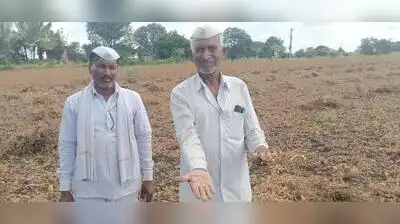
Dharashiv farmers are uprooting soybean and selling it as fodder Shridhar Waybhatt (right) a Dharashiv farmer shows shrivelled soybean seeds Young farmers in Dharashiv gathered on a dry field when they should be reaping the harvest are angry that no govt officials has visited Dry stalks are all that’s left to hold on to in Dharashiv Dharashiv farmers are uprooting soybean and selling it as fodder Shridhar Waybhatt (right) a Dharashiv farmer shows shrivelled soybean seeds Young farmers in Dharashiv gathered on a dry field when they should be reaping the harvest are angry that no govt officials has visited Dry stalks are all that’s left to hold on to in Dharashiv Washi/ Bhum ( Dharashiv ): At this time of the year, Shridhar Waybhatt from Pargaon village in Washi tehsil is usually preparing to harvest his six-acre soybean farm along Beed-Dharashiv highway. The monsoon’s prolonged break has had its say. In Mhatrewadi village in Bhum tehsil, soybean plants were so stunted that they were hardly above the ground. “There is nothing left to farm now. Mhatrewadi farmer Laxman Pawar killed himself when his crop was washed away by a stream that overflowed, flooding his field. “I realise why he took the extreme step. The team included officials from revenue and agriculture departments, experts from Krishi Vigyan Kendra, Tuljapur, scientists from Marathwada Agricultural University and IIT Bombay representatives. Soybean was at the flowering and pod-filling stage when the prolonged dry spell struck. The committee observed that flowers were scorched and had fallen, and only a few pods had formed. Many were flat and unfilled, with shrivelled grains. Aug rain vanished, so did flowering The district had received near-normal rainfall during June and July, raising hopes of a good kharif season. But the monsoon vanished in Aug, when crops need them the most. “I will also go to Pune once I graduate. Download the TOI App.
The crisis is so severe that he is experiencing the same despair that had gripped another farmer from his village last year.
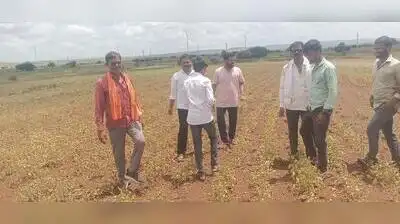
We have yet to get specific instructions,” Pujar said. Mass migration looms A rural development expert said the agricultural crisis could accelerate seasonal migration of agricultural workers and small farmers towards urban and industrial centres. “If the crop failure extends across the district, seasonal migration to Pune, Chhatrapati Sambhajinagar and other urban and industrial centres could increase as farm households search for wage employment,” the expert associated with govt projects said. Ramraje Mane, a youth from Mhatrewadi said they will move to the city.
“We have submitted our report to the divisional commissioner and the state govt. The team must also compile technical indicators including vegetation indices, groundwater drought indices and actual sown area against the five-year average. Socio-economic indicators such as fodder availability, drinking water, demand for employment, migration, wages and prices will also be documented. “Even if we get a menial job, we will still be able to earn some money. Our families need it to tide over the immediate financial crisis at home.”
Of the 53 assessed mandals, 23 were in the first category, where crop loss was estimated at more than 80% across heavy, medium and light soils. Under the state’s drought assessment process, ground-truthing is carried out in 10% of randomly selected villages in each taluka crossing the prescribed trigger. But officials have to see the damaged crop so that the statutory ground verification, crop-cutting experiments and panchanamas can be completed.
The assessment found particularly severe conditions in Paranda, Bhum, Washi and Kalamb, with the impact extending to other parts. The team observed stem fly and yellow mosaic disease in what survived of the soybean crop, further reducing their survival. These included seven mandals in Paranda, two each in Bhum, Washi and Kalamb, four in Dharashiv, three in Tuljapur, two in Lohara and one in Umarga. Farmers want drought relief, but crop evidence may not survive The crisis has now moved beyond crop loss. The committee recorded the beginning of drinking-water stress for people and livestock, with tankers operating in some villages. Several farmers are preparing to plough the field with the crop or use it as fodder. Five sites for each major crop will be examined, with observations recorded through a cellphone application along with GPS coordinates and photographs. The committee has recommended that the exercise start immediately, before farmers remove the dry stalks.