
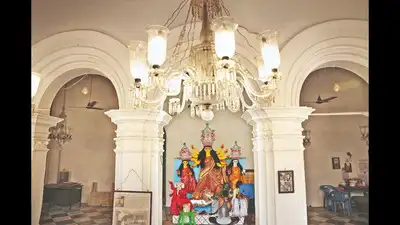
Kolkata’s bonedi baris are entering a new chapter, as smaller families, migration, rising upkeep costs and changing ideas of heritage make the old model of collective, generational upkeep harder to sustain. Yet younger generations are showing renewed interest in these traditions’ stories, and families are turning to adaptive reuse, cultural events and pop-ups to keep homes active, relevant and financially viable. The question now isn’t just how to preserve the past, but how to give it a future.Kolkata’s bonedi baris are entering a new chapter, as smaller families, migration, rising upkeep costs and changing ideas of heritage make the old model of collective, generational upkeep harder to sustain. The question now isn’t just how to preserve the past, but how to give it a future.
They run a café in one section of their 126-year-old home, which remains their Durga Pujo venue.
“Giving these spaces a new purpose while retaining their architectural character makes conservation more sustainable — it keeps buildings active while preserving the memories embedded in them,” said Riona Mitter of Mitra Bari-Bishnupur. Devipriya added, “We wanted the house to stay occupied, and economically relevant without losing its identity.” Adaptive reuse could offer Kolkata’s heritage homes a practical way to survive. Adaptive reuse is something Devipriya and her sister Devaleena are already doing.