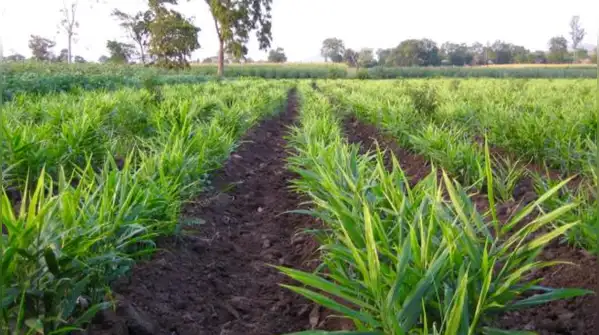
In 2025, the 27-year-old farmer from Chincholi Mali village in Maharashtra’s drought-prone Beed district harvested 290 quintals of ginger from one acre. He sold it at an average of around Rs 6,000 per quintal and says the acre brought in Rs 17.4 lakh in revenue. After cultivation costs of about Rs 3 lakh to Rs 3.5 lakh, Gaikwad says he was left with more than Rs 13 lakh in profit.
These are figures reported by 30Stades based on Gaikwad’s account, not a return that every ginger farmer can expect. The ginger growing under Nikhil Gaikwad’s soil is worth a closer look. What makes his story interesting is how he managed the crop in a district where water is a constant concern.
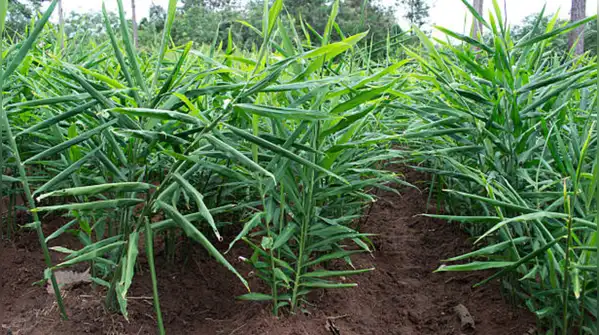
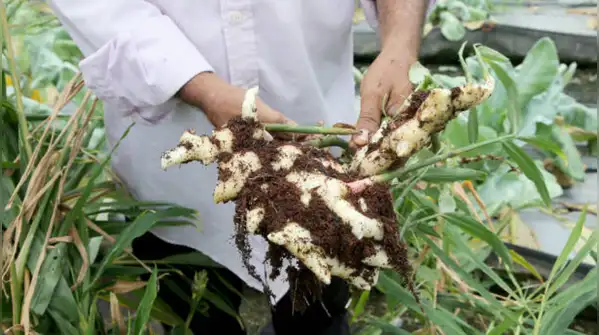
Gaikwad’s family farms about 10 acres and traditionally grew crops such as jowar, moong, wheat and soybean. In 2022, he decided to experiment with ginger after seeing other farmers grow it. He harvested 187 quintals from around 38 guntha, or roughly three-fourths of an acre, after about 10 months, according to his interview with 30Stades. He sold the ginger for Rs 9,300 per quintal. Gaikwad uses about 10 quintals of ginger rhizomes per acre, with plants kept less than half a foot apart, 30Stades reported.
Gaikwad told 30Stades that he focuses on building soil fertility before the ginger is planted rather than trying to correct everything later. The loose material helps create a softer growing area for the ginger rhizomes, according to his account. He told 30Stades that he uses these inputs as part of his approach to keeping the crop healthy and managing disease.
But after completing his studies, he wanted to try something different. He selected the IISR-Mahima variety and planted it on roughly three-fourths of an acre. The first harvest gave him a reason to continue. That first experiment changed his calculation. He grows chickpea or green gram as a preceding crop. After harvesting the chickpeas around February, he doesn’t simply clear the field and start again. Instead, he breaks down the remaining stalks and roots and mixes them back into the soil. He then adds cow dung manure and works the soil with a rotavator. The idea is to put organic matter back into the field before planting a crop that will remain underground for eight to nine months. This is particularly relevant in Beed, where water availability can be a challenge. Gaikwad prepares raised beds with inline drip irrigation running beneath the crop. Instead of spreading water across the whole field, the drip system delivers it closer to the plants’ root zone. He also builds the beds with organic material such as soybean waste and fallen leaves. The crop is planted after the beds are prepared and adequately watered. And there’s a reason he pays so much attention to what happens underground. Ginger stays in the soil for months, so problems with the root zone can remain hidden until they start affecting the harvest. Gaikwad also uses biological inputs, including Trichoderma and other microbial formulations, along with biofertilisers. His reasoning is fairly straightforward. Since the ginger remains underground for much of its growing period, he wants to pay close attention to the soil and root zone throughout those eight to nine months. That doesn’t mean microbial products can guarantee a successful ginger crop. Farming outcomes still depend on soil, weather, water, disease pressure, input costs and market prices. Gaikwad himself acknowledges that ginger prices can change sharply.
One of the less obvious parts of Gaikwad’s method happens before the ginger even goes into the soil.

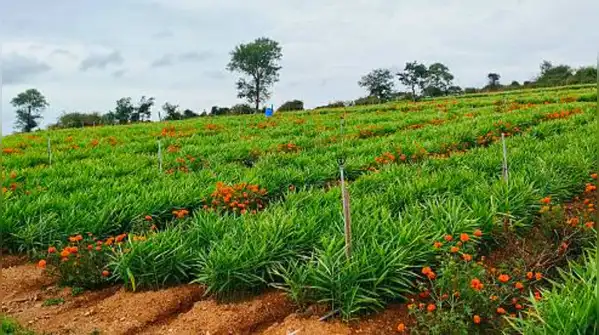

Gaikwad’s 2025 harvest convinced him to expand.
That is what makes his story more than a simple “farmer earns Rs 17 lakh” success story. This is perhaps one of the simplest changes in his business model. When the ginger is ready, wholesalers come directly to his farm. They arrange workers to harvest it and have machines to wash the produce before taking it onward. That means Gaikwad doesn’t have to pay separately for transporting the crop to a market or handle all of the harvesting and washing himself. It also changes where his attention goes. He can concentrate on growing the crop while the buyers take care of much of the work after harvest. He is now growing ginger on two acres, with harvesting expected around March. But he isn’t ignoring the biggest risk. Ginger prices can move up and down, and a high selling price isn’t guaranteed every season. Gaikwad’s own view is that strong yields and controlled costs can help protect returns when market prices are lower. The number came from one year’s crop, one farm and one set of conditions. Behind it was a long preparation process, careful water use, attention to the soil and a marketing arrangement that reduced some post-harvest costs. In a drought-prone part of Beed, Gaikwad has found that changing how he farms can matter just as much as changing what he grows.