
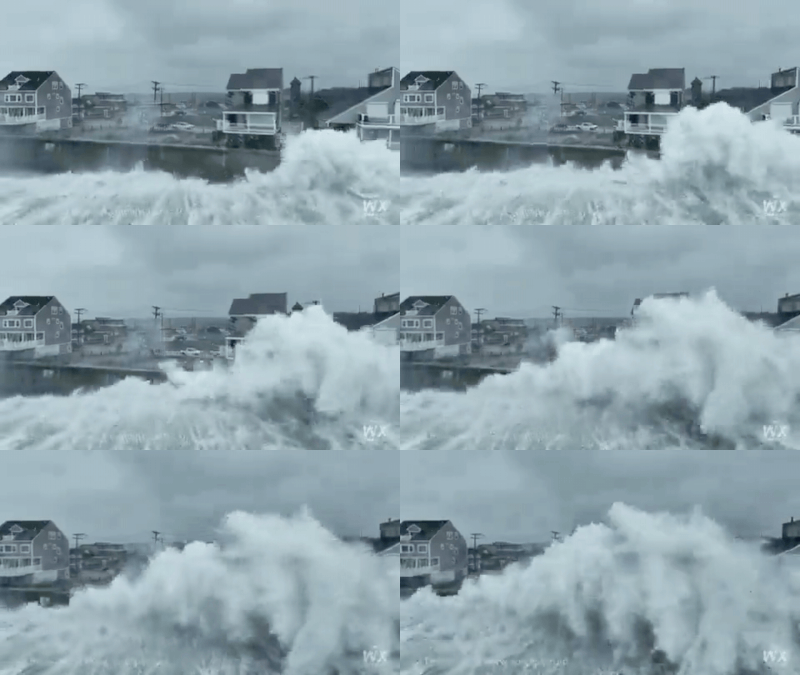
Nor’easter pounding the Massachusetts coast with huge waves. (Source: X)
Nor’easters also appear to occur more frequently during El Niño years, according to a New York Times report. But there is a bigger climate pattern in the background: El Niño. El Niño is a natural cycle in the tropical Pacific in which unusually warm ocean temperatures alter atmospheric circulation far beyond the Pacific. This year’s El Niño is particularly strong. Its effects are being felt across the US, although scientists stress that it does not directly cause every individual storm. For the Northeast, El Niño can shift the Pacific jet stream southward. That atmospheric pattern can help provide energy and moisture for storms forming off the southeastern US before they move north along the East Coast.
The National Weather Service warned that the storm could continue bringing coastal flooding, rip currents, strong wind gusts and heavy rain through Monday. The biggest threat was expected along coastal and bayside communities, where exceptionally high tides could send water onto roads and into homes and businesses. They can bring a dangerous combination of heavy rain, powerful winds, coastal flooding and huge waves. Heavy rainfall can overwhelm drainage systems and worsen inland flooding, while strong gusts can bring down trees, damage buildings and snap power lines. High tides, combined with storm-driven water, can push seawater onto roads and into coastal communities. Meanwhile, prolonged strong winds can whip up dangerous surf and accelerate beach and dune erosion. The immediate ingredients are the storm’s atmospheric setup, strong winds, moisture and the temperature contrasts that help nor’easters intensify.