
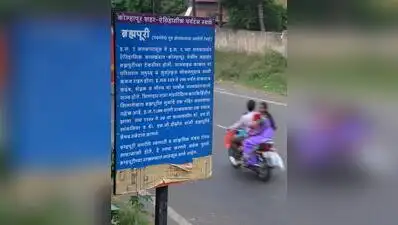
Picture of a board erected at Brahmapuri area in Kolhapur city displaying information about the history of Brahmapuri hill
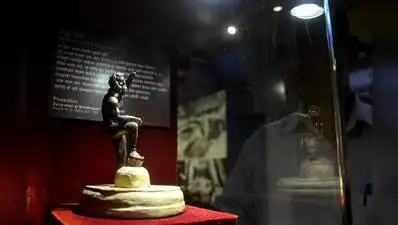
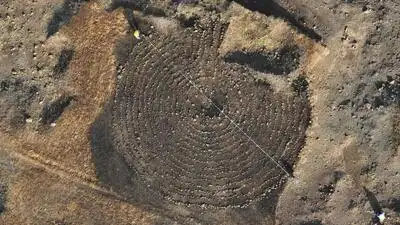
Kolhapur : The discovery of 12 labyrinths of varying sizes and shapes in parts of western and central Maharashtra has renewed interest in an ancient site in Kolhapur city over the possibility of a trade route used by Graeco-Roman travellers and a flourishing conch shell bangle making hub. Head of archaeology department at Deccan College Research Institute and Deemed University in Pune, Prof PD Sabale said, “Statue of the Graeco-Roman sea god Poseidon and bronze polished mirror found in the excavation carried out at Bramhapuri in 1945, the 12 labyrinths and the Roman antiques found at Ter suggest that our region was used as a trade route or silk route by the then Graeco-Roman merchants.
Our aim through this fresh excavation is to identify if a Roman settlement existed at Brahmapuri and to trace evidence of a conch shell bangle making workshop at the site,” he said. Conch shells used to make bangles were found only in Dwarka, Shankodhar Island and Karachi region at the time, officials said. This will establish a connection between Dwarka and Brahmapuri,” Ambekar said. Measurements, land ownership and other details will be checked after which approval and steps will be taken for conservation,” Ambekar said.
ASI officials informed that this excavation can disclose the relation between the ancient foreign trade and the labyrinths discovered in parts of western and central Maharashtra. A series of labyrinths have been discovered in Sangli, Kolhapur, Satara, Solapur and Dharashiv districts over the past two years, indicating travel of Roman traders to this part of the country. Ambekar added that archaeology researcher Sachin Patil has put forth evidence showing connection of the labyrinth with Roman trade. “If there was a Roman settlement and if the labyrinths are connected to them, then definitely we will unearth more artefacts at Brahmapuri after excavation. Evidence of conch shells has also been found at Ter in Dharashiv district, Paithan in Chhatrapati Sambhajinagar, Nashik and settlements across South and Central India. Manufacturing at Ter and Brahmapuri would indicate a profitable business. “Now, these bangles are only made at Bishnupur in West Bengal. Excavation at Vadnagar in Gujarat shows that production of bangles from shells stopped in the 13th Century. Similar evidence is likely to be unearthed from the excavation at Brahmapuri. The ASI is now considering conservation of the labyrinths discovered recently. “Conservation of these labyrinths is on the radar of ASI. Our team will visit these labyrinth sites post monsoon. More in-depth study and conservation of such structures is required. ”