
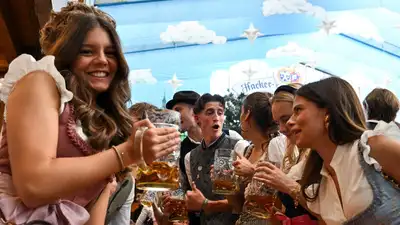
At least 32,000 videos featuring women on the Teufelsrad have been circulated. (Reuters photo)
Police step up warnings as influencers face new rules
German broadcaster BR reported that one woman earned €9,000 from a single clip. At least 32,000 videos featuring women on the Teufelsrad have been circulated, according to Munich daily Süddeutsche Zeitung. Bavarian police have been running a poster campaign at Oktoberfest since 2025 to warn visitors about upskirting, a spokesman told the BBC. Police arrested a 45-year-old Swiss man this year after he was allegedly caught using his phone to film under a German woman’s dirndl. There were 10 arrests for upskirting at the festival last year and seven in 2024.
Some images have also been digitally manipulated to make the women appear naked, according to BR. However, Polaczy said it is impossible to monitor everyone using a smartphone in the crowded area. Ballon said people who upload intimate images online should face consequences, as should platforms that host such material.
A popular ride at Munich’s Oktoberfest has become the centre of a growing controversy over voyeuristic videos, with its operator handing out free cycling shorts to women to help protect them from being filmed under their skirts. The Teufelsrad, or Devil’s Wheel, is one of the oldest attractions at the annual beer festival. Its large circular platform spins at increasing speeds, eventually throwing riders off. The movement can cause skirts and dresses to fly up, making people on the ride vulnerable to being filmed from below. Thousands of videos showing women on the attraction have appeared online, with some reportedly attracting millions of views. Some have apparently been watched millions of times. The videos often show women wearing traditional dirndl dresses with their underwear visible. The Teufelsrad tent displays signs and police posters in both German and English warning visitors against filming under people’s skirts. Some waitresses working at this year’s festival have also started wearing cycling shorts beneath their dirndls. The issue comes as Munich authorities are also tightening rules for influencers and content creators who make money from filming at Oktoberfest. The city has banned live streaming from the festival and requires people who want to film there to obtain a permit for a fee. Hundreds of permits have been issued this year to influencers who earn money through activities such as product placements and sponsorships. You use AI every day. Now get your AI Quotient. Take the AIQ test.
She said she has handed out more than 100 pairs during this year’s Oktoberfest. Polaczy, who is 80, said providing the shorts costs her money but gives her peace of mind.
Josephine Ballon, head of German non-profit organisation Hate Aid, which supports victims of digital violence, said the existing law does not offer enough protection. She said there are plans for new legislation, but the current law “applies only when you film under the skirt”, meaning it may not apply when a skirt simply flies up and someone photographs what is visible. Elisabeth Polaczy, who runs the Teufelsrad, told the BBC that she has been giving women and girls wearing dresses free cycling shorts for the past three years.
BR’s investigation found that a group of professional YouTubers from Ukraine and several people from Bavaria were behind the videos. Filming under someone’s skirt is illegal in Germany and can carry a prison sentence of up to two years. However, critics say the law does not cover every situation in which intimate images are captured. Ballon also warned that new devices such as camera glasses could create additional risks. “I want to do everything I can to make people feel secure.