
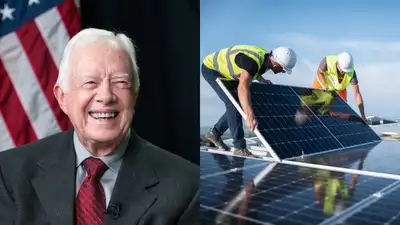
The solar array was equipped with single-axis tracking technology, which means its panels are able to follow the movement of the sun and improve energy generation throughout the day.
In 2017, Carter leased 10 acres of his Georgia property to Atlanta-based SolAmerica Energy to build a 1.3-megawatt solar installation, according to Market Screener. Later estimates put its contribution at about 60% of the city’s electricity demand. The project was developed, engineered and installed by SolAmerica and supported by a 25-year power purchase agreement with Georgia Power. The Plains installation is expected to produce more than 55 million kilowatt-hours of clean electricity in its first 25 years. Carter’s interest in solar power is not new, dating back to his presidency from 1977 to 1981.
The report said the solar array was equipped with single-axis tracking technology, which means its panels are able to follow the movement of the sun and improve energy generation throughout the day. Because it was located on land associated with Carter, the installation had an added historical dimension. He also signed legislation called the Public Utility Regulatory Policies Act, or PURPA, which helped spur greater participation by independent power producers and contributed to the growth of renewable energy in the United States.
Before solar farms dotted the American landscape, Jimmy Carter was already threading renewable energy into his public legacy. That philosophy was practiced in the past by the former president in his hometown of Plains, Georgia, where he leased part of his family farm for a solar project that would go on to provide a significant share of the small city’s electricity needs, an online report by Market Screener states. The project was meant to provide over half of Plains’ electricity needs, a strikingly large renewable-energy installation for the community. This was a sizable project for a community with a small population and relatively small electricity demand. The solar farm became part of Plains’ daily power supply rather than a demonstration installation. The project also typified a larger shift taking place in Georgia as utility-scale and distributed solar developments started to take off. Carter spent decades advocating for renewable energy, both while president and after leaving the White House. His administration created the Department of Energy , and set policies that helped shape the emerging energy framework of the country .
Beginning with 10 acres and a modest 1.3-megawatt installation, it became a major electricity provider for the town, a lasting testament to how a small community can take a familiar piece of landscape and make it part of its energy future. For Plains the project was more than a solar array. It was a rare convergence of local history, energy policy and technological change. Once famous for its peanuts, agriculture and the former president’s post-White House life, Carter’s farm has another chapter as part of Georgia’s shift to renewable power. Images Courtesy: Facebook and istock You use AI every day. Now get your AI Quotient. Take the AIQ test.
The report also notes that Carter became closely identified with solar energy during his presidency after solar panels were put on the White House. The panels were meant to show what solar power could do when the technology was still far from being common. Though the panels were removed during the Reagan administration, Carter’s legacy of renewable energy persisted long after his presidency. The Plains installation linked that long-standing interest in renewable energy with Carter’s hometown. And its location on his property also highlighted the potential role that privately owned land can play in developing smaller, distributed energy projects. The long-term contract was expected to make the solar installation productive for decades, providing electricity and helping diversify the community’s sources of energy.