
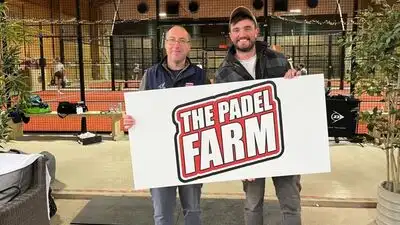
Callum Stark (on the right). Image Credit: The PADEL FARM/website
Callum Stark converted a 3,000-tonne potato storage building at Fridlington Farms near Sutton-on-the-Forest into two indoor padel courts. His new venture, The Padel Farm, opened in 2025 and quickly attracted strong demand. A North Yorkshire farmer has found a new use for a potato store after disappointing returns from the crop prompted him to rethink part of his farming business. Within months, the courts were fully booked, turning a space once used for storing potatoes into a new source of income while Stark continues to run the family farm.
Stark lost £12,000 on a potato contract, prompting him to consider how the farm could make better use of its existing assets, according to Farmers Guardian. The farm covers about 3,000 acres near Sutton-on-the-Forest, and farming remains a central part of the business. Farm Business Innovation reported that there were only around 800 padel courts in the UK at the time, compared with about 33,000 in Spain. The Padel Farm is around 15 minutes from York city centre, according to The Padel Paper, while the club’s own website describes it as York’s first indoor padel and social club. The venue opened in March 2025 at Fridlington Farms, with free introductory sessions for adults and children. It says the facility has attracted about 3,000 active members, showing how quickly the project has developed from an experiment in an old agricultural building into an established local sports venue. In its May 2026 feature, The Padel Paper reported plans for more indoor courts, an outdoor court, a café and bar, wellness areas, spin and Pilates studios, hot tubs and ice baths, alongside a Hyrox gym. Farmers Guardian reports that the project had created a completely new income stream within 3 months, while the same report noted that the wider family farm faces significant financial pressures, including planning for a potential multi-million-pound inheritance tax liability. The Padel Paper’s 2026 feature described the farm’s finances as having faced tight margins, while the new venture was bringing additional visitors and revenue.
But Farm Business Innovation reported that Stark felt the potatoes were not providing enough reward for the level of risk and effort involved. The Padel Paper reported that the team had been inspired by a visit to Blazing Padels near Norwich, where two padel courts had also been installed inside a converted barn. The Padel Paper reported that junior activities were planned from the beginning, including a Saturday morning children’s club and ladies’ taster sessions with free coffee. Farm Business Innovation later reported that The Padel Farm was fully booked, with courts operating every day from 7am to 11pm.
The idea began with a problem familiar to many farmers. The numbers behind a crop were no longer making enough sense. Instead of abandoning agriculture, he looked at what was already available on the farm. One of the largest buildings was a potato store, and that empty space offered an opportunity for something completely different. The answer was padel, a racket sport played on a smaller enclosed court and combining elements of tennis and squash. The Padel Paper described the project as a move that brought two indoor courts, coaching facilities and a coffee shop onto the farm. Image Credit: The PADEL FARM/Website The choice was closely linked to the sport’s growing popularity. For Stark, the shortage of facilities in the UK made the sport an interesting option for a large building that was no longer being used in the same way. The location also gave the project a particular advantage. The decision was not simply about putting courts inside a shed. The project was developed with Barney Spratt and Dan Hall alongside Stark, with the aim of creating a place where people could play, socialise and spend time in the countryside. The early response was strong. The club’s own website now describes the venue as having two indoor courts and opening seven days a week. The Padel Farm has retained elements of its agricultural setting instead of trying to hide its origins. When it opened, The Padel Paper noted features including a coffee bar made from a converted horse box, outdoor seating and the two panoramic courts inside the barn. The project has also been planned as something larger than a pair of courts. The experience has become an example of farm diversification based on an asset that was already there. Potatoes are still grown on the farm, but part of the property now has a very different rhythm, with players arriving throughout the day instead of potatoes being stored inside. You use AI every day. Now get your AI Quotient. Take the AIQ test.
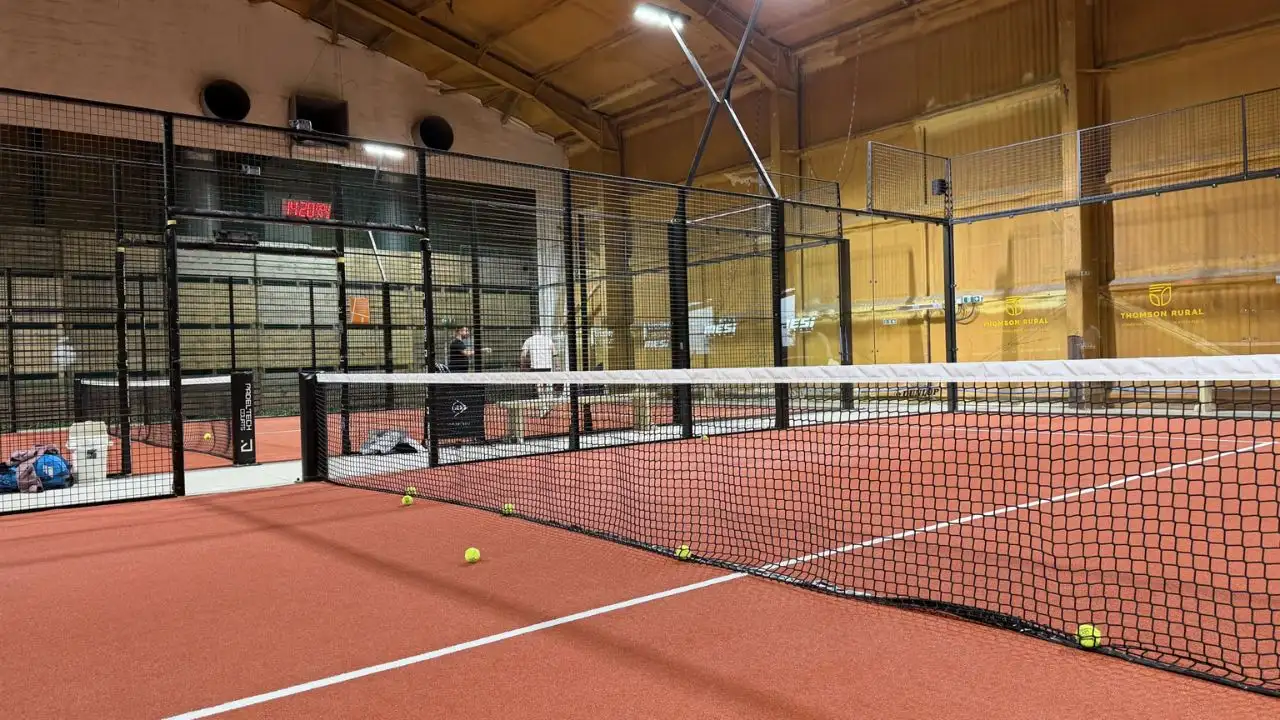
Farm Business Innovation reported that the cost of installing two courts was roughly comparable with buying a destoner for potato farming, while the courts were expected to pay for themselves within a year. For Stark, the transformation also demonstrated the potential sitting inside buildings that farmers may already own. The conversion has not replaced farming. Stark still manages the agricultural operation, but padel has added another income stream to the business.