
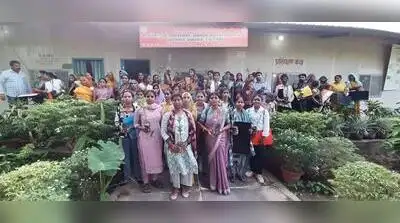
Nursery Sakhis being imparted training
VK Singh, in-charge of the training centre, explains that in the first phase, 70 participants were trained to raise nurseries using seedling pro-trays. The alternative is raising seedlings in pro-trays, which offers up to 100% protection against these diseases and pathogens. Moreover, sowing seeds directly in the ground often results in a 30–40% loss due to spoilage or rotting from excess water, whereas the tray method ensures a germination rate of over 90% and keeps the seeds safe.
The horticulture department has launched the initiative with a long-term vision to empower these rural women and make them self-reliant while allowing them to stay in their villages. Stay updated with the latest Prayagraj news.
Kaushal Kumar Neeraj, Deputy Director (Horticulture), said that these women will also be trained in grafting techniques for nursery development in the future. Prayagraj: In a bid to expand green cover, women associated with Self-Help Groups (SHGs) have initiated steps to develop nurseries in their own villages. As part of the initiative, women from Rural Livelihood Mission are being trained as ‘Nursery Sakhis’ (Nursery Caretakers). The horticulture department is conducting training at the horticultural experiment and training centre at Khusrobagh under Mission for Integrated Development of Horticulture (MIDH). He notes that traditional nursery-raising methods have several drawbacks. In this method, each plant grows in an individual cell of the tray, ensuring that root systems remain separate and do not become entangled. Upon completion of the training, the horticulture department distributed training kits and seedling pro-trays for plant propagation. Geeta Devi, a member of the ‘Om Mahila Swayam Sahayata Samuh’ (Women’s Self-Help Group) from Balkaranpur village in Phulpur, explains that the group can use these trays to develop nurseries and raise seedlings right in their home courtyards. Selling these seedlings to local farmers would also generate additional income for them. Farmers often pesticides and chemicals to protect vegetable crops from pests and diseases, and this not only renders the produce potentially harmful to health but also imposes a financial burden on the farmer. Employing grafting techniques in nursery management offers a beneficial solution to the issue. Seedlings raised using grafting techniques are disease-resistant and possess strong root systems, making them resilient against soil-borne pests. A ‘Mini Centre of Excellence’ for nursery management and grafting has been set up by the horticulture department in Saidabad. However, seedlings are currently raised from seeds, and grafting techniques are not yet being utilised. Download the TOI App.