
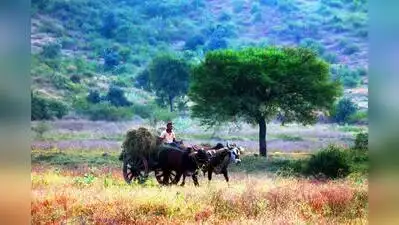
Prolonged nutritional stress, officials warned, could also lead to reduced milk production, weight loss, reproductive problems and increased susceptibility to diseases
As of Sept 30, the state had about 194.3 lakh metric tonnes of fodder, sufficient for an average of 188 days for its livestock population of nearly 2.78 crore. Jalna, for instance, has about 63 days of fodder left. In Beed, it’s 65 days. Hingoli has about 121 days, Nanded 125 days, while Chhatrapati Sambhajinagar division, as a whole, has fodder availability for only 113 days, the lowest among Maharashtra’s divisions. This disparity is particularly stark if one considers Pune division where there’s enough fodder (59.36 lakh metric tonnes) to last 218 days. Nagpur has 31.72 lakh tonnes, for 250 days and Konkan 18.52 lakh tonnes, for 261 days. But Nashik division has stocks for 152 days, Latur 153 days and Amravati 166 days. Kiran Patil, commissioner of animal husbandry of the state, told TOI: “The department has begun distributing improved and hybrid fodder seeds under the district annual plan with 100% subsidy. Individual farmers can receive assistance of up to Rs 4,000 for one hectare, while farmer groups can receive up to Rs 20,000 for five hectares. The government has budgeted Rs 48.2 crore for fodder seed distribution, while districts have sought an additional Rs 55.54 crore. Under the National Livestock Mission, 67 silage projects have been approved, with an estimated combined production of 1.6 lakh to 1.87 lakh tonnes,” Patil added.
Pune: For farmers in drought-hit Marathwada, failure of the kharif crop has led to a serious shortage of crop residue, which means they’re now braced for another crisis — a fodder scarcity. Because of high daytime heat and water shortages, animal husbandry experts said insufficient availability and poor quality fodder can directly impact livestock health, especially when animals are already under stress. Because of substantial stock in several other regions, the animal husbandry department has identified 265 talukas where the fodder stock is worrisome, although the state’s overall availability remains within the comfortable range. Within Marathwada, farmers are therefore likely to face increasing pressure as the rabi season progresses and livestock begin to depend on stored fodder.
“We have already lost much of our crop. You Can Also Check: Gold Rate in Pune | Silver Rate in Pune | Bank Holidays in Pune | Public Holidays in Pune | Petrol Price in Pune | Diesel Price in Pune | CNG Price in Pune | LPG Price in Pune Stay updated with the latest Pune news.
We can’t afford to keep buying fodder from the market for months,” said Suresh Gaikwad from Dharashiv, one of the eight drought-hit districts in Marathwada. When cattle do not receive adequate energy, protein, minerals and fibre, their body condition deteriorates and immunity can weaken,” a senior official from the animal husbandry department told TOI. Over time, this can affect productivity as well as reproductive health,” the official, who has worked in Marathwada, said. Experts, however, said the immediate challenge would be ensuring farmers don’t have to wait for their fodder stock to run out, before making other arrangements. This would give confidence to dairy farmers to continue with the business,” said Uddhav Ghodke, a farmer activist from Beed. Another livestock expert said fodder planning must begin before the shortage turns acute. “Once cattle lose body condition, restoring their health and productivity becomes much more difficult and expensive,” the expert said. They need to be fed daily, and we need fodder for that,” said Ghodke.
If the dry fodder runs out too, keeping cattle will become difficult. Maharashtra’s animal husbandry department has flagged considerable regional variations in fodder availability, with several Marathwada districts showing significantly lower stocks than the state average. But in parts of Marathwada, the situation is far more precarious. “Fodder shortage is not merely an issue of quantity. “This becomes particularly stressful for lactating or pregnant animals, and even young calves. Prolonged nutritional stress, the official warned, could also lead to reduced milk production, weight loss, reproductive problems and increased susceptibility to diseases. “During a drought , farmers tend to feed animals whatever residue is left from crops. But if this is not supplemented properly, the animal’s nutritional balance gets disturbed. Officials are also prioritising fodder cultivation in sugarcane harvesting areas and areas with irrigation facilities. Jowar and bajra, which grow relatively quickly and require less rainfall, have been identified as suitable fodder crops in areas facing water stress. “The department is also promoting silage and hay production, hydroponic fodder and chaff-cutting machines to reduce wastage. Other proposals include sourcing fodder from forests, unused govt land and grazing lands through farmer groups, self-help groups and farmer producer organisations. “Ideally, govt should start fodder camps at tehsils that are under stress, for instance, Pathardi in Ahilyanagar, Ashti in Beed and other tehsils where drinking water is being supplied through tankers. The urgency is visible among Marathwada’s livestock-dependent farming families. “A farmer can survive one failed crop by borrowing money or waiting for the next season. But our cattle cannot wait. Download the TOI App.