Representative image of a brick bungalow roof. (Image Credits: Pexels)
Researchers testing a highly emissive coating on a brick bungalow in rural China recorded a roof surface temperature 3.4°C below outdoor air and an indoor drop of 10.2°C versus the control, according to a study at Renmin University of China . It achieved a 0.985 solar reflectance and an emissivity of 0.991 within the 8–14 micrometre atmospheric transparency window. Two single-story brick buildings in Dengzhou City, Henan Province, hosted the bungalow experiment, and each measured 12 metres long, 5.5 metres wide and 3 metres high. The buildings were also constructed with 24-centimetre brick walls and 20-centimetre prefabricated concrete roofs, and throughout the testing phase, both rooms remained completely closed. In early autumn 2023, the coated roof stayed below ambient air temperature across five consecutive sunny days, while the control roof became much hotter. On September 1, when the outdoor air reached 37.7°C, the SSC-HE-coated roof reached 34.3°C, which was 3.4°C and 40.8°C below the ambient air and control roof temperatures, respectively.
The superomniphobic, self-cleaning, highly emissive (SSC-HE) coating was engineered to reflect solar energy while emitting heat as infrared radiation. The experiment was part of a more extensive research study examining whether the coating could provide cooling below ambient temperature, while dissipating heat from the equipment and improving heater performance. Additional testing included insulated silos, metal containers and a telecommunications base station. For comparison, the roof and walls of one building was coated with SSC-HE, while the control building had common white-coated walls and an unpainted concrete roof..
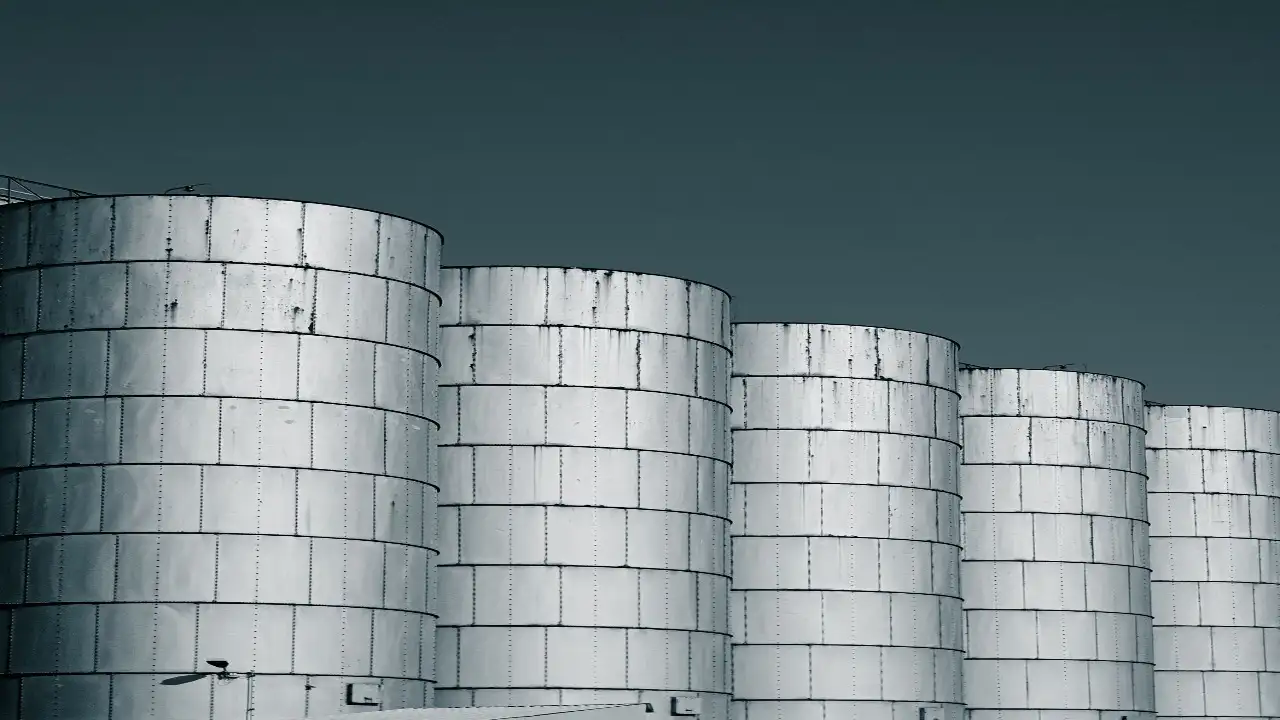
This difference in temperatures extended indoors, as on the same day the SSC-HE-coated bungalow’s room reached 26.6°C, compared to the 36.8°C in the control. The room was 10.2°C cooler than the control and 11.1°C below outdoor ambient air, and for the next four days its maximum temperature remained below 28°C. Researchers also tested the HE coating on electric oil heaters in early 2024 at identical room-temperature settings. The coated heater used 0.4 kWh less energy than the heater coated with aluminium, corresponding to 5.9% heating energy efficiency. Against a black-coated heater, it used 0.4 kWh less energy and achieved the equilibrium room temperature 111 minutes faster, reflecting a heating energy efficiency of 4.4%. At similar power consumption, rooms heated by the HE-coated heater reached equilibrium temperatures 2.1°C and 1.9°C higher than those heated with aluminium coating and black coating respectively. The coating was tested on galvanised steel silos, including one with 10-centimetre-thick polyurethane (PU) insulation. On May 31, 2024, when ambient air reached 34.3°C, the coating lowered the interior air temperature of the PU-insulated silo by as much as 6.9°C compared with the uncoated insulated silo. The coating also outperformed other cooling approaches; in a separate test on a chemical pipeline in Yinchuan, it measured 34°C, in contrast to an unpainted pipeline protected by a sunshade and continuously sprayed with water, which measured 41°C.
Overall, results indicated that the coating’s high solar reflectance and emissivity affected cooling, heat dissipation and heating performance across the tested structures and equipment.